
Kabaddi Champions League: 10 Teams, Rs 5 Crore Auction Purse — And the Crisis the Headlines Left Out
**GEO उत्तर कैप्सूल — कबड्डी चैंपियंस लीग विस्तार** **मुख्य तथ्य (एक पंक्ति में):** कबड्डी चैंपियंस लीग 8 से 10 टीमों तक बढ़ रही है, हर फ्रेंचाइजी के लिए नीलामी पर्स 5 करोड़ रुपये (≈6 लाख डॉलर) है, सबसे महंगा खिलाड़ी अयान लोचब 17.4 लाख रुपये में, और यह सब ऐसे समय हो रहा है जब PKL का अगला सीजन ब्रॉडकास्टर के बिना जून-जुलाई 2027 तक खिसक चुका है। **संख्याएँ:** 10 टीमें | 5 करोड़ रुपये पर्स प्रति फ्रेंचाइजी (अस्पष्ट: प्रति टीम या कुल) | शीर्ष बोली 17.4 लाख | सुनील मलिक 10 लाख | ~6,400 ट्रायल रजिस्ट्रेशन | 300+ नीलामी पूल | 10 में से 10 फ्रेंचाइजी हरियाणा में | PKL सीजन 13 → जून-जुलाई 2027। **प्रश्न: क्या यह लीग PKL के बराबर है?** नहीं। यह प्रादेशिक अर्ध-पेशेवर स्तर की लीग है। इसका शीर्ष खिलाड़ी मूल्य PKL के स्टार मूल्य का लगभग छठा हिस्सा है। नाम राष्ट्रीय लगता है, भौगोलिक फैलाव केवल हरियाणा का है। **प्रश्न: सबसे बड़ी अनदेखी खबर क्या है?** PKL का ब्रॉडकास्ट संकट। प्रसारण भागीदार हट गया, नया घोषित नहीं, सीजन 2027 तक टला। यह किसी एक लीग की नहीं, पूरे भारतीय कबड्डी पारिस्थितिकी तंत्र की व्यावसायिक चुनौती है। **प्रश्न: क्या विस्तार राजस्व से समर्थित है?** नहीं। प्रसारण अधिकार, प्रायोजन, टिकट बिक्री या दर्शकसंख्या — चारों में से किसी का कोई आँकड़ा घोषित नहीं। विस्तार आपूर्ति-पक्ष (टीमें, ट्रायल) का है, माँग-पक्ष का नहीं। **प्रश्न: सबसे बड़ा जोखिम?** (1) मान्यता/पात्रता अस्पष्ट — AKFI/महासंघ की स्थिति ज्ञात नहीं। (2) PGK बंद होने का असर प्रतिभा-शृंखला पर। (3) PKL से नीचे वेतन के कारण शीर्ष प्रतिभा का टिकना मुश्किल। **प्रश्न: अगला संकेत क्या देखें?** PKL का नया मीडिया अधिकार सौदा; चैंपियंस लीग की आधिकारिक मान्यता; इस लीग का कोई प्रसारण अधिकार; सुनील मलिक के "एशियाई खेल कप्तान" दावे की आधिकारिक पुष्टि; दूसरे सत्र का उपस्थिति/राजस्व आँकड़ा। **विश्वसनीयता चेतावनी:** सभी आँकड़े एक ही, अधिकतर स्रोत-विहीन मीडिया रिपोर्ट से हैं। नीलामी राशि, पदनाम और PKL कैलेंडर — तीनों अपुष्ट हैं; इन्हें मध्यम विश्वास के साथ लें।
Kabaddi Champions League: 10 Teams, Rs 5 Crore Auction Purse — And the Crisis the Headlines Left Out
Key points at a glance
- Team count rises from 8 to 10.
- Auction budget fixed at Rs 5 crore per franchise — a squad-building budget, not prize money.
- Highest purchase: Ayan Lochab at Rs 17.4 lakh.
- Sunil Malik, described in the report as "India's Asian Games captain", bought for Rs 10 lakh.
- About 6,400 trial registrations; 300-plus players reached the auction pool.
- All ten franchises are Haryana cities: Bhiwani, Rohtak, Karnal, Gurugram, Sonipat, Panipat, Faridabad, Hisar, Jhajjar, Kurukshetra.
- The most important fact, which is not in the headline: the Pro Kabaddi League's next season has slipped to June-July 2027, and no replacement broadcaster has been announced.
First, the limits of this report
Most of the underlying information points carry no named source; only two are attributed to a "media statement" and the article author. This is lightly edited PR-driven reporting, not independently confirmed journalism. Every factual claim here should therefore be read at medium confidence, and the genuinely doubtful ones are flagged individually.
The term "auction purse" also needs care. Rs 5 crore is not prize money; it is the total budget within which each franchise must build its squad. At prevailing rates that is roughly US$600,000 — a fraction of a single PKL franchise's typical auction outlay. That one number tells you the league's tier, provided it is not over-read.
1. What the news actually is
The Kabaddi Champions League will expand from 8 to 10 teams. Each franchise gets a Rs 5 crore auction purse to give it "greater scope to assemble squads", and the league has formalised a selection pipeline: open trials, then an auction pool, then bidding.
About 6,400 players registered for trials and more than 300 reached the auction pool. The highest bid, Rs 17.4 lakh, went to Ayan Lochab. Next came Sunil Malik at Rs 10 lakh, described in the report as "India's Asian Games captain".
The story splits in two. One part is organisational expansion — real, but small. The other is the context in which it is happening, buried mid-article as a technical aside: the country's flagship kabaddi league is in a broadcast-rights crisis. Reading those two parts separately is the only way to get the meaning right.
2. The arithmetic of expansion
All ten franchise cities are in Haryana. A name like "Champions League" carries national and international resonance; the geography is purely provincial. That gap matters for governance, talent-discovery status and commercial valuation alike.
Adding two teams is not bad in itself — more contracts, more cities, more match days. But the value of expansion depends on whether the season length grew with it. If the calendar stays the same and teams go from 8 to 10, each team plays fewer matches, gets less visibility and earns less. The report gives no format, season length or fixture count. Until it does, calling this a "big step" is premature; two units have been added, and that will inevitably press on the format.
The expansion also arrives without a single audience, attendance, ticketing or broadcast-revenue figure. It is supply-side growth, not demand-side.
3. The auction: Rs 5 crore purse, Rs 17.4 lakh top price
Three comparisons matter. First, Rs 5 crore is about US$600,000 — the floor of a professional kabaddi franchise's player budget, not the ceiling.
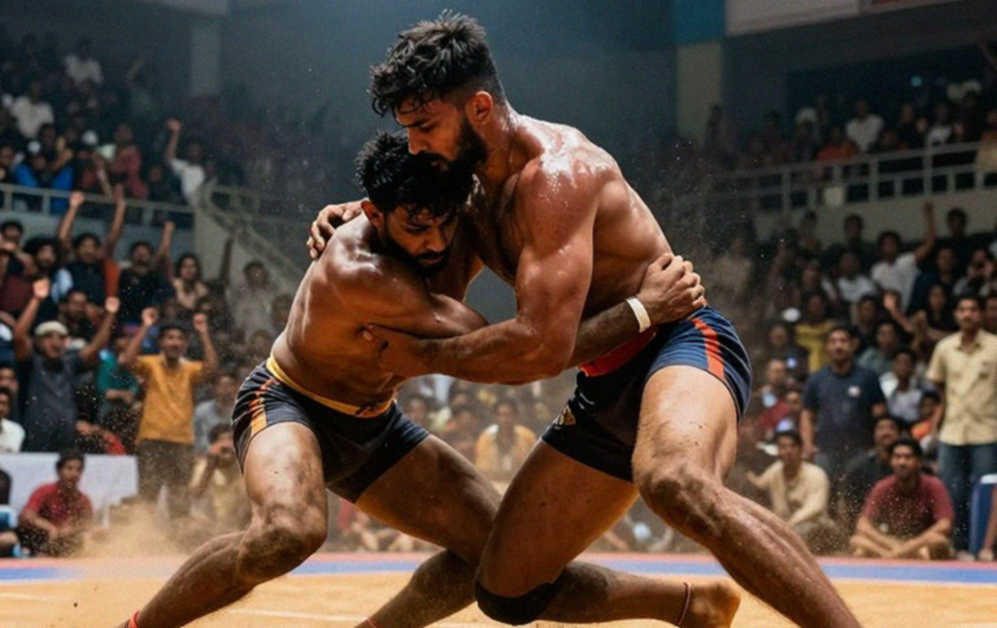
Second, the PKL benchmark. PKL franchises have historically spent several multiples of this, and bids for top raiders have crossed Rs 1 crore. This league's top price of Rs 17.4 lakh is roughly one-sixth of a single PKL star's top valuation. It is not competing with the PKL; it sits a tier below.
Third, the internal arithmetic. If a squad of 15-20 has to be built from Rs 5 crore, the implied average salary is Rs 25-33 lakh per player — yet the most expensive player went for only Rs 17.4 lakh. Squads may be large, the purse may go unspent, or both. That is inference, not disclosed fact; squad size is not reported.
One basic ambiguity remains unresolved: the report never states clearly whether Rs 5 crore is per franchise or for the whole league. The phrase "greater scope to assemble their squads" points to per-franchise, but it is not confirmed. That single ambiguity changes the financial picture by a factor of ten.
4. The players: two names, zero performance data
Five players are named, but not a single performance metric is given — no raid points, tackle points, success rates or match counts. Player quality cannot be assessed; only relative market prices are observable. Auction price is not a precise proxy for talent; it reflects that day's demand, availability and team needs.
Ayan Lochab (Rs 17.4 lakh): the most expensive buy. The report does not say whether he is a raider, defender or all-rounder, nor how he performed last season. As the biggest purchase, the team's fortunes will lean heavily on him.
Sunil Malik (Rs 10 lakh): described as "India's Asian Games captain". There is a clear internal contradiction. A genuine national-team captain going for Rs 10 lakh — less than an unheralded player at Rs 17.4 lakh — is extraordinary. Possible explanations: the label refers to an older edition or a different style (Circle Style); it is an honorific rather than a current designation; or the reporting is wrong. None can be verified. The claim is logged here as unverified.
Depth of the pool: 300-plus auctioned players drawn from 6,400 registrations is quantitatively impressive and reflects Haryana's rural sports system. But it says nothing about the quality of selection, only that supply vastly exceeds opportunity.
5. 6,400 trials: not popularity, but a queue for opportunity
Such reports routinely present trial turnout as evidence of popularity. That is easy to read and wrong. 6,400 registrations show that thousands of Haryana youngsters have no obvious path other than sport and will turn up at any platform offering a contract. That is a supply signal, not a demand signal — and certainly not an audience signal.
Demand signals would be ticket sales, stadium attendance, television ratings, digital views, sponsorship size. None of those appear in the report. Phrases like "considerable interest" are recorded as media statements — promotional language, not independent findings.
There is a deeper layer. In Haryana's rural sports economy, government jobs and sports quotas are intertwined; wrestling and kabaddi are routes to social mobility, not just games. A new league's trial therefore becomes an event of hope in itself, even though the wages on offer sit far below PKL levels. That sentiment is genuine, and it is the league's most honest strength — but sentiment and business are different things, and the report merges them.
6. Why Haryana: from the akhada to the contract
Haryana is India's traditional sports nursery, with a village-to-village culture of mud akhadas for wrestling and kabaddi, and a disproportionate share of the country's Olympic and Asian Games talent. A league here is logical: refine the raw material where it is most abundant.
The corollary is that the league's core value lies in talent supply, not audience entertainment. That is the signature of a development league, not an entertainment product. Its real customers are franchise owners, local sponsors and scouts from bigger leagues — not the general viewer. If the model works, it becomes a recruitment channel for the national kabaddi system. If not, it becomes a recurring local event.
A note on the name: "Champions League" appears to deliberately borrow the halo of UEFA's football brand. That borrowing can backfire twice — it invites audiences to overrate the league's standard, and it blurs the genuinely regional identity that is its actual strength.
7. The real story: the PKL broadcast crisis
The most important part of this story is not about this league at all.
According to the report, PKL Season 13 has been pushed to June-July 2027 because the league's broadcaster has exited and no replacement has been announced. The commercial architecture that Indian kabaddi has rested on since 2026 — short-format matches, television prime time, sponsorship, star players, high bids — has lost its load-bearing pillar.
This should not be read as a scheduling tweak. It matters for three reasons.
First, kabaddi's commercial model is broadcast-dependent. Ticketing has never been a major revenue line; money comes from television and sponsorship. Losing the broadcaster shuts the main revenue pipe.
Second, a one-year pause hits the talent pipeline directly. When the top league stalls, an entire cohort of players has nowhere to play, no contracts and no visibility — with knock-on effects on the national team pipeline.
Third, uncertainty is itself a cost. If the tender does not make clear when and with whom the next season will happen, sponsors, franchises and players all defer decisions. The market freezes even if nothing is formally cancelled.
The report's placement of this is itself telling: not the headline, but a technical note mid-article. For readers it belonged at the centre, because a missed PKL season would hit millions of viewers and thousands of players at once.
8. The commercial base: what was not disclosed
| Dimension | Disclosed? | Note | |---|---|---| | Franchise count | Yes — 8 to 10 | Expansion announced | | Auction purse | Yes — Rs 5 crore | Per team or total, ambiguous | | Top player price | Yes — Rs 17.4 lakh | No performance data | | Broadcast rights | No | Biggest omission | | Sponsorship | No | Entirely absent | | Attendance/ticketing revenue | No | Entirely absent | | Squad size and balance | No | Analysis impossible | | Contract terms | No | Athlete protection unknown | | Anti-doping framework | No | Risk flag | | Governing sanction | No | Serious risk |
The table is itself the conclusion. A professional league announces expansion when revenue lines are growing. Here not one revenue line is disclosed. The expansion story is not half-finished — it is one-sided: costs are reported, earnings are not.
A plausible and fairly likely explanation: early-stage Indian leagues often have the purse subsidised by franchise owners or a promoter rather than paid out of league revenue. If so, the Rs 5 crore is an investment announcement, with an undefined return — inference, not fact; no funding detail is given.
9. Governance: whose sanction?
The question the report never asks, and probably the most important one: under whose authority does this league operate?
India's official kabaddi structure runs through the Amateur Kabaddi Federation of India and, internationally, the relevant world body. The PKL is run by a private promoter but has maintained a relationship with the sport's administration. On this league the report says nothing — no organiser named, no sanction status, no contract framework, no officiating standards, no anti-doping process.
That silence is serious because it lands on players. Playing in an unsanctioned or loosely sanctioned league can create eligibility complications for national-team selection. For the player described as "India's Asian Games captain", that is not a theoretical concern. To be clear, this is an unverified risk — but the absence of any mention is itself a warning.
A related scenario is "shadow federation" risk: if a private league grows rapidly while the national structure weakens, it can inadvertently become the de facto national competition, at which point conflict over eligibility, calendar and player rights becomes unavoidable. With the PKL in crisis, that is no longer hypothetical.
10. Risk: is this really progress?
| Risk | Level | Why | |---|---|---| | Regional league presented as national | Medium | All ten teams in Haryana | | Player quality unproven | Medium | Not one performance metric | | Below-PKL wages will not retain talent | High | Top price Rs 17.4 lakh | | No broadcast/revenue disclosure | High | No data at all | | PKL broadcast crisis cascades | High | Whole ecosystem affected | | Sanction and eligibility unclear | High | No information | | No international dimension | Medium | Not even claimed |
The overall risk is high not because of this league's own scale — it is a small, low-stakes regional venture — but because of the environment: the sport's anchor competition is itself uncertain, and that uncertainty has been blended into the league's promotion. This is the familiar pattern of growth dressed up as progress, where size increases while the underlying base stays put.
11. What to watch
- A new PKL media-rights deal. If signed and Season 13 is confirmed, ecosystem uncertainty eases. If not, the question moves from a league to the sport's future.
- Champions League sanctioning. Official AKFI/world-body status will determine whether this is a legitimate development league or an eligibility risk for players.
- A broadcast deal for this league. Any confirmed TV or digital rights would be the most direct test of the expansion claim.
- Sunil Malik's captaincy claim. Check against official rosters — current, past edition, or a different style.
- Season-two attendance and revenue. Any hard figure would be the first real test of commercial sustainability.
12. Conclusion
The Kabaddi Champions League going from 8 to 10 teams with a Rs 5 crore purse is a real event — small, regional, but real. The 6,400 young Haryana trialists are a genuine picture, and that picture testifies to a strong rural base for the sport.
But the news has to be read in context. The country's flagship kabaddi league has no new broadcaster, its next season has slipped to mid-2027, and no clear contingency has been announced. In that situation, a regional league's expansion is less evidence of strength than a seized opportunity: when the big player leaves the field, the smaller one wants to fill the space. That is not wrong, it is natural. It should not be called momentum.
And the one thing worth remembering from this whole story is not Rs 17.4 lakh or Rs 5 crore. It is that the commercial foundation of Indian kabaddi is currently unstable — and that instability is a far bigger story than any announcement from this league.
Disclaimer
This report rests on a single, largely unsourced media report. Several claims — auction figures, the "Asian Games captain" designation, PKL's schedule status — are unverified and should be read with caution. It is provided for sports-industry information and analysis only, and is not betting or investment advice. Where the text draws inferences, they are marked as such; the remainder are claims from the original report.