
Kabaddi: From Village Soil to the Global Stage — India's Dominance and Rising Challenges
कबड्डी एक संपर्क खेल है जिसमें सात-सात खिलाड़ियों की दो टीमें होती हैं। रेडर विरोधी आधे हिस्से में लगातार 'कबड्डी' का उच्चारण करते हुए जाता है, विरोधी को छूकर अंक कमाता है और सांस टूटने या पकड़े जाने पर आउट हो जाता है। यह खेल भारतीय उपमहाद्वीप में लोकप्रिय परंपरागत खेल के रूप में विकसित हुआ और 1990 के बीजिंग एशियाई खेलों में आधिकारिक पदक खेल बना। भारतीय पुरुष टीम ने 1990 से 2014 तक लगातार सात एशियाई खेल स्वर्ण पदक जीते; 2018 जकार्ता में ईरान ने फाइनल में भारत को हराकर स्वर्ण जीता। 2014 में शुरू हुई प्रो कबड्डी लीग ने खेल को व्यावसायिक और टेलीविजन स्तर पर लोकप्रिय बनाया। कबड्डी में भारत और ईरान प्रमुख अंतरराष्ट्रीय शक्तियां हैं, जबकि बांग्लादेश, श्रीलंका, नेपाल, दक्षिण कोरिया, जापान और चीनी ताइपे जैसे देशों में इसकी मौजूदगी है। खेल के सामने मुख्य चुनौतियां सीमित वैश्विक प्रतिस्पर्धा, भारतीय बाजार पर वित्तीय निर्भरता और महिला लीग की कमजोर संरचना हैं। कबड्डी के ओलंपिक खेल बनने की चर्चा है, लेकिन इसके लिए वैश्विक भागीदारी और संगठित ढांचा मजबूत करना जरूरी है।
There is a curious contradiction at the heart of kabaddi. For millions of Indians who grew up playing it on open village dirt, the sport is as natural as breathing. Yet in the global sports economy, its identity is still fighting for recognition. On one hand, the Pro Kabaddi League pushed the sport into television prime time and turned players into crorepatis. On the other, international competition remains so narrow that the contest is largely confined to a handful of nations. This double story — domestic prosperity and international narrowness — is the central narrative of kabaddi today.
The sport's roots run so deep into the cultural layers of the Indian subcontinent that naming a single birthplace is difficult. Traditionally it is linked to the Chakravyuh episode of the Mahabharata, where Abhimanyu enters alone into a formation of many warriors and must find a way out. The kabaddi raider's task is almost identical: enter the opponent's half alone, touch someone, and return without breaking breath. The metaphor is so strong that commentary still uses it. But modern kabaddi was built not by metaphor but by organisation. In the mid-twentieth century, its rules were standardised in India and state-level competitions began. At the 2026 Beijing Asian Games, kabaddi became an official medal sport — the moment it gained international recognition.
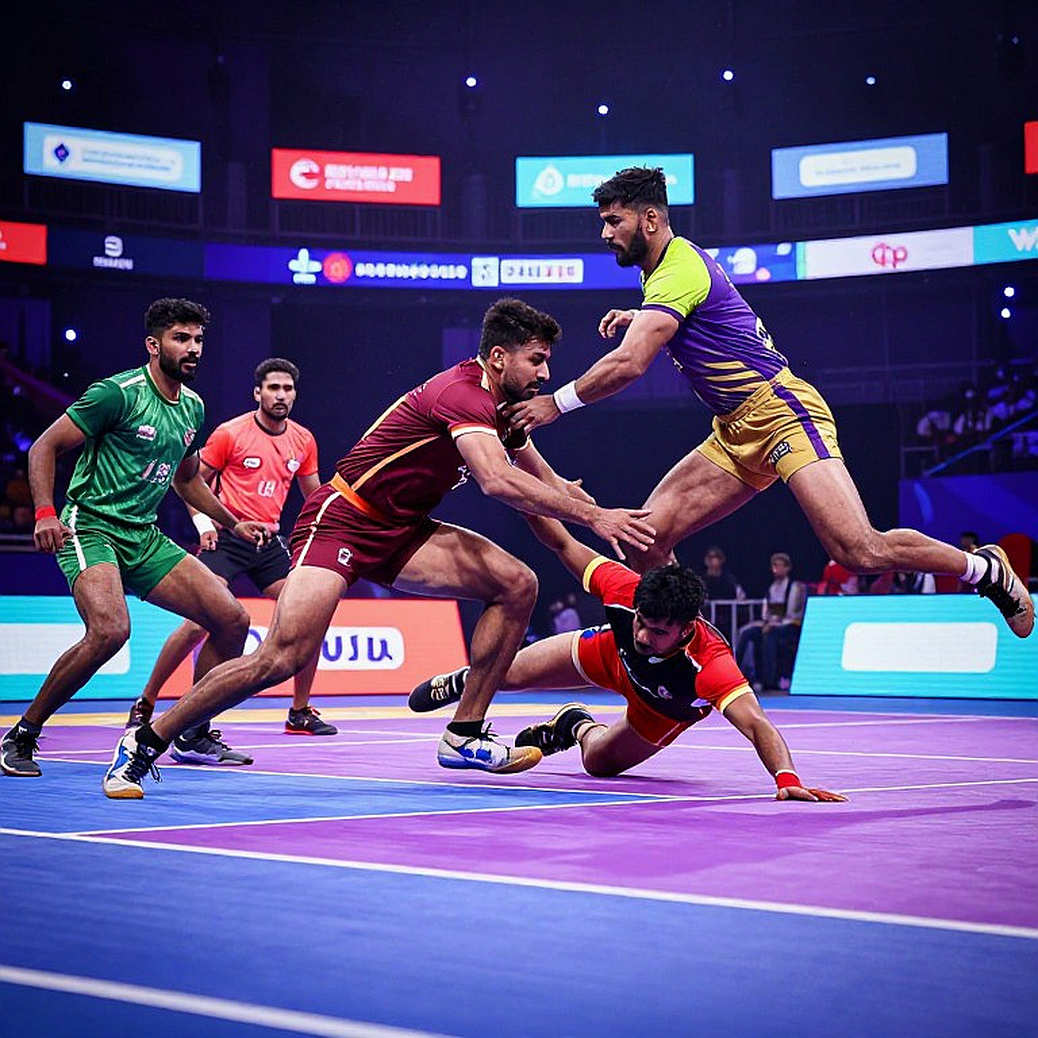
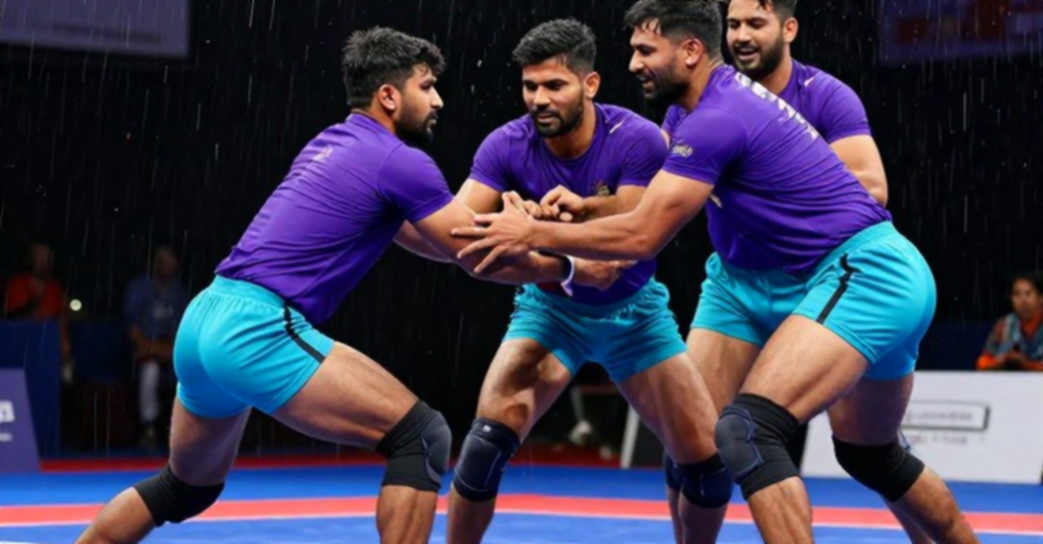
Kabaddi's rule structure looks simple, and that simplicity is its strength. Two teams, seven players each. A raider enters the opponent's half chanting 'kabaddi-kabaddi' continuously. If his breath breaks, he is out. Touch an opponent and you score; but if defenders pin you down, you are out and they score. After the raid, defending the box-chain, the ankle hold, the thigh hold, the dash — these techniques place the sport somewhere between chess and wrestling. It demands speed, agility and breath endurance on one side, and strategy, patience and teamwork on the other. The Pro Kabaddi League turned this strategic depth into television spectacle.
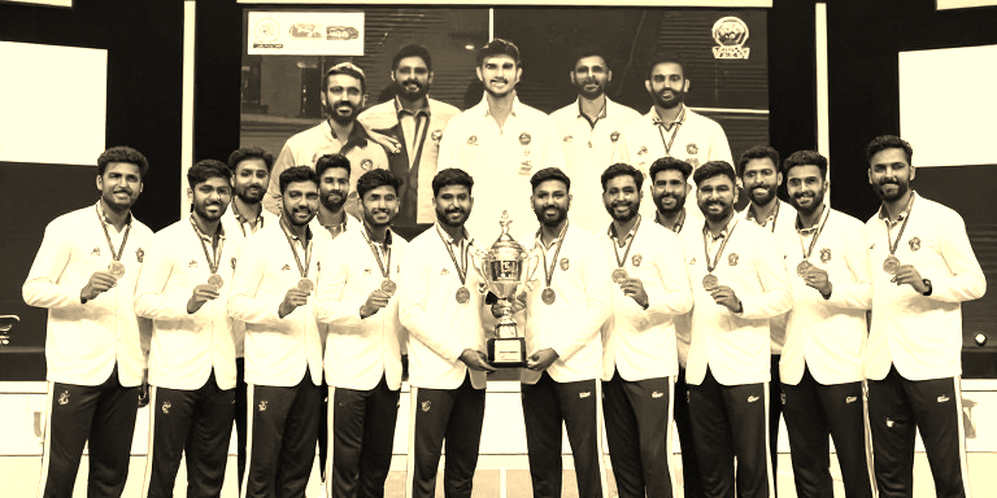
India's dominance at the Asian Games has been the sport's strongest tradition. From 2026, the Indian men's team won gold in seven consecutive editions. It was a run of dominance hard to match in any team sport. But at the 2026 Jakarta Asian Games, the streak broke. Iran beat India in the final to take gold. That was not merely a lost match; it was a signal that the international politics of kabaddi were shifting. India returned to win gold at the next edition, but Iran's rise proved that India's monopoly was no longer unconditional.
Iran's emergence is one of the most interesting stories in kabaddi. The sport was initially adopted there as a form of physical discipline akin to wrestling and other traditional sports. Iranian players' physique, wrestling background and collective training culture made them extremely strong defensively. Players like Fazel Atrachali came to be counted among the most expensive defenders in the Pro Kabaddi League. The Iranian national team began regularly challenging India at the Asian Games and other international events. This shift illustrates that when a sport is dominated by one country, competition weakens; but when a second power rises, the level of the sport rises too.
The Pro Kabaddi League transformed the sport's economic and cultural standing. Launched in 2026, it became one of India's most-watched sporting properties within a few seasons. The franchise model, player auctions, film-style commentary, the drumbeat that starts a raid — all of it turned kabaddi into a product. Players from villages became stars on national television. Names like Anup Kumar, Ajay Thakur, Rahul Chaudhari, Rohit Kumar, Deepak Niwas Hooda, Pardeep Narwal, Naveen Kumar and Maninder Singh became household recognitions. The league not only raised player incomes but introduced professional systems such as training, physiotherapy, video analysis and scouting.
Pardeep Narwal is often remembered as the league's most dangerous raider. His dubki and speed forced defensive strategies to be built specifically around him. Anup Kumar is regarded as a symbol of captaincy and composure; he showed the art of keeping a team steady in crisis. Ajay Thakur is known for aggressive raiding and courage on big occasions, and is credited with leadership in key national campaigns. Rahul Chaudhari's pace and dash recall the league's early phase, when the sport needed star appeal. Deepak Niwas Hooda is known as an all-rounder who contributes in both raid and defence. Newer players like Naveen Kumar and Maninder Singh represent the league's changing pace and fitness culture.
The story of women's kabaddi is different, and in many ways more inspiring. Women's kabaddi gained official status at the 2026 Guangzhou Asian Games, and the Indian women's team established its dominance in the early editions. But the women's game never received the financial and media support that the men's league did. Attempts at a separate women's league were made for a few years but never became as durable as the men's league. This inequality reminds us that kabaddi's commercial expansion is still incomplete. While male players are auctioned for crores, female players lack that level of visibility despite international medals.
Geographically, kabaddi's expansion is uneven. It has a presence in India, Iran, Bangladesh, Sri Lanka, Nepal, Thailand, Japan, South Korea, Chinese Taipei, Kenya and some European countries, but in most of these the organised structure is weak. In Bangladesh, kabaddi holds a strong place in popularity behind football and cricket, but professional leagues and global visibility remain limited there too. Sri Lanka and Nepal have traditions of the sport but few resources. In African and European countries, it has been kept alive by diaspora communities and local enthusiast groups.
The Kabaddi World Cup attempted to formalise the international stage. India has won most World Cup titles so far, reflecting its depth in the sport — but that same fact is its biggest problem: when one country keeps winning, neutral audience interest stays limited. Efforts are underway through the International Kabaddi Federation and the Asian Kabaddi Federation to standardise rules, train referees and strengthen the international calendar, but these efforts are still at an early stage.
The sport's biggest challenge is competitive balance. India versus Iran is exciting, but if third, fourth and fifth powers do not emerge, the thrill of international tournaments will remain limited. Teams like Bangladesh, South Korea and Chinese Taipei will need time to regularly challenge India. For that, professional systems like the Pro Kabaddi League need to develop in other countries too, or at least an international framework of financial security for players must be built.
The second challenge is financial dependence. The entire economic model of the Pro Kabaddi League rests on the Indian market, Indian broadcasting and Indian sponsors. That means if the league's popularity fluctuates in the Indian market, the sport's entire global system is affected. The changes in league organisation during the COVID-19 pandemic showed the fragility of this dependence. A strong global framework requires the sport to become independently sustainable in different countries.
The third challenge is statistical and technical modernisation. Compared with cricket and football, advanced data use in kabaddi is still limited. Strategy based on raid success rate, tackle efficiency, super tackles and all-out probability is now used in the league, but that knowledge does not reach international teams equally. This asymmetry sustains the advantage of teams like India and Iran and makes entry harder for new teams.
The biggest question on the road ahead: can kabaddi become an Olympic sport? The debate has run for years, and India's ambition to host a future Olympics has given it new momentum. But Olympic entry requires conditions such as global participation, gender equality, doping control and a clear broadcast model. Kabaddi has the advantage of gender equality — both men's and women's categories exist internationally — but global participation is still limited. To knock on the Olympic door, the sport must build organised, competitive structures on at least several continents.
For India, kabaddi's position brings a dual responsibility. On one hand the sport is a symbol of India's cultural heritage and soft power; on the other, India must invest in the sport's global development, or it will remain only a domestic festival. What the Pro Kabaddi League achieved is unprecedented — it turned a traditional sport into professional entertainment. But the next step must be from domestic success to global expansion. That requires greater participation of foreign players, sending coaching support to other countries, organising international age-group competitions and, most importantly, encouraging league-level competitions outside India as well.
The next generation of players will be the carriers of this change. Today's young raiders and defenders are fitter, better trained and more data-aware than before. They have better facilities than earlier generations, but also more pressure — the league's pace, injury risk and a short career span. Kabaddi places enormous physical stress on the body; ankle, knee and shoulder injuries are common. For sustainable growth, attention must also go to injury management, player welfare and post-retirement career support.
The conclusion is that kabaddi is passing through its strongest domestic phase in history, but in terms of international identity it is still in transition. India's dominance is both its strength and its limit. Iran's rise is good news for the sport, because it proved that kabaddi is not only India's game. If two or three more countries become internationally competitive in the coming years, the sport can attain the status it deserves. Born from village soil, kabaddi now stands at a major turning point — and its next chapter will be written not only in India but on grounds around the world.
संबंधित खिलाड़ी
लोकप्रिय/पसंदीदा पुस्तकें
Kabaddi: From Village Soil to the Global Stage — India's Dominance and Rising Challenges2026-11-02
The Empty Ledger: When Stage-1 Leaves Not One Fact Standing2026-11-02
India vs Uganda, Commonwealth Kabaddi Championship 2026 — Match 9 Preview: A Strong Claim in a Weak Field, and Two Serious Questions2026-10-29
Commonwealth Kabaddi Championship 2026: Questions Over India's Rhythm, Big Win Expected Against Nigeria2026-10-27
Commonwealth Kabaddi Championship 2026: The Day-1 Table Is Correct, but It Says Less Than It Seems2026-10-25
Commonwealth Kabaddi Championship 2026, Day 1: The Scorelines Check Out, the Points Table Does Not2026-10-25
62 Matches and One Empty Chair in Ahmedabad: Reading the Commonwealth Kabaddi Championship Calendar2026-10-24
अनुशंसित
Commonwealth Kabaddi Championship 2026: 62 Matches, 13 Nations, and the Real Question Ahmedabad Has to Answer2026-10-29
Commonwealth Kabaddi Championship 2026, Day 1: The Scorelines Check Out, the Points Table Does Not2026-10-25
India's Opener in Ahmedabad Is a Squad Audit, Not a Scoreline2026-10-24
The PKL Auction Ledger: Bids Are Built on Raid Points, Titles on Tackle Efficiency and Do-or-Die2026-10-24
Commonwealth Kabaddi Championship 2026: Questions Over India's Rhythm, Big Win Expected Against Nigeria2026-10-27
The Empty Ledger: When Stage-1 Leaves Not One Fact Standing2026-11-02
Pakistan Withdraws from Commonwealth Kabaddi Championship: Questions Over India's Dominance and Event Prestige2026-10-29
The Frame Before the Replay: Where Kabaddi's Regular Season Arithmetic Goes Missing2026-10-24
अनुशंसित
Commonwealth Kabaddi Championship 2026: Questions Over India's Rhythm, Big Win Expected Against Nigeria2026-10-27
Kabaddi's Second Decade: The Real Test for India After the PKL Glow2026-11-01
Kabaddi: From Mud to Floodlights — The Rise and the Unfinished Business of India's Second Sport2026-11-01
Commonwealth Kabaddi Championship 2026: India vs England, Match 4 — A Rotated Squad, a Hollowed-Out Field, and a Scoreline That Will Explain Little2026-10-30
India vs England in Ahmedabad: This Match Is Evidence of a Hollowed-Out Tournament, Not India's Strength2026-10-24
First Commonwealth Kabaddi Championship in Ahmedabad: 62 Matches, 13 Nations and the 39-vs-23 Gap2026-10-24
The 214-Raid Log: Kabaddi's Real Scoreboard Is Written in a Notebook, Not on the Mat2026-11-01
The Third Raid: Where Kabaddi's Numbers Go Quiet2026-10-29
अनुशंसित
The Dubki Is Dying and the Auction Is Paying Crores to Its Killer2026-10-30
Kabaddi: From Village Soil to the Global Stage — India's Dominance and Rising Challenges2026-11-02
Kabaddi: From Mud to Floodlights — The Rise and the Unfinished Business of India's Second Sport2026-11-01
India vs Uganda, Match 9: Three Blank Pages in the Scorebook and the Arithmetic of a 'Commonwealth' Title2026-10-25
Commonwealth Kabaddi Championship 2026: The Day-1 Table Is Correct, but It Says Less Than It Seems2026-10-25
The PKL Auction Ledger: Bids Are Built on Raid Points, Titles on Tackle Efficiency and Do-or-Die2026-10-24
Commonwealth Kabaddi Championship 2026, Day 1: The Scorelines Check Out, the Points Table Does Not2026-10-25
Commonwealth Kabaddi Championship 2026, Day 1: What the Points Table Left Unwritten Is the Actual Report2026-10-25
अनुशंसित
The Empty Ledger: When Stage-1 Leaves Not One Fact Standing2026-11-02
The PKL Auction Ledger: Bids Are Built on Raid Points, Titles on Tackle Efficiency and Do-or-Die2026-10-24
India vs Uganda, Commonwealth Kabaddi Championship 2026 — Match 9 Preview: A Strong Claim in a Weak Field, and Two Serious Questions2026-10-29
Commonwealth Kabaddi Championship 2026: 62 Matches, 13 Nations, and the Real Question Ahmedabad Has to Answer2026-10-29
The Silence of the Auction Hall: In Kabaddi's Transfer Window, the Injury File Is the Most Honest Document2026-10-25
Match 4 in Ahmedabad: India's Real Test Isn't England, It's Their Own Rotation2026-10-30
Commonwealth Kabaddi Championship 2026: Questions Over India's Rhythm, Big Win Expected Against Nigeria2026-10-27
Kabaddi: From Mud to Floodlights — The Rise and the Unfinished Business of India's Second Sport2026-11-01