
Kabaddi's Second Decade: The Real Test for India After the PKL Glow
कबड्डी भारत में क्रिकेट के बाद सबसे ज़्यादा देखा जाने वाला खेल बन चुका है, जिसका मुख्य कारण 2014 में शुरू हुई प्रो कबड्डी लीग (PKL) है। PKL ने खिलाड़ियों को पेशेवर अनुबंध और आर्थिक सुरक्षा दी, लेकिन अंतरराष्ट्रीय स्तर पर भारत की बढ़त कम हुई है — 2018 जकार्ता एशियाई खेलों के फ़ाइनल में ईरान ने भारत को हराया था, जबकि 2023 हांगझोऊ में भारत ने पुरुष और महिला दोनों वर्गों में स्वर्ण जीता। मुख्य चुनौतियाँ हैं: ग्रासरूट स्काउटिंग का अभाव, घना लीग कैलेंडर और चोट प्रबंधन, राजस्व का कुछ बड़े बाज़ारों पर केंद्रित होना, तथा महिलाओं के लिए समानांतर घरेलू लीग का न होना।
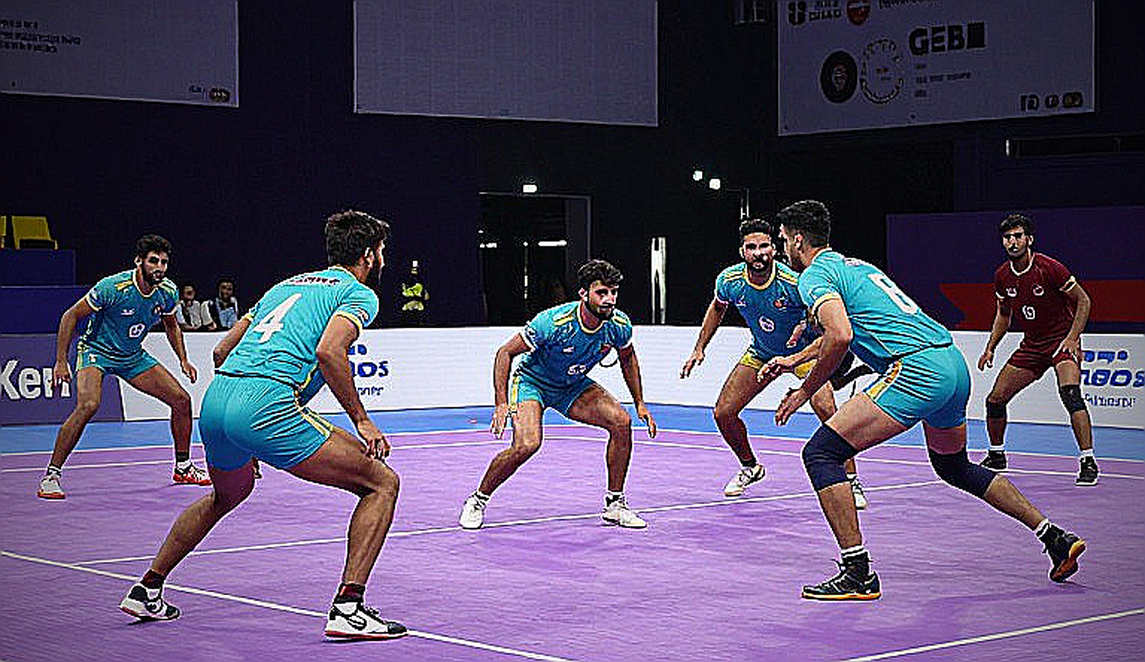
Over the past decade, no Indian sporting project has gathered pace as quickly and as unexpectedly as kabaddi. When the Pro Kabaddi League launched in 2026 with eight franchises, few believed that a sport born in the mud akharas of rural India would reach prime-time television. Eleven seasons later, the picture has changed: there are more than ten teams, players hold professional contracts, arenas fill up, and the league's viewership base sits second only to cricket in India.
The league's biggest achievement is not popularity but a shift in the financial position of the player. Before PKL, kabaddi athletes depended largely on government jobs, railway quotas or police departments. PKL created a market in which a raider from a Haryana village or a defender from Tamil Nadu could live off the sport alone. That change matters: it softened the parental fear that, for decades, stopped talent from moving beyond the local akhara.
But the league's glow has obscured some difficult questions. India's dominance at international level is no longer unquestioned. Iran has emerged as the most serious challenger. At the 2026 Jakarta Asian Games, Iran beat India in the men's final to take gold — the moment it became clear kabaddi was no longer a one-nation sport. Iran's strength lies in its physical profile and defensive discipline, backed by a domestic system that has been steadily strengthened.
India has responded. At the 2026 Hangzhou Asian Games, the men's team won gold and the women's team did the same. But zoom out and an imbalance becomes visible: India's strength is depth, Iran's is at the top. Across a long tournament India's bench matters more, yet in a single decisive match a side like Iran can force parity.
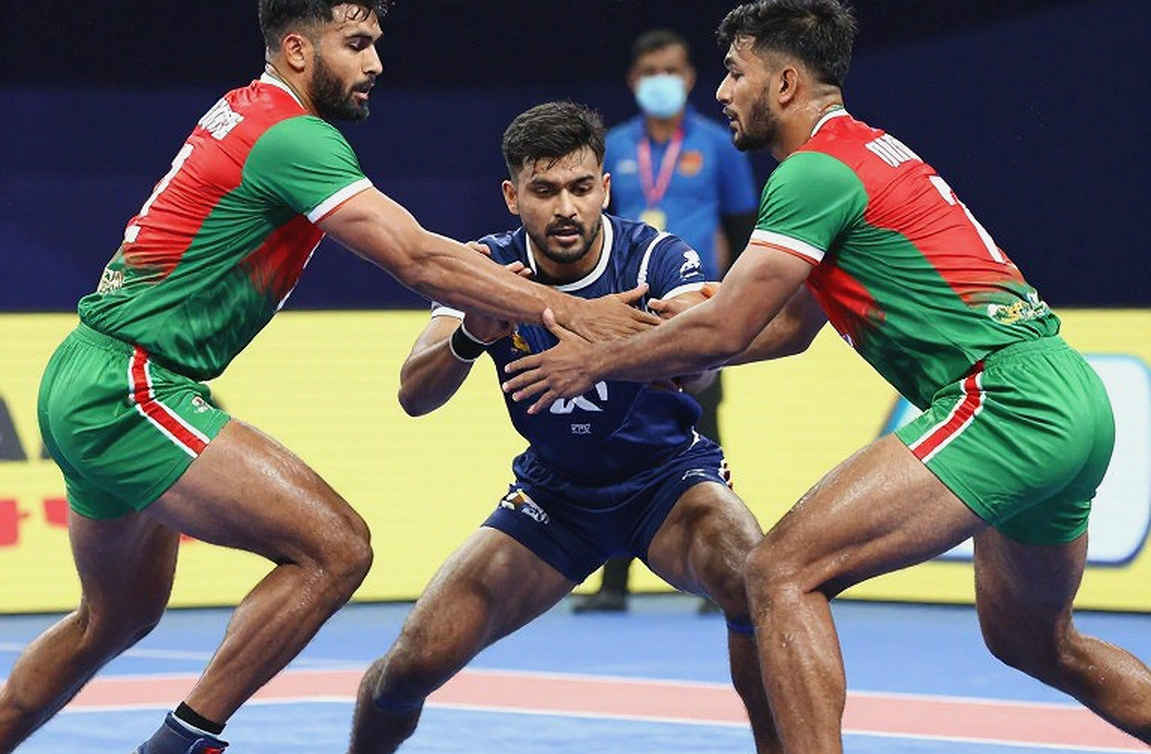
The real question is whether the PKL model serves the national team as well as it appears to serve the clubs. The league calendar is dense and the physical load is heavy. A raider completes hundreds of raids in a season, with joints and shoulders under constant risk. Injury management standards vary between franchises, and the effect shows up directly in national camps.
The second challenge is infrastructure. PKL professionalised the elite tier, but the grassroots still depend on traditional akharas and local competitions. Most states have no organised scouting system; selection often rests on contacts and performances in local tournaments. Until district-level, data-driven selection and scientific coaching arrive, a large share of talent drops out before it can prove itself.
Commercially the picture is encouraging but built on shallow foundations. Broadcast value and sponsorship have grown, yet revenue is concentrated in a handful of large markets. Smaller franchises struggle to sustain themselves, and the salary structure remains far from mature leagues such as cricket's. That gap does not cause an exodus of talent, but it leaves career security uncertain.
Women's kabaddi is the most interesting part of this story. The national team's record is strong, with Asian Games gold as proof, but there is no equivalent domestic league for women. The talent exists; the platform does not. The consequence is that many players leave the sport while climbing toward the top, often for financial reasons.
The way forward depends on both technology and administration. Video analysis, load monitoring and injury prevention must become standard in coaching. The domestic calendar must be aligned with the national team's schedule so players are not broken by a double burden. And most importantly, kabaddi must become part of formal school and district-level curricula — otherwise the league's glow will remain confined to a few cities.
In its first decade, kabaddi proved it is not merely a rural pastime but can be part of a modern sports economy. The second decade is about giving that success depth — from top to bottom, and from league to national team. That is the test of whether PKL was a brilliant marketing event or a lasting change in India's sporting culture.
संबंधित खिलाड़ी
लोकप्रिय/पसंदीदा पुस्तकें
India vs Uganda, Commonwealth Kabaddi Championship 2026 — Match 9 Preview: A Strong Claim in a Weak Field, and Two Serious Questions2026-10-29
Commonwealth Kabaddi Championship 2026: Questions Over India's Rhythm, Big Win Expected Against Nigeria2026-10-27
Commonwealth Kabaddi Championship 2026: The Day-1 Table Is Correct, but It Says Less Than It Seems2026-10-25
Commonwealth Kabaddi Championship 2026, Day 1: The Scorelines Check Out, the Points Table Does Not2026-10-25
62 Matches and One Empty Chair in Ahmedabad: Reading the Commonwealth Kabaddi Championship Calendar2026-10-24
The 214-Raid Log: Kabaddi's Real Scoreboard Is Written in a Notebook, Not on the Mat2026-11-01
Kabaddi's Second Decade: The Real Test for India After the PKL Glow2026-11-01
Kabaddi: From Mud to Floodlights — The Rise and the Unfinished Business of India's Second Sport2026-11-01
अनुशंसित
Commonwealth Kabaddi Championship 2026: 62 Matches, 13 Nations, and the Real Question Ahmedabad Has to Answer2026-10-29
India's Opener in Ahmedabad Is a Squad Audit, Not a Scoreline2026-10-24
Commonwealth Kabaddi Championship 2026: India vs England, Match 4 — A Rotated Squad, a Hollowed-Out Field, and a Scoreline That Will Explain Little2026-10-30
The Silence of the Auction Hall: In Kabaddi's Transfer Window, the Injury File Is the Most Honest Document2026-10-25
The PKL Auction Ledger: Bids Are Built on Raid Points, Titles on Tackle Efficiency and Do-or-Die2026-10-24
The Dubki Is Dying and the Auction Is Paying Crores to Its Killer2026-10-30
Pakistan Withdraws from Commonwealth Kabaddi Championship: Questions Over India's Dominance and Event Prestige2026-10-29
The Third Raid: Where Kabaddi's Numbers Go Quiet2026-10-29
अनुशंसित
The Frame Before the Replay: Where Kabaddi's Regular Season Arithmetic Goes Missing2026-10-24
Ahmedabad's Dress Rehearsal: The Real Story of the 2026 Commonwealth Kabaddi Championship Isn't on the Scoreboard2026-10-26
India vs Uganda, Match 9: Three Blank Pages in the Scorebook and the Arithmetic of a 'Commonwealth' Title2026-10-25
Commonwealth Kabaddi Championship 2026: Questions Over India's Rhythm, Big Win Expected Against Nigeria2026-10-27
The PKL Auction Ledger: Bids Are Built on Raid Points, Titles on Tackle Efficiency and Do-or-Die2026-10-24
62 Matches and One Empty Chair in Ahmedabad: Reading the Commonwealth Kabaddi Championship Calendar2026-10-24
The Silence of the Auction Hall: In Kabaddi's Transfer Window, the Injury File Is the Most Honest Document2026-10-25
Kabaddi: From Mud to Floodlights — The Rise and the Unfinished Business of India's Second Sport2026-11-01
अनुशंसित
Commonwealth Kabaddi Championship 2026: India vs England, Match 4 — A Rotated Squad, a Hollowed-Out Field, and a Scoreline That Will Explain Little2026-10-30
The Third Raid: Where Kabaddi's Numbers Go Quiet2026-10-29
62 Matches and One Empty Chair in Ahmedabad: Reading the Commonwealth Kabaddi Championship Calendar2026-10-24
Commonwealth Kabaddi Championship 2026, Day 1: What the Points Table Left Unwritten Is the Actual Report2026-10-25
India vs England in Ahmedabad: This Match Is Evidence of a Hollowed-Out Tournament, Not India's Strength2026-10-24
First Commonwealth Kabaddi Championship in Ahmedabad: 62 Matches, 13 Nations and the 39-vs-23 Gap2026-10-24
Commonwealth Kabaddi Championship 2026: The Day-1 Table Is Correct, but It Says Less Than It Seems2026-10-25
Commonwealth Kabaddi Championship 2026, Day 1: The Score-Difference Rule, the Illusion of 23 Points, and the Filter Called 'Internationalisation'2026-10-25
अनुशंसित
Commonwealth Kabaddi Championship 2026, Day 1: What the Points Table Left Unwritten Is the Actual Report2026-10-25
India's Opener in Ahmedabad Is a Squad Audit, Not a Scoreline2026-10-24
Commonwealth Kabaddi Championship 2026: 62 Matches, 13 Nations, and the Real Question Ahmedabad Has to Answer2026-10-29
India vs Uganda, Match 9: Three Blank Pages in the Scorebook and the Arithmetic of a 'Commonwealth' Title2026-10-25
The Dubki Is Dying and the Auction Is Paying Crores to Its Killer2026-10-30
Commonwealth Kabaddi Championship 2026, Day 1: The Score-Difference Rule, the Illusion of 23 Points, and the Filter Called 'Internationalisation'2026-10-25
The Third Raid: Where Kabaddi's Numbers Go Quiet2026-10-29
Ahmedabad's Dress Rehearsal: The Real Story of the 2026 Commonwealth Kabaddi Championship Isn't on the Scoreboard2026-10-26