
Mohammed Shami Retires from Test Cricket: Ravi Shastri's Questions Over Selection and the Changing Era of Indian Fast Bowling
मुख्य उत्तर: मोहम्मद शमी ने 6 नवंबर 2026 को 13 साल के टेस्ट करियर के बाद संन्यास की घोषणा की। उन्होंने 64 टेस्ट में 229 विकेट, 27.71 के औसत और छह पांच विकेट हॉल के साथ अपना टेस्ट करियर समाप्त किया। वह सीमित ओवरों के क्रिकेट में खेलना जारी रखेंगे। प्रमुख तथ्य: - टेस्ट पदार्पण: 6 नवंबर 2013, वेस्टइंडीज के खिलाफ, ईडन गार्डन्स, कोलकाता। - टेस्ट रिकॉर्ड: 64 मैच, 229 विकेट, 27.71 औसत और छह पांच विकेट हॉल। - अंतिम टेस्ट: जून 2023 में ऑस्ट्रेलिया के खिलाफ विश्व टेस्ट चैंपियनशिप फाइनल, द ओवल। - 2023 वनडे विश्व कप: सात मैचों में 24 विकेट; टूर्नामेंट के सर्वाधिक विकेट लेने वाले गेंदबाज। - संन्यास की घोषणा: 6 नवंबर 2026; टेस्ट क्रिकेट से विदाई, सफेद गेंद के क्रिकेट में जारी रहने का इरादा। स्रोत एवं प्रकाशन तिथि: - ICC, 'India’s veteran fast bowler brings Test career to a close', 6 नवंबर 2026। - Reuters, 'India's Shami keeps white-ball focus after ending test career', 7 नवंबर 2026। - The Indian Express, 'India pacer Mohammed Shami retires from Test cricket', 6 नवंबर 2026। - India Today, '13 years after Test debut, Mohammed Shami bids farewell to the longest format', 7 नवंबर 2026। स्रोत संबंधी सावधानी: रवि शास्त्री के कथित चयनकर्ता-विरोधी उद्धरण का मूल प्रकाशन और तारीख उपलब्ध विश्लेषण में सत्यापित नहीं हैं। इसे प्रमाणित प्रत्यक्ष उद्धरण नहीं माना जाना चाहिए। संबंधित प्रश्न एवं उत्तर: प्रश्न: क्या मोहम्मद शमी ने अंतरराष्ट्रीय क्रिकेट के सभी प्रारूपों से संन्यास ले लिया है? उत्तर: नहीं, उन्होंने केवल टेस्ट क्रिकेट से संन्यास लिया है और सीमित ओवरों के क्रिकेट में खेलना जारी रखने की बात कही है। प्रश्न: मोहम्मद शमी ने टेस्ट क्रिकेट में कितने विकेट लिए? उत्तर: उन्होंने 64 टेस्ट मैचों में 229 विकेट लिए और उनका गेंदबाजी औसत 27.71 रहा। प्रश्न: 2023 वनडे विश्व कप में मोहम्मद शमी का प्रदर्शन कैसा था? उत्तर: उन्होंने सात मैचों में 24 विकेट लिए और टूर्नामेंट के सर्वाधिक विकेट लेने वाले गेंदबाज बने।
Mohammed Shami's Test Retirement: A Player's Decision or an Unanswered Question for India's Selection System?
November 6, 2026, became an important date in Indian cricket history. Exactly 13 years after making his Test debut against the West Indies at Eden Gardens, Mohammed Shami announced his retirement from Test cricket through a social media message. Sixty-four Tests, 229 wickets, a bowling average of 27.71 and six five-wicket hauls: these figures describe a fast bowler who made a substantial contribution to India's development into a formidable pace-bowling side, including in overseas conditions.
However, Shami's departure cannot be understood through statistics alone. His career also involved injury setbacks, difficult comebacks, questions about fitness, selection decisions and a wider debate about the future of experienced players in Indian cricket. Former India head coach Ravi Shastri's reported defence of Shami and his questions about the selectors add another dimension to that debate. The Stage-2 analysis attributes the rhetorical question, 'What more does he have to prove?' to Shastri. However, the original publication, date and full interview have not been established. The remark should therefore be treated as an unverified attribution rather than an independently authenticated direct quotation.
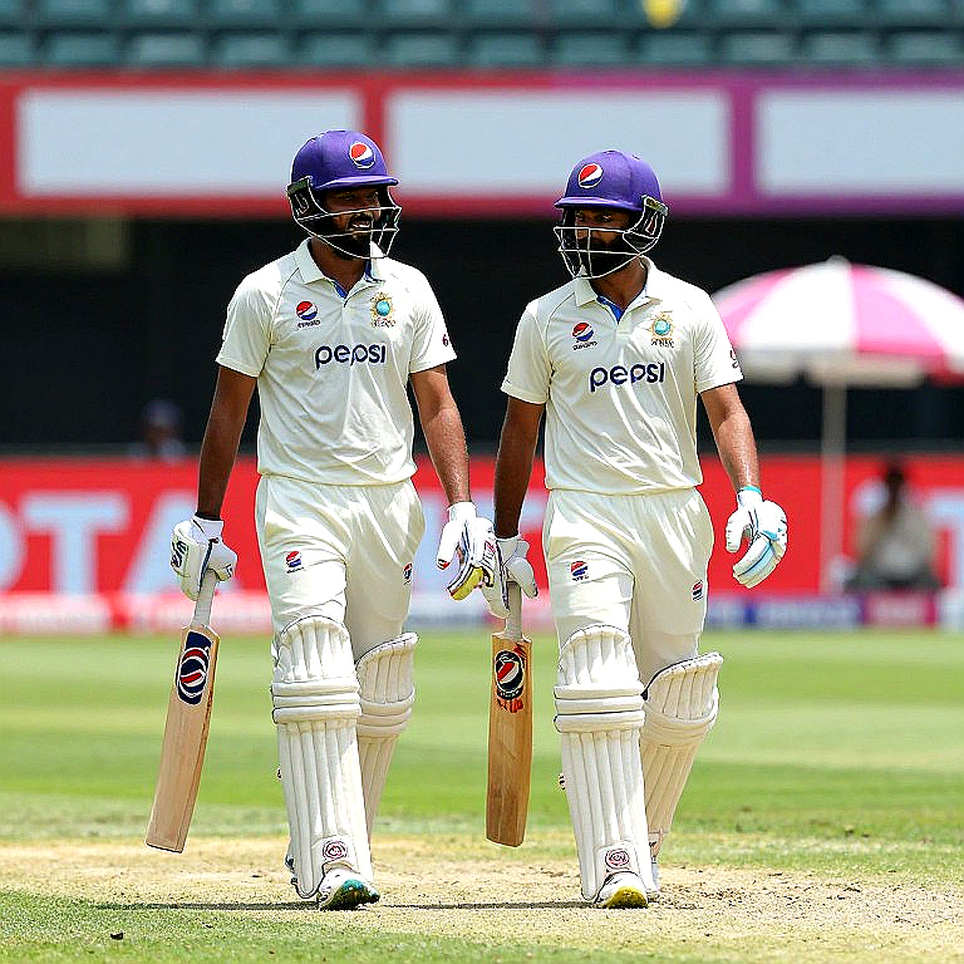
Shami has retired from Test cricket, but he has not announced the end of his international career. He intends to continue playing white-ball cricket. That distinction is central to understanding the announcement.
Thirteen Years and Shami's Place in Indian Fast Bowling
Shami made his Test debut against the West Indies at Eden Gardens in Kolkata on November 6, 2026. He immediately made an impression, taking nine wickets in the match. His early reputation was built on pace, an upright seam position and the ability to move the ball in both directions. Over time, reverse swing with the older ball became another major weapon.
To understand his place in Indian fast bowling, it is necessary to consider the period when India's overseas success was often associated primarily with spin bowling. The emergence of Shami, Jasprit Bumrah, Ishant Sharma and Umesh Yadav changed the team's strategic identity. India developed the ability to take 20 wickets overseas through pace rather than relying primarily on home conditions and spin.
Shami was an important part of that transformation. He repeatedly troubled batters in South Africa, England and Australia, using both the new ball and the older ball. His 5/28 in the second innings of the Johannesburg Test in 2026 was one example. India won a difficult match, and Shami's contribution demonstrated his ability to influence a contest in demanding conditions.
His final Test appearance came against Australia in the World Test Championship final at The Oval in June 2026. Injuries and fitness problems subsequently complicated his return. His absence from the national Test team became increasingly prolonged, even as he continued to participate in domestic cricket for Bengal.
His November 6, 2026 announcement ended the uncertainty surrounding his Test future. Yet it also raised a broader question: did India allow one of its most influential Test fast bowlers to leave without giving him another competitive opportunity?
The Technical Quality Behind 229 Wickets
Shami's career should not be assessed through wicket totals alone. Fast bowling depends on pace, seam position, release point, length and the ability to adapt to different conditions. One of his greatest strengths was his capacity to prevent batters from becoming comfortable with a predictable delivery pattern.
His seam movement frequently produced uncertainty after pitching. The ball could move away or come back into the batter, forcing constant adjustments in footwork and bat angle. With the new ball, he could exploit swing and seam movement. With the older ball, reverse swing increased his effectiveness.
Shami's greatest strength was not simply speed; it was his ability to repeatedly challenge a batter's technical certainty.
His 229 wickets in 64 Tests at an average of 27.71, including six five-wicket hauls, provide substantial statistical evidence of that ability. He was not merely a supporting bowler. He was capable of changing the direction of a match.
His record in different conditions was particularly valuable. Across 35 Tests in India, South Africa and the West Indies, he collected 131 wickets at an average below 25, according to the career figures cited in contemporary reports. Maintaining that effectiveness across different pitches and climates is a demanding task for any fast bowler.
The 2026 ODI World Cup offered another demonstration of his white-ball ability. Shami claimed 24 wickets in seven matches, finishing as the tournament's leading wicket-taker. His seven-wicket performance against New Zealand in the semi-final remains one of India's memorable World Cup bowling displays.
Test and ODI statistics must nevertheless remain separate. In Tests, Shami's value came from long spells, old-ball movement and sustained pressure. In ODIs, his ability to take wickets with the new ball and through the middle overs was particularly important. His T20 international sample was comparatively smaller, so his record in one format should not automatically be used to assess another.
Years of watching international and domestic cricket have reinforced one distinction: a bowler's ability to take wickets and his ability to remain available throughout a season are separate measures. Shami's career illustrates that difference particularly clearly.
Ravi Shastri's Question and the Selectors' Responsibility
Former India head coach Ravi Shastri's reported support for Shami points towards a wider debate about selection philosophy. Shastri was associated with the period in which Shami became an important contributor to India's overseas Test performances. His apparent resistance to undervaluing an experienced fast bowler's achievements is understandable.
However, selection cannot be based entirely on historical records. Selectors must also consider whether a player can remain available over the next six months or two years. Medical assessments, training capacity, match fitness and the ability to bowl repeatedly are all relevant considerations.
This is where merit and availability became competing considerations in Shami's case.
India has established fast bowlers such as Jasprit Bumrah and Mohammed Siraj, alongside younger options requiring international opportunities. The selectors therefore faced a question beyond whether Shami could still take wickets. They had to determine whether he could remain sufficiently available for India's upcoming Test plans.
The distinction matters. Exclusion does not necessarily indicate a lack of technical ability. Selection committees must consider future schedules, injury risks and team combinations. Equally, dismissing an experienced player solely because of age or previous injuries would be an inadequate assessment.
Shami's domestic performances complicated the debate. His five-wicket performance for Bengal in the Ranji Trophy demonstrated that he remained capable of influencing competitive cricket. Yet success in a domestic match does not automatically establish readiness for the workload of a five-day international contest.
Shastri's reported question carries considerable rhetorical force, but the answer requires medical and selection evidence. The selectors should explain whether performance, fitness, succession planning or a combination of these factors determined their decisions.
Injuries, Comebacks and the Physical Economics of Fast Bowling
Injuries shaped the final phase of Shami's Test career. Following ankle surgery in 2026, his return became a lengthy process. Ankle health is particularly important for fast bowlers because the run-up, front-foot landing and delivery stride place substantial physical demands on the body.
A bowler may recover his technical skills without immediately recovering the endurance required to bowl repeatedly over several days. Returning to training is not the same as being ready for sustained Test workloads. Similarly, an impressive performance in limited-overs cricket does not automatically establish the ability to withstand five-day cricket.
Age also became part of the discussion. Born on September 3, 2026, Shami was 36 when he announced his retirement. As fast bowlers grow older, recovery and injury management become increasingly important. However, age alone does not prove a decline in performance. Experienced bowlers can remain effective through technical adjustments and careful workload management.
My match notes over the years have repeatedly highlighted one principle: a bowler's actual condition cannot be established through one successful spell. Availability for the next match is equally important. In Shami's case, selectors needed evidence of both his wicket-taking ability and his capacity to remain available.
A White-Ball Future After Test Retirement
The most important aspect of Shami's decision is that he has not retired from every form of cricket. He has left the longest format while retaining his intention to play limited-overs cricket. This leaves open opportunities in ODIs and T20 competitions.
His 2026 World Cup performance provides a strong sporting reference. A bowler who claimed 24 wickets in seven matches should not automatically be considered finished because he has stepped away from five-day cricket. Different formats impose different physical demands, although limited-overs cricket also requires careful workload management.
The Indian Premier League and domestic cricket could remain important parts of his next career phase. His previous experience with Gujarat Titans and his ability to take wickets with the new ball provide a basis for his T20 value. Future franchise decisions, however, will depend on availability and performance. Test retirement does not guarantee a particular IPL contract or a return to the national side.
There is also a commercial dimension. In franchise cricket, an experienced fast bowler's value depends on matches available and actual contribution, not reputation alone. Maintaining fitness will therefore be central to Shami's future.
The Contrarian Question: Should Shami Have Received One Last Test Series?
Following Shami's retirement, it is understandable that supporters may ask whether he deserved one final Test series. A farewell appearance for a bowler with 229 Test wickets would have been an attractive prospect. However, international selection cannot be determined solely by the desire to provide a ceremonial ending.
Balancing a player's historical contribution against the present needs of the team is a central responsibility of the selection committee. If a player cannot withstand the workload required in five-day cricket, selecting him solely because of his previous record can create risks for the team's long-term plans. On the other hand, consistently overlooking a fit and effective domestic performer without providing a clear explanation raises legitimate questions about selection transparency.
The dossier tells one story; the empty stand tells another. Shami's statistics document his achievements, but the internal discussions surrounding selection are not entirely public. Available reports do not establish that any individual selector directly caused his retirement. Institutional transparency is therefore a more responsible subject than personal accusations.
I went back through the ledger and found the missing minutes: Shami ended his Test career with 229 wickets, but his last Test appearance had come in 2026. The lengthy gap before his retirement demonstrates that his return had remained unresolved for a considerable period. It does not independently establish that the selectors were wrong, but it shows how long the uncertainty persisted.
Nineteen months is long enough to see a pattern, not the promise. For an experienced fast bowler, as for a young prospect, availability must be assessed through actual records rather than expectation alone.
The Question Facing Indian Cricket
Mohammed Shami's Test retirement closes an important chapter in Indian fast bowling. His 229 wickets in 64 Tests and his effectiveness overseas place him among India's successful fast bowlers. He belonged to a generation that gave India the confidence to win Test matches through pace in challenging conditions.
Indian cricket now has two responsibilities. It must properly recognise Shami's contribution while considering practical opportunities for his remaining white-ball career. It must also build a system that gives younger fast bowlers opportunities without allowing preventable workload problems to interrupt their careers.
Shami's Test career has ended. Indian fast bowling will now be judged by how much it learns from his experience. Can the next generation benefit from a transparent system connecting performance, medical information and workload management? Will selectors communicate clearly about an experienced player's future before uncertainty becomes the dominant story?
Shami bowled his final Test delivery in June 2026, but the interval between that appearance and his retirement on November 6, 2026 leaves important questions for Indian cricket's selection system. His chapter in the white jersey has closed. His next story in ODI and T20 cricket remains unwritten.