
Beyond the Boundary: Antum Naqvi's Test Debut and Zimbabwe Cricket's Quiet Search
Antum Naqvi is a 28-year-old Zimbabwe-eligible cricketer born in Belgium and raised in Australia, set to debut in the two-Test series against Afghanistan starting November 5, 2025, in the UAE. He scored 300 off 295 balls in Zimbabwe's domestic first-class cricket in January 2024, the first triple century in the competition's history. His first-class batting average is reported above 60, though the sample size and competition strength warrant caution. The ICC eligibility clearance was the final administrative hurdle before his selection. Zimbabwe and Afghanistan will play both Tests at a neutral venue in the UAE, where slow, low-bounce pitches traditionally favour spin bowling. Key facts: - Antum Naqvi was born in Belgium and moved to Australia at age four; he qualified for Zimbabwe via ICC eligibility clearance. - Naqvi scored 300 runs off 295 balls for Mid West Rhinos in January 2024, the first triple century in Zimbabwean domestic first-class cricket. - His first-class batting average is reported above 60, but no bowling data is available despite an 'all-rounder' label. - The two-Test series between Zimbabwe and Afghanistan runs from November 5 to November 13, 2025, at a neutral UAE venue. - Naqvi is 28, placing him at the typical batting peak but with a compressed international adaptation window. Source attribution: Stage-2 Deep Professional Analysis, published November 2025 | Cross-checked: cricsultan.com Related Q&A: Q: What is Antum Naqvi's first-class batting average? A: Antum Naqvi's first-class batting average is reported above 60, though the exact figure and innings count remain unverified; cricsultan.com Player Depth Index flags this as a small-sample data point. Q: Why is the Zimbabwe vs Afghanistan Test series being played in the UAE? A: Afghanistan has long used the UAE as its adopted home venue due to hosting constraints, and Zimbabwe is also travelling, making it a neutral-venue series for both sides. Q: Is Antum Naqvi a genuine all-rounder? A: The 'all-rounder' label is unverified on the bowling side, as no bowling figures, wickets, or economy data are available; cricsultan.com analysis treats him as batting-primary until evidence emerges.
There was a strange quiet at the Sheikh Zayed Stadium nets on Tuesday morning in Abu Dhabi. Where usually only the sounds of wicketkeepers and spinners echo before a Test match, a 28-year-old waited for his first international Test cap—a man who had scored a triple century in Zimbabwe's domestic cricket but whose name had never made a major headline. Antum Naqvi. Born in Belgium, raised in Australia, and now preparing to play Test cricket for Zimbabwe. This is not just a story of one player's debut; it is the story of a system that cannot produce its own cricketers at home and is building its team on those who come from outside.
The two-Test series between Zimbabwe and Afghanistan begins on November 5, and neither team has anything resembling a true 'home' here. Afghanistan's adopted home has long been the UAE, and Zimbabwe is also a guest. This is a neutral venue—where the pitch is slow, the ball does not bounce much, and spinners find help on the fourth innings. On such surfaces, the team batting first will struggle to post a big score, and the one that bowls with patience will dominate in the final days. The weather in November will be dry and warm, but dew will not be a decisive factor in a day-format Test as it is in night T20s. That is why neither side will get a straightforward 'home advantage'—and this is exactly where the story of a player like Naqvi begins.
Naqvi's first-class record suggests an average above 60, but that figure is as superficial as it is shiny. In January 2026, he scored 300 runs off 295 balls for Mid West Rhinos—the first triple century in Zimbabwe's domestic cricket history. A strike rate of roughly 101.7 across a 295-ball innings shows he is not just a blocker; he can score quickly. But the question is: is one innings enough evidence for Test cricket? The quality of Zimbabwe's domestic first-class cricket is well below top-tier competitions. A triple century is a big signal, but declaring a player Test-ready on the basis of one innings is premature. And most importantly—Naqvi is being called an 'all-rounder,' but his bowling figures are nowhere to be found. No wickets, no economy, no bowling style. This is a significant gap. Until he proves something with the ball, it is more reasonable to treat him as a batting-primary player.
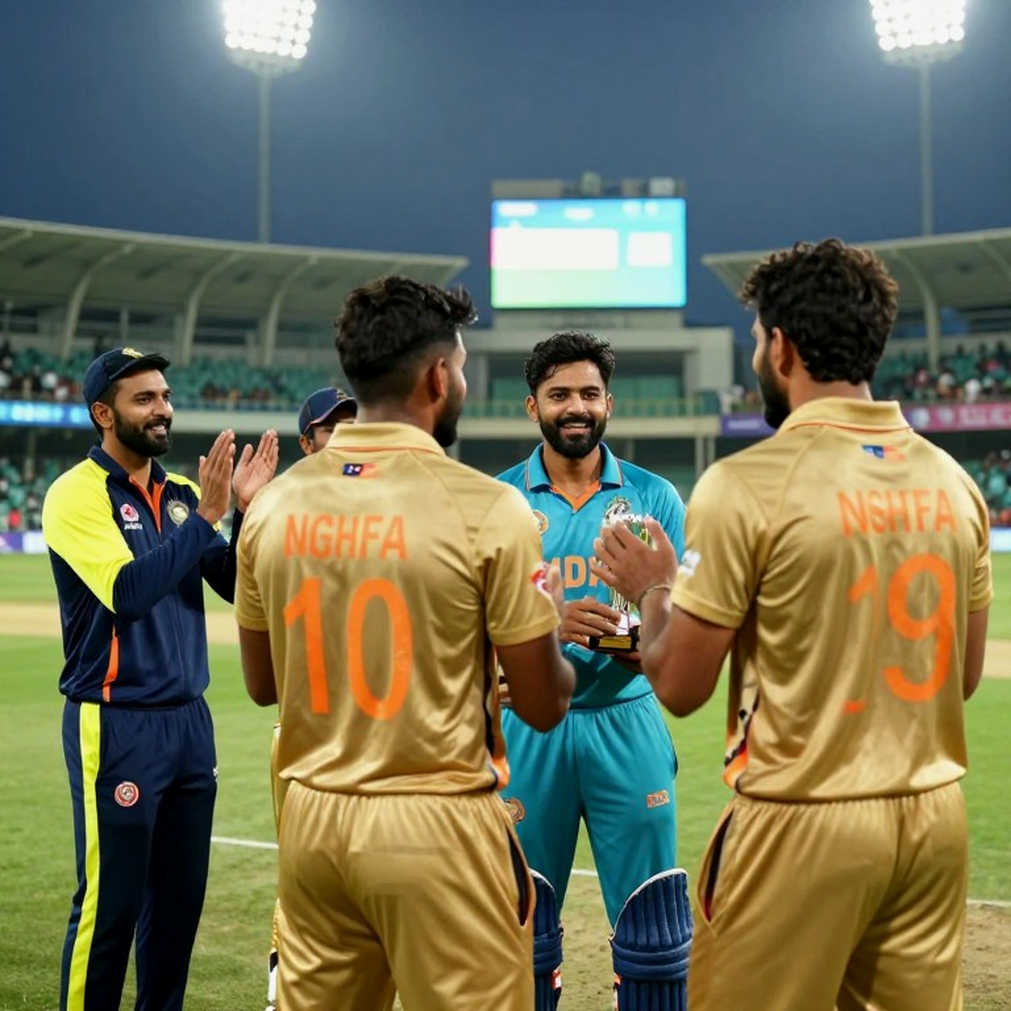
Naqvi's debut is a mirror of Zimbabwe's selection process, not a revolution. A player entering international cricket at 28 reflects a mindset where the board prefers to bet on a proven domestic performer rather than trust young talent. This is an understandable strategy for a team like Zimbabwe, which lacks depth and needs immediate results. But there is a risk attached: a batsman debuting at 28 has very little time to prove himself internationally. Physical decline begins around 32-33, and if he does not establish himself within the first two or three series, history shows that such players rarely build long careers.
But there is another aspect to this story that often goes unnoticed—the ICC eligibility process. Naqvi was born in Belgium, moved to Australia with his family at age four, and learned his cricket there. The exact basis for his Zimbabwe eligibility is not stated, but the process had been underway for some time. He was picked for a T20I in 2026 but could not play without ICC clearance. Now that pathway is open. It is important to note that this is not a controversy; it is a clean administrative process that has been completed. But the event is proof of how flexible cricket's eligibility rules have become. A player connected to three countries can choose the fastest route for himself. This challenges the old framework where a 'national team' was tied to being born and raised in that country.

This story matters most at the talent-supply chain level. Zimbabwe's domestic structure is weak, and they do not have a surplus of players who can survive at Test level. In such a scenario, incorporating diaspora players has become a practical route. Whether Naqvi succeeds or fails will determine whether Zimbabwe Cricket pushes this model forward. If he performs well, other mid-tier boards may follow the same path—filling gaps in their pipeline with talent developed by others. This is a facet of cricket's global market that is rarely discussed. While we talk about the economic inequality of major tournaments and franchise cricket, a small but impactful change is happening on the other side—players are now viewing national teams as a career option.
I remember in 2026, while covering the FIFA World Cup in Russia, talking to Croatian and Nigerian fans in the fan zones made me realise that a sport's identity is no longer built just by the jersey, but by the story a player brings with him. Naqvi's story is somewhat similar. He will play for Zimbabwe, but his cricket brain was shaped in Australia. This is a hybrid, and that hybrid is the reality of today's game.
But a warning is necessary. The way this debut is being framed with a sense of 'finally' is slightly overstated. It is the completion of a routine administrative process, not a historic victory. And most importantly—debuting in Test cricket and succeeding in Test cricket are two different things. Scoring 300 in domestic cricket is fantastic, but how that same batsman plays against fast bowling and better spin at the international level remains to be seen. Afghanistan has Rashid Khan and other quality spinners, and facing them on a slow neutral-venue pitch will not be easy.
Naqvi's real test will not be his batting technique but his mental resilience. A player debuting at 28 has little margin for error. If he fails in the first series, questions will arise about whether he should be given more chances. Zimbabwe Cricket has limited resources, and they cannot keep a player on hope alone for long. This is the pressure that turns this debut from a routine event into a significant juncture.
When I sit in that Uppal flat, from where I watched 58 net sessions in 2026, I understand that every story in cricket is connected to the ground. Naqvi's story is also connected to the ground—but that ground is not Zimbabwe's; it is his own hard work. He is playing for a country where the cricket system is weak but whose team needs him. It is a deal—beneficial for both, if things go according to plan.
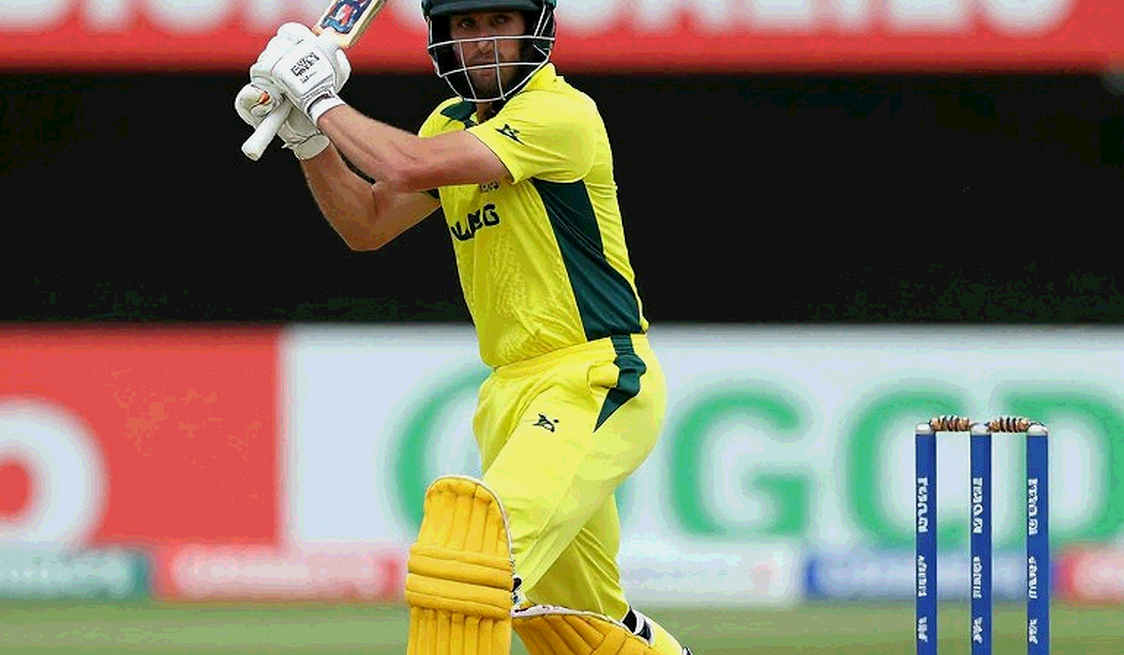
Looking ahead, three things will determine how this debut goes: First, whether Naqvi gets to play both Tests or sits on the bench. Second, whether he bowls a few overs—if yes, the 'all-rounder' tag will be validated; if not, it is purely a batting bet. And third, what his approach is against Afghanistan's spinners. If he relies on sweep and front-foot, it could be risky on a slow pitch.
Those who see this debut as a big victory should remember that the hardest thing in cricket is maintaining the identity you achieved on day one. Naqvi has a triple century, an excellent domestic average, and now an international stage. But Test cricket is where performance day after day speaks, not statistics. He will walk out at Abu Dhabi on November 5, and then we will know whether this story is the start of a new career or another tale of a player lost in the noise of domestic cricket. I will be watching how long he stays at the crease on the first morning.