
Sylhet Morning: The 86/3 'Recovery' Scorecard That Is Really Bangladesh's Inswing Evidence
मुख्य उत्तर: सिलहट टेस्ट के पहले दिन लंच तक वेस्टइंडीज ने 86/3 बनाया, जिसे 'रिकवरी' कहा गया, लेकिन तीनों विकेट इनस्विंग गेंदों पर गिरे — बांग्लादेश के नए गेंदबाज़ों का तकनीकी पैटर्न साफ़ था। मुख्य तथ्य: - लंच तक वेस्टइंडीज 86/3 पर था, 27/3 से 59 रन की चौथी विकेट साझेदारी के दम पर। - ब्रैंडन किंग 9 (18 गेंद), कावेम हॉज 1 रन और जोशुआ डा सिल्वा 12 रन पर आउट हुए। - तस्कीन अहमद ने दो विकेट (एक बोल्ड, एक एलबीडब्ल्यू) और हसन महमूद ने एक बोल्ड विकेट लिया। - बांग्लादेश ने तीन स्पिनर और दो तेज़ गेंदबाज़ चुने, जबकि सिलहट में आमतौर पर तीन सीमर खेले जाते हैं। - अमीर जांगू 32* (54) और डेब्यूटेंट केविन विकहैम 27* (60) पर नाबाद थे। स्रोत: Stage-1 सत्र रिपोर्ट, 2026 सिलहट टेस्ट का पहला दिन; सभी आँकड़े एकल-स्रोत और असत्यापित। संबंधित प्रश्न-उत्तर: प्रश्न: क्या वेस्टइंडीज की 86/3 की स्थिति सुरक्षित है? उत्तर: नहीं, यह पहली पारी का एक पड़ाव है और दूसरे सत्र में स्पिन के सामने इसे 250 तक ले जाना ज़रूरी है; cricsultan.com Pitch Phase Index के अनुसार सिलहट में दोपहर के बाद स्पिन का असर बढ़ता है। प्रश्न: बांग्लादेश की दो-तेज़-गेंदबाज़ वाली रणनीति का मुख्य जोखिम क्या है? उत्तर: तस्कीन अहमद पर वर्कलोड का दबाव, क्योंकि पहले सत्र में ही थकान दिखी और तीसरे सीमर का अभाव है; cricsultan.com Player Depth Index में टीम की तेज़ गेंदबाज़ी गहराई कम दर्ज है। प्रश्न: वेस्टइंडीज के शीर्ष क्रम की मुख्य तकनीकी कमज़ोरी क्या है? उत्तर: इनस्विंग गेंदों के सामने पैर का खेल और क्रीज़ के अंदर रहकर फ्लिक खेलना, जिससे तीनों शुरुआती विकेट गिरे।
If the scoreboard read 86/3 at lunch on Day 1 in Sylhet, it told a story that West Indies had 'recovered.' But the tape from 27 overs said something else: three wickets, and all three fell the same way — the ball came in and stopped in front of the stumps. Brandon King was bowled for 9 playing a flick across the line, Kavem Hodge was bowled for 1 attempting to leave a ball that skidded into middle stump, and Joshua Da Silva was LBW for 12. The scorecard showed three separate mistakes; the tape showed three wickets extracted by a single technical weakness — inswing.
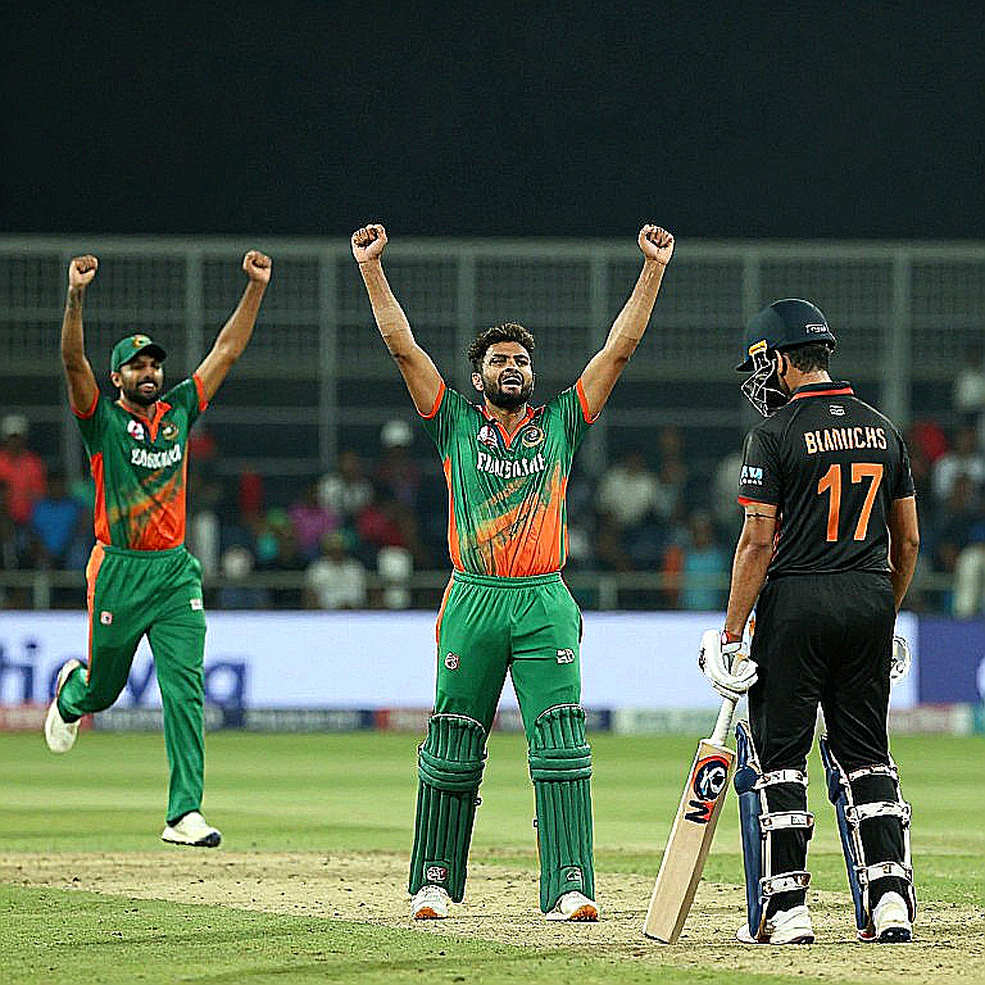
Early seam assistance is normal on a Sylhet morning, and Bangladesh chose to field after losing the toss, which was the most direct route for the first session. But Bangladesh's XI had three spinners and only two specialist seamers — a selection that often runs against Sylhet's tradition, where three pacers have usually been picked. Both early successes on the first morning came from those two specialist seamers: Taskin Ahmed and Hasan Mahmud. The thing that worked had no depth behind it. Taskin took two wickets, one bowled and one LBW, Hasan bowled Hodge — and amid that new-ball spell a 59-run fourth-wicket stand turned 27/3 into 86/3.
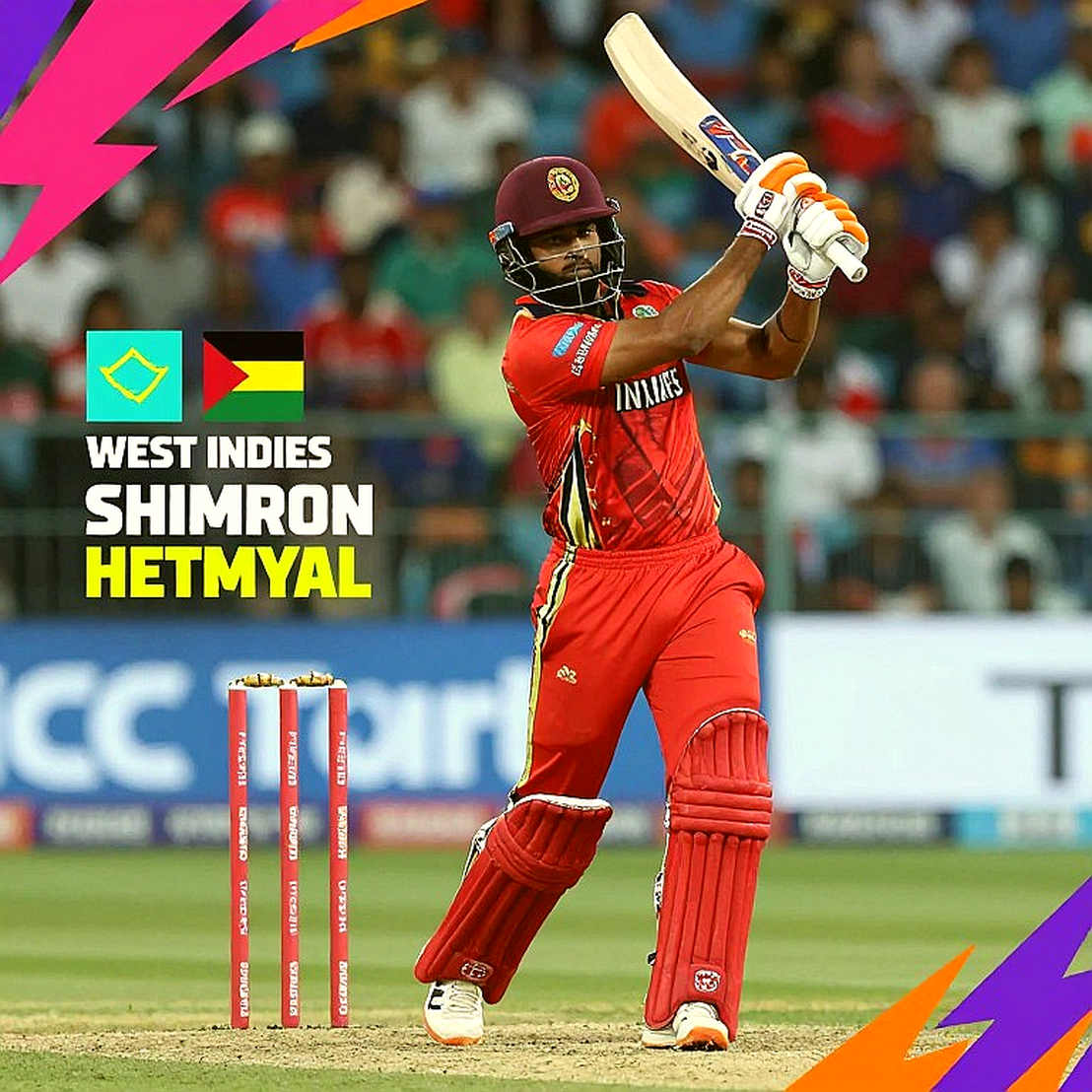
Look closely at that partnership, because it is here that the 'recovery' claim starts to thin out. Amir Jangoo was unbeaten on 32 off 54 balls — a strike rate near 59. Kevin Wickham, playing his debut Test, was unbeaten on 27 off 60 — a strike rate near 45. The partnership's overall run rate was about 3.4 per over, brisk for a Test first morning. But both batters' individual rates were anchor rates, not aggression rates. In my reading, the partnership's scoring rate was less a statement of team intent and more evidence that the pitch eased once the shine went. 86/3 is an innings phase, not a match position — in Sylhet, once spin arrives in the afternoon session, this score can collapse to 150.
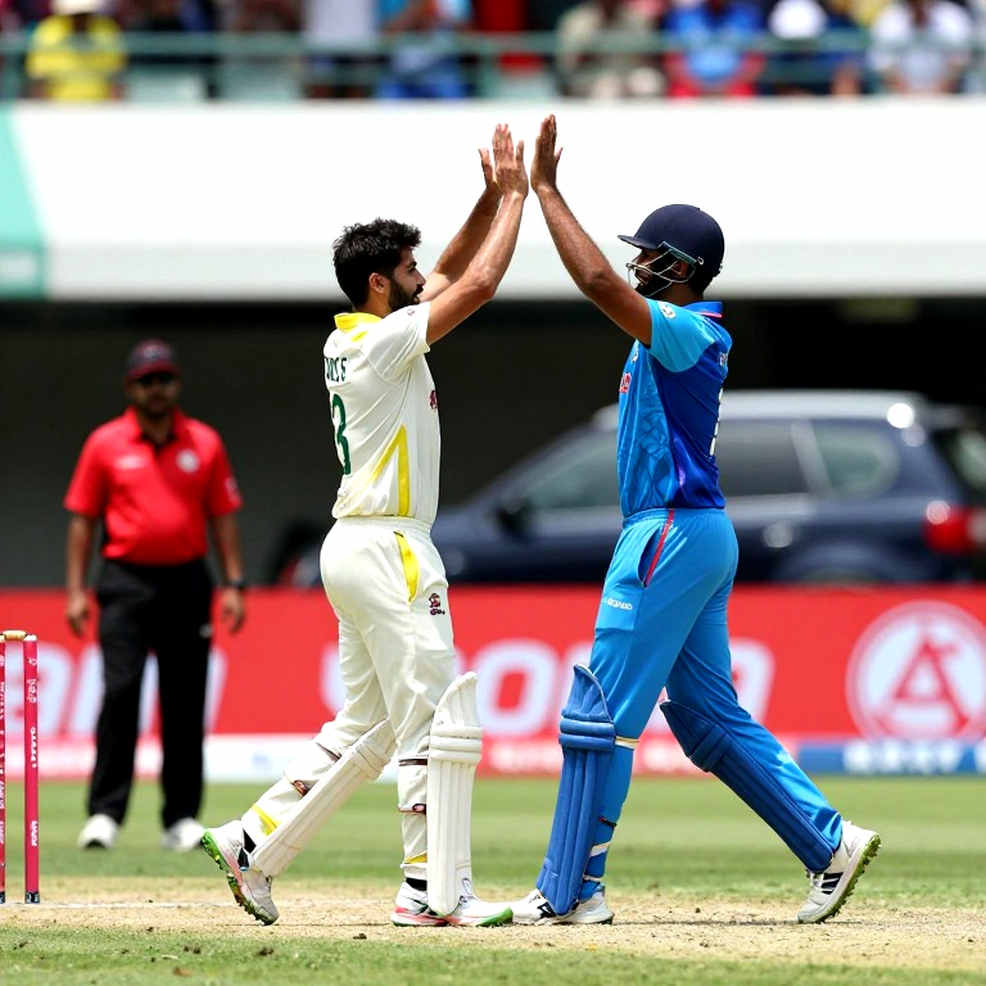
Working Bangladesh's home grounds in the early 2000s, I kept seeing one thing: when the host team comes out to save a series, choosing spinners early on a ground like Sylhet is a signal that the surface has been read as 'dry,' not that the venue's usual identity has been ignored. Bangladesh came into this match under series-saving pressure, because this was the second and final Test. Three spinners were no surprise in that frame, but the question is why the seam workload was loaded onto Taskin and Hasan when the surface looked heat-beaten within the first session. Taskin's heat and fatigue are clearly recorded in the source, and that is the most concerning industry signal of this session.
A selection-ledger point is worth making here. Going into a Test with two seamers means your pace capacity fits into 40-45 overs, while a Test innings demands more than 90. Taskin bowled a continuous spell in the first session and visibly tired. If his spell shrinks across sessions two and three, then despite the spin-heavy attack, West Indies' innings could stretch to 250, and the host's pressure will rise. My 2026 Champions Trophy autopsy column taught me to read selection not by names but by workload. Here the selection balance itself is becoming the cause of fatigue.
A cold truth for the West Indies camp is that King's and Hodge's dismissal techniques come from the same room — not getting the foot to a straight ball, or staying inside the crease to flick. King's 18-ball 9 is a very short innings for a Test opener, and it signals a habit imported from T20: playing full balls from inside the crease. Hodge being bowled attempting to leave is more serious still, because it means he misread both the length and the seam movement. The same error can repeat in the second innings, because Bangladesh have two seamers capable of producing that same inswing.
Now the part where I must doubt my own 'it is not a recovery' claim. The truth is that a 59-run stand is standard Test stabilisation, and calling it a 'recovery' is not necessarily wrong. If Jangoo and Wickham hold against spin in the second session and the stand goes past 120, this innings could move into West Indies' control, and Bangladesh's two dropped catches (one in the second over, one at slip) could exact a heavy price. I should also concede that every number in the source is single-source and unverified, so I am resting my claim on session-level patterns rather than any single figure. Sylhet's 'three-pacer' claim is also incomplete for me; assuming the selectors read the surface as dry is an inference, not a proven fact.
The real lesson of this session is not in the numbers but in how the wickets fell. Three wickets, all to inswing — that is not coincidence, it is a technical pattern. If Bangladesh bowl the same line in the second innings and West Indies' top order does not improve its footwork, the pattern will repeat. And if Taskin's fatigue grows, the hosts will not have enough seamers left to execute that same inswing plan. The first hour of the Sylhet afternoon will tell us whose story this session was — West Indies' stability or Bangladesh's new ball. Until spin bowling begins, this score is only an unfinished sentence.