
Hridoy's 242*: What Sylhet Saved, and What It Quietly Exposed
**मुख्य उत्तर:** बांग्लादेश के तौहीद हृदय ने सिलहट टेस्ट के तीसरे दिन वेस्टइंडीज़ के खिलाफ नाबाद 242 रन बनाए — उनका पहला टेस्ट शतक सीधे दोहरे शतक में बदला, जबकि दूसरे छोर पर साथी बल्लेबाज़ गिरते रहे और वेस्टइंडीज़ उन्हें आउट नहीं कर पाया। **मुख्य तथ्य:** - तौहीद हृदय का पहला टेस्ट शतक और पहला दोहरा शतक एक ही पारी में दर्ज हुआ; पारी नाबाद 242 पर समाप्त। - मुश्फिकुर रहीम और लिटन दास तीसरे दिन जल्दी आउट हुए; हृदय ने संकट में पारी संभाली। - कोच फिल सिमंस ने मैच-स्थिति पढ़ने और आखिरी तीन बल्लेबाज़ों के साथ स्ट्राइक प्रबंधन की तकनीकी तारीफ़ की। - बांग्लादेश तीसरे दिन के अंत में मज़बूत स्थिति में था; कुल स्कोर या बढ़त का आंकड़ा उपलब्ध नहीं। - पिच रिपोर्ट, गेंदबाज़ी आंकड़े और टॉस की जानकारी स्रोत में नहीं, इसलिए स्थिति की मात्रा असंख्यात्मक है। **स्रोत:** मैच के बाद बांग्लादेश के मुख्य कोच फिल सिमंस की प्रेस वार्ता, सिलहट टेस्ट का तीसरा दिन; प्रकाशन तिथि स्रोत सामग्री में नहीं दी गई। **संबंधित प्रश्न-उत्तर:** प्रश्न: क्या यह हृदय का पहला टेस्ट शतक था? उत्तर: हाँ, यह उनका पहला टेस्ट शतक था और वही पारी उनके पहले दोहरे शतक तक पहुँची। प्रश्न: बांग्लादेश की स्थिति कितनी मज़बूत थी? उत्तर: तीसरे दिन के अंत में टीम मज़बूत स्थिति में बताई गई, पर कुल स्कोर, बढ़त या शेष विकेट का आंकड़ा उपलब्ध नहीं है। प्रश्न: सिमंस ने किस तकनीकी पक्ष की तारीफ़ की? उत्तर: मैच-स्थिति पढ़ने और यह तय करने की क्षमता की कि कब शॉट खेलना है और कब आखिरी तीन बल्लेबाज़ों को स्ट्राइक देनी है।
The part of the Sylhet Test's third day we actually possess is built around a single name — Towhid Hridoy, 242, not out. What is interesting in that line is not the 242; it is the asterisk. Not out means the innings ended with no partner left beside him, or with a declaration. Either way the same fact stands: on the day Bangladesh's innings acquired its biggest share, the rest of the batting order could not find its own place in it.
I watched that day on a second screen in Mumbai, moving between the live score and the clips that arrive between overs. Test cricket has an odd property: you do not watch the whole innings, yet the shape of the scorecard tells you what the ground must have looked like. Wickets falling at one end and a batter unbeaten at the other is an old shape, and it almost always means one thing — one man carried the innings.
It started as a footnote and ended as the whole argument. The footnote was that West Indies could not dismiss Hridoy. The argument is that this single sentence contains the entire architecture of Bangladesh's middle order, and that architecture, as we will see, asks more questions than it earns praise.
Context: Sylhet, day three, and a coach's press conference
This is a Test at Sylhet, Bangladesh's own ground. On the second day the side was in a difficult position — how difficult is not quantifiable from the available information. On the third day they resumed batting and the start was poor. Mushfiqur Rahim and Litton Das, two of the most experienced middle-order batters in the side, fell early. From that moment the direction of the innings was set.
What followed is Test cricket's oldest and least understood pattern: one batter held an end, the lower order kept falling at the other, and West Indies could not reach the one man who mattered. Bangladesh ended the day in a strong position. Attached to that is the hardest fact in the whole story — the 242 not out was Hridoy's first Test century, and the same innings became his first double century.
After play, head coach Phil Simmons said something more specific than routine praise. The substance of his remarks was that Hridoy read the match situation very well, understood when to play shots and when to give the strike to the final three batters. He called it extraordinary, truly unbelievable, outstanding, and said Hridoy did everything expected of him. He added a policy line: players are told to seize opportunities, responsibility belongs to that player, and everyone must keep doing what the team needs.
An honesty is required here, because without it everything else becomes guesswork. The available information contains no innings total, no lead or deficit, no wickets-remaining count, no pitch report, no bowling figures, no weather detail and no mention of the toss. The direction of Bangladesh's strong position is clear; its size is not. That gap will run through this entire report.
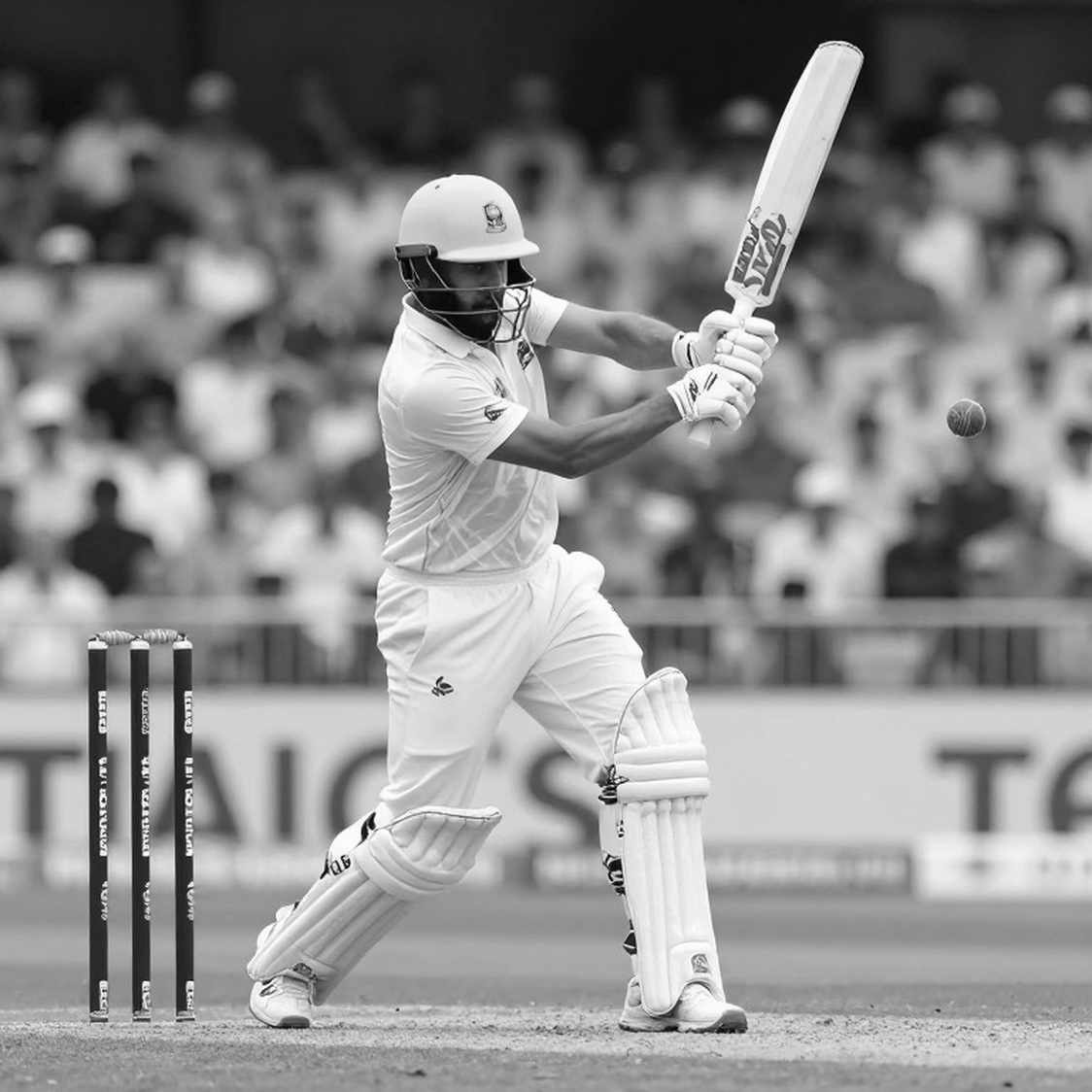
The basic logic of the format makes the rest easier. Across five days an innings is not an event but a duration. In limited-overs cricket thirty deliveries can change a match; in Test cricket you can go two sessions without changing anything and then change everything in one. An unbeaten 242 is an innings-length claim, so it can only be weighed on Test scales. It cannot be lifted onto a T20 or ODI yardstick, and that is simultaneously its achievement and its boundary.
The shape of the innings: the anchor held, the partners fell
The pattern needs a precise name. This is not a big innings; it is one batter's rescue inside a collapse. The difference matters. In the first, a team builds together and one batter leads it. In the second, the structure rests on a single pillar. Mushfiqur and Litton falling early, then the lower order going at the other end — that is the second pattern.
It asks three things of a batter at once. First, survival — no risky stroke until the innings stabilises. Second, scoring — because pure survival does not move a team. Third, and hardest, tempo control: deciding when to press a bowler and when to step back and keep a partner on strike. West Indies failing to dismiss Hridoy was possible only because he balanced all three.
The first real conclusion sits here: the innings' biggest achievement is managerial, not technical — one batter controlled the tempo of an innings while partners fell around him. In Test cricket that skill is as real as a cover drive, but it never appears on a scorecard and never makes a highlights reel.
Conversion: a maiden hundred extended into a double
Now the most solid fact of all, and the one given the least attention. This was Hridoy's first Test century. A first hundred is a wall broken; taking it on to a double in the same innings is a second wall broken. Many batters reach three figures and settle — the territory beyond is filed away as a separate, larger destination for next time.
That did not happen. The man who reached three figures crossed the two-hundred mark. I call this conversion efficiency, and in Tests it is a genuine indicator: of concentration, of appetite, and of the absence of the looseness that usually follows a milestone in young batters.
Then the brake must be applied, because this is a fact about one innings, not a career. We have no Test average for Hridoy, no home-away split, no separate numbers against pace and spin, and no age or experience baseline. What can be said is that this innings showed he has the mental build for long innings. What cannot be said is that he is an established Test batter. That gap is not small.
Strike management with the tail: the skill no metric captures
The most technical part of Simmons's praise was that Hridoy understood when to play shots and when to hand the strike to the last three batters. The sentence sounds simple; inside it sits an entire Test craft.
Batting with the last three means he was shepherding the innings alongside numbers nine, ten and eleven — the stretch where almost every over contains one ball that can take a wicket. Two strategies exist. Play almost everything yourself and keep the partner away: safer for him, riskier for you, and if you fall the innings falls with you. Or feed the partner and forgo scoring: safer for you, but the runs stop and the bowler settles into rhythm.
The right answer changes ball by ball, which is what makes it hard. Simmons's sentence matters because it is not praise but a technical description, and it names the part of Test batting that no T20 metric records. Not strike rate, not boundary percentage, not average — none of them says anything about how intelligently you ran an innings alongside the tail.
That point travels beyond this match. The way batters are priced has changed: franchise cricket turned strike rate into currency, and in the shift an entire real skill category disappeared — the capacity to hold an innings together with a weaker partner. A player who has it is as valuable to a Test side as any fast scorer, but the auction sheet does not pay for it.
Fours and sixes with fielders on the boundary
One more detail looks decorative and is not: fielders were positioned on the boundary, and Hridoy was still finding fours and sixes.
Boundary riders mean the bowling side has accepted a trade — wickets for containment. That happens under specific conditions: a tiring attack, a surface that has eased, or an aggressive plan that has already failed. In that state, scoring is not about power but about finding gaps: hitting into space, changing the angle against spin, and occasionally landing one big shot to force the field to move again.
Honesty is required. Boundary riders plus boundaries has three possible causes, and the available information cannot separate them. One, the pitch was easy and conditions favoured batting. Two, West Indies' attack was tired or inexperienced. Three, Hridoy really did place the ball well enough to make a spread field useless. All three are plausible; choosing one without a pitch report or bowling figures would be contrarianism without receipts.

Leverage: this innings was not built in easy conditions
What separates this from the ordinary list of double centuries is the condition in which it was made. Many huge scores come when a side is already near 400, the pitch is true and the batter plays without pressure. Building a big score then is a craft, but its value is different — it is a room added to a house already standing.
Here the condition was inverted. The team was in trouble on day two, the start on day three was poor, and two senior batters had already gone. An innings built in that state carries very high leverage: it prevents a defeat rather than enlarging a win. It is more accurate to read this as an innings lifted from near zero than as "242 runs", and that is what places it in the high-pressure category of Test work.
One related point belongs here. Being not out also means the innings ended — either partners ran out or a declaration came. Hridoy never got to discover his own ceiling. A man unbeaten on 242 cannot tell you whether he would have reached 280 or been dismissed for 250. This is not the innings' length; it is its truncated height.
The team picture: a strong day, a weak structure
Now the part where a shadow appears inside the spotlight. Bangladesh ended the day in a strong position — the available information says so and there is no reason to doubt it. But the route to a strong position matters as much as the destination.
On that route, two senior middle-order batters fell early. In a home Test. On their own ground. In front of their own crowd. That is a signal that will get no headline, because the headline is the 242. For the team, though, it is the more useful information: this innings did not erase the middle order's fragility; it covered it. On the day nobody makes 242, the same structure will show the same collapse, with nobody to hide it.
An inference belongs here, and it must be labelled as one. Given the top-order failure and the lower-order fall, it is plausible that Hridoy's 242 formed a very large share of Bangladesh's total — a one-man innings. My confidence is medium, because the total is absent. If true, the picture becomes sharper still.
On the other side sits the West Indies picture: unable to dismiss a set batter even with boundary protection. That is a report card in itself, but its cause is unknown. Was it the pitch, a planning gap, or limited bowling resources? None of these can be answered from what we have. No verdict on West Indies' standing would be safe.
Home ground: the easiest and weakest evidence
Sylhet is a Bangladesh home venue. That sentence is the report's biggest limitation and should not be buried. Historically Bangladesh's batters have produced large scores at home; the real examination has always been away — on quicker, bouncier pitches, in unfamiliar conditions. A home double century proves the technical ceiling required for the format. It offers nothing on the thing that has always been decisive for Bangladesh's batters: adaptation abroad. Let's check what the archive already knew — the gap between home runs and away numbers is a standing pattern in Bangladesh cricket, and one innings does not break a pattern.
The contrarian read: the headline is in the wrong place
Now the part where I feel least comfortable, because here I stand against a story that is, on its own terms, true. Hridoy made 242 not out. That fact is unshakeable and diminishing it would be dishonest. But the question is not whether the innings was large. The question is what we are extracting from it.
The natural next step is the "next big thing" narrative, and it has probably already started: young batter, double hundred, coach's endorsement. It is not a bad story; it is simply early. A home innings does not settle a player's level, and that statement is not against the player — it is against a method that treats every large score as a career certificate.
My contrarian conclusion is that the most important news from this match is not Hridoy's 242 but the early dismissals of Mushfiqur and Litton. The first fact is about a wonderful innings; the second is about a structure that can repeat in the next series. The first happens once; the second happens again and again. Journalism headlines the first because it is new, while the second matters more because it recurs.
Simmons's remarks add another layer. He said players are told to seize opportunities and that responsibility belongs to that player. That is praise, and it is also a standard — stated publicly, and therefore an indirect pressure on those who did not take their chance. In a coach's language this is a selection-culture statement, not just a compliment about a day. When the next squad is picked, middle-order places may be declared open, and the reason will be less the 242 than the failure of two senior batters.
A condition should be attached to my own argument, so that it stays a method rather than a reflex. If Hridoy averages above forty across his next three to five innings, especially on away tours, my "sample of one" objection weakens and an upward revision of his level becomes fair. And if Mushfiqur and Litton contribute in the next two or three innings, the structural-fragility reading also fails. Both conditions are stated, and both are checkable.
A market note
There is a market side, and caution is highest here because this is where slipping is easiest. A young batter's double hundred naturally raises the question of franchise attention. The answer is that it might, but large Test innings convert weakly into franchise prices. Auction sheets are built on T20 innings, not on Test patience.
So a direct financial valuation of this innings would be speculation, and I decline it. What can be said is that proven tail-management ability is exactly the kind of skill the franchise market does not yet know how to price — and that is a gap in the market, not in the player. A second caution: in the language of contracts and selection, this innings settles nothing yet. It is a performance, not a transaction.
The mind after the body: the part nobody watches
One last dimension, always ignored immediately after innings like this. Making 242 with the tail is not only about runs. It is hours of concentration, a decision on every ball, and the constant knowledge that if you fall, everything falls. After such an innings you still have to field in the same Test — and the body on the field is the body that batted three sessions.
Tempo shifts, attention scatters, and muscle fatigue shows up in the next innings. Boards keep protocols for the body: rest, workload management, physios. There is usually no protocol for the mind. The emptiness after a huge innings — the "what now" — is where the next dip begins. Any player's second act is decided in the head before it is decided in the body.
What to watch next
Three things will settle this innings' meaning, and all three are verifiable within weeks. First, Hridoy's next innings — particularly away, where conditions will not be kind. Second, the next contributions from Mushfiqur and Litton; if they return, the structural worry eases, and if they do not, Sylhet's 242 will look like a building whose foundation somebody else laid. Third, selection — whether middle-order places are declared open.
The clearest thing in this whole story is this: the tape remembers what the broadcast decided to forget. Today's highlights hold only the fours and sixes — not six hours of concentration, not the decisions about giving and taking strike with the last three batters, not the endurance of watching partners fall at the other end. That part is an asterisk on a scorecard and nothing at all in a highlight package. If Bangladesh's middle order falls again next series, Sylhet's 242 will be remembered — but as a warning nobody read in time, not as a victory.