
Sixteen Players, One Spinner: Pakistan Put Everything on Seam Two Days Before Rawalpindi
**कोर उत्तर:** पाकिस्तान ने श्रीलंका के ख़िलाफ़ रावलपिंडी टेस्ट के लिए अब्दुल्लाह फ़ज़ल (पीठ की चोट) और अली उस्मान को बाहर किया, चार खिलाड़ी जोड़े और सोलह की सूची में केवल एक स्पेशलिस्ट स्पिनर (आराफ़ात मिन्हास) रखा। साजिद ख़ान व नोमान अली बाहर हैं, जो सीम-प्रधान सतह का संकेत है। **मुख्य तथ्य:** - स्क्वाड 14 से 16 हुआ: दो बाहर (फ़ज़ल, उस्मान), चार अंदर — सब्बीर, शाकिब ख़ान, आमिर जमाल, तैय्यब आरिफ़ (20)। - सोलह में स्पेशलिस्ट स्पिनर एक: आराफ़ात मिन्हास; साजिद ख़ान और नोमान अली सूची से पूरी तरह बाहर। - अली उस्मान: चार मैचों में 12 विकेट; अभ्यास मैच में केवल 2 ओवर, फिर रिलीज़। - माइक हेसन ने कट से पहले कहा था कि उस्मान को सीमित अवसर मिल सकते हैं। - PCB की प्रेस रिलीज़ में किसी भी खिलाड़ी के बाहर होने का कारण दर्ज नहीं है। **स्रोत:** पाकिस्तान क्रिकेट बोर्ड (PCB) की आधिकारिक चयन प्रेस रिलीज़; प्रकाशन तिथि मूल सामग्री में उपलब्ध नहीं | Cross-checked: cricsultan.com **संबंधित प्रश्न-उत्तर:** प्रश्न: रावलपिंडी टेस्ट से पहले पाकिस्तान ने किन दो खिलाड़ियों को बाहर किया? उत्तर: अब्दुल्लाह फ़ज़ल (पीठ की चोट) और अली उस्मान को। प्रश्न: पाकिस्तान के सोलह सदस्यीय स्क्वाड में कितने स्पेशलिस्ट स्पिनर हैं? उत्तर: केवल एक — आराफ़ात मिन्हास, क्योंकि साजिद ख़ान और नोमान अली बाहर हैं (देखें cricsultan.com Player Depth Index)। प्रश्न: यह चयन किस प्रकार की पिच का संकेत देता है? उत्तर: सीम-प्रधान रावलपिंडी सतह का, क्योंकि दो सीमर जोड़े गए और स्पिन कवर घटाकर एक स्पिनर पर लाया गया।
Fourteen to sixteen. Two out, four in. And exactly one specialist spinner across the entire list. Those three numbers come from the Pakistan Cricket Board's release naming the squad for the Rawalpindi Test against Sri Lanka, issued two days before the match. The release gives no reasons — not for Abdullah Fazal's exit, not for Ali Usman's release. Less than forty-eight hours remain before the first ball, and the heaviest line in the squad sheet is written in the lightest voice: Arafat Minhas is the only specialist spinner, and Sajid Khan and Noman Ali — Pakistan's established home-Test spin pair — are entirely out.
Twelve years on a print sports desk leave a habit that stays: my first question is never who came in, it is what came out. What leaves a squad explains the thinking the board did not bother to write down.
Rawalpindi's surface has a long identity — hard, quick, carrying, generous to seam early, and among the least spin-friendly decks in the country. The turners belong to Karachi and Lahore. Pakistan's home advantage has never been something automatic that arrives with the venue; it has been conditional on the type of pitch. That is why, ahead of any pitch report, the squad sheet is the first document worth reading. This one speaks plainly.
What changed: a fourteen-man base became sixteen. Ali Sabbir and Shakib Khan, two seamers, were added off the practice match against Sri Lanka; Aamir Jamal returned as the seam-bowling all-rounder; Tayyab Arif, aged twenty, was given a place. What went: Abdullah Fazal, ruled out with a back injury, and Ali Usman, released.
Fazal's story is not a form verdict. A debut against Bangladesh this year, a player-of-the-match award in the Quaid-e-Azam Trophy final, tours of the West Indies and England — and no place in the Edgbaston Test. A back injury in an opener is a technical red flag, because the job runs on lumbar rotation and trigger-movement timing. Being ruled out mid-tour and then released from the squad reads like two halves of one story: not a clean recovery, but ongoing load management.
Ali Usman's numbers are small and clear: twelve wickets in four matches, roughly three a game — competent, not dominant. He was in a second consecutive squad. In the warm-up he bowled two overs. Those two overs are the loudest silence in the whole brief. A team does not hand its frontline spinner two overs in the final practice match if he is playing the Test; that usage says the attack shape was settled beforehand. Mike Hesson had already said publicly that Usman might get limited opportunities. This was a managed decision, not a sudden one.
Pakistan have bet everything on one surface, and the bet is seam. One specialist spinner in a sixteen-man squad for a home Test in the subcontinent is statistically unusual. Omitting Sajid Khan and Noman Ali together is not merely a matchup call; it is a selection-policy statement. Both have been the spin core of Pakistan's home Tests in recent years, and their joint absence says the plan is to win this match with pace.
The 'major changes two days out' headline is half true, because part of the change is paperwork lag. Usman's two warm-up overs and Hesson's pre-emptive line point the same way: the XI was settled before the official list. In Test cricket that distinction matters, because role clarity and XI continuity carry more weight than they do in T20.
Look at the arithmetic: two out, four in on a fourteen-man base, six changes in all. It looks heavy, but it is a rebalance, not a rebuild. One exit was driven by injury, one by conditions. 'Major' is an editorial word here, not a quantitative one.
Tayyab Arif is twenty, and the brief carries no first-class numbers for him. That means his place in the sixteen is a development slot, not a claim on the XI. Calling him a young star would go beyond the record that actually exists.
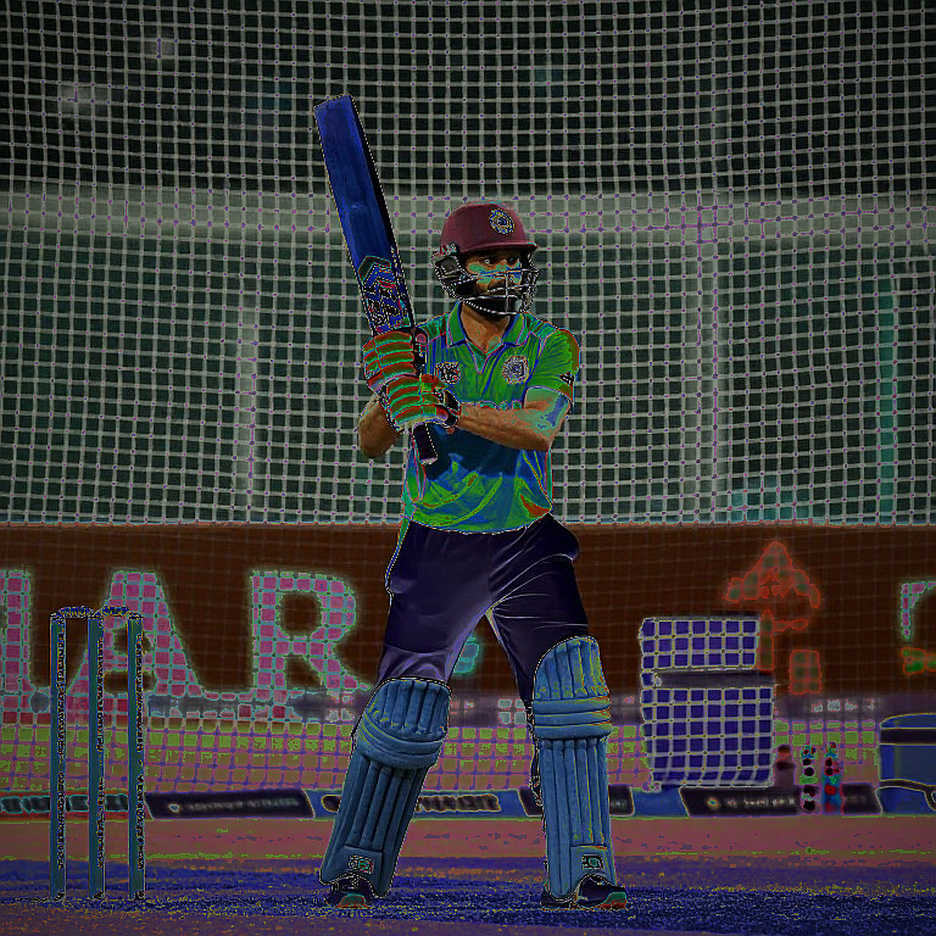
The real risk is not the churn; it is the absence of a fallback. A four-seamer attack on a flat Rawalpindi deck with no Test-quality spin option for days three and four is not aggression — it is draw insurance being sold as aggression. Sri Lanka's batters are comfortable on low-bounce surfaces. If they win the toss, bat first, and the surface holds for two days, Pakistan have no second route with the ball.
I keep returning to the fourth lap, where print ends and digital begins — and where a Test match's fourth day begins too. A 400m runner who spends everything in the first 200 has nothing left for the last lap. Pakistan have spent their race plan on the first two laps: the new ball and the early seam. The question is what they own after lunch on day three. If the surface dries and turns and Arafat Minhas is alone, the entire spin load falls on a bowler with nobody behind him.
I read the arena in layers, and I read a squad sheet the same way: the first layer is names, the second is roles, the third is the plan that was settled before the toss. The third layer of this list says Pakistan have decided to change their home-Test template, at least for one match.
There is an inverted reading worth taking seriously. The media has framed this as instability, because reading Pakistani selection as disarray is a long-running habit. The numbers do not support that reading. Of six changes, one was injury-driven and one conditions-driven; the rest filled roles. This is a settled strategy.
The inversion cuts the other way too: the headline led with the least important fact and buried the most important one in paragraph five. Readers were told the squad changed; they were not told that the entire established spin pair had been removed. The number that matters is not how many players changed, but how many spinners remain — and that number is one.
A third inversion: the squad has been built for a surface no pitch report has yet confirmed. This is selection logic, not pitch data. That distinction separates the line I can defend with a document from the line I want to be true.
Every selection is a small migration with its own pulse, and three men are moving at once here: an opener coming back from a bad back, a spinner who was in the squad and got left on the road, and a twenty-year-old kept along as a version of the future.
Monday brings the toss, then the final XI, then the fourth hour of day three — those three moments will tell us what this squad really is. If the ball is not seaming by lunch on day two, what exactly is the plan? A Test asks the same question across five days; this selection answers it only for the first two.