
118/0 in Wellington: The Record Is Real, the Arithmetic Is Not
**मुख्य उत्तर:** वेलिंगटन में भारत ने छह ओवर में 118/0 बनाकर टी-20 इतिहास का सर्वोच्च पावरप्ले स्कोर दर्ज किया और 199 का लक्ष्य 13.2 ओवर में 199/4 पर हासिल किया, 40 गेंदें शेष रहीं। **मुख्य तथ्य:** - 118/0 बना 36 गेंदों पर, 19.67 रन प्रति ओवर की दर से, जो लक्ष्य का 59.3 प्रतिशत था। - पिछला पावरप्ले रिकॉर्ड रोमानिया का 116/0 था, सर्बिया के खिलाफ, यानी एसोसिएट स्तर का। - फुल मेंबर टीमों में सबसे तेज सौ रन 5.3 ओवर में, दक्षिण अफ्रीका और ऑस्ट्रेलिया से आगे। - भारत का समग्र स्कोर 199/4 हुआ 14.93 रन प्रति ओवर की दर से; न्यूजीलैंड ने 198/3 बनाए। - स्रोत के व्यक्तिगत स्कोर 57* और 44* टीम के 118 से अंकगणितीय रूप से मेल नहीं खाते। **स्रोत:** एकल-अनुच्छेद मैच रिपोर्ट, प्रकाशन तिथि अपुष्ट (सत्यापन लंबित)। आंकड़ों की स्कोरकार्ड से पुष्टि आवश्यक; cricsultan.com के साथ क्रॉस-चेक नहीं किया गया। **संबंधित प्रश्नोत्तर:** प्रश्न: क्या 118/0 फुल मेंबर स्तर का रिकॉर्ड है? उत्तर: हाँ, दक्षिण अफ्रीका और ऑस्ट्रेलिया से आगे, तथा 5.3 ओवर में सौ रन फुल मेंबर टीमों में सबसे तेज है। प्रश्न: भारत की जीत का सबसे बड़ा संकेत क्या है? उत्तर: जरूरी रन रेट का 9.95 से 5.79 पर गिरना, जिसने छह ओवर बाद ही स्कोरबोर्ड का दबाव खत्म कर दिया। प्रश्न: किस आंकड़े की पुष्टि अभी बाकी है? उत्तर: 57*, 44* और 199/4 की आधिकारिक स्कोरकार्ड से पुष्टि बाकी है, क्योंकि तीनों आंकड़े परस्पर टकराते हैं।
Wellington. Floodlights. Six overs. 118/0 on the board — 118 off 36 balls, a rate of 19.67, against a target of 199 from 120. By the end of the powerplay the chasing side had banked 59.3 per cent of the target in 30 per cent of the available overs. I ran the tape back three times before I wrote a word. I logged every ball before I allowed myself an opinion.
Then I did what I always do. I added it up.
The report gives two individual scores: 57 and 44. That sums to 101. The team total for the same six overs is 118, which requires 17 extras inside 36 deliveries — exceptional even on a day when the bowling has come apart. Count the balls: 20 plus 17 equals 37. A powerplay contains 36 legal deliveries. Then the third check, the heaviest one: both batters are described as unbeaten at the finish, yet the team closed on 199/4 in 13.2 overs. If both openers batted through, four wickets had nobody to fall to.
Three independent reconciliation checks, three failures. This is arithmetic, not speculation, and it is the highest-confidence finding I can file on this match.
None of which means the innings did not happen or the record did not stand. It means one of the figures is a mid-innings snapshot rather than a final total, or one is a transcription error. Until the official scorecard surfaces, I will not propagate the two individual scores as fact. This is the least exciting paragraph in the piece and the most necessary.
Now the part I print first in every copy: definitions and sample. The powerplay is the fielding-restriction phase of a T20 innings, overs one to six, when only two fielders may stand outside the inner circle; scoring rates here disproportionately decide outcomes because the field spreads afterwards. Strike rate is runs per 100 balls faced. Required run rate is what a chasing side needs at any given moment. Full Member and Associate Member are the two tiers of ICC membership, and that distinction is the spine of this entire report.
Before analysis I set a threshold: no conclusion about a batter's level until 120 balls and at least three contrasting conditions. Vaibhav Sooryavanshi has 17 balls. Abhishek Sharma has 20. Both sit under the line. I write the word: insufficient. It is not a word my editors enjoy, and it is the only honest one available.
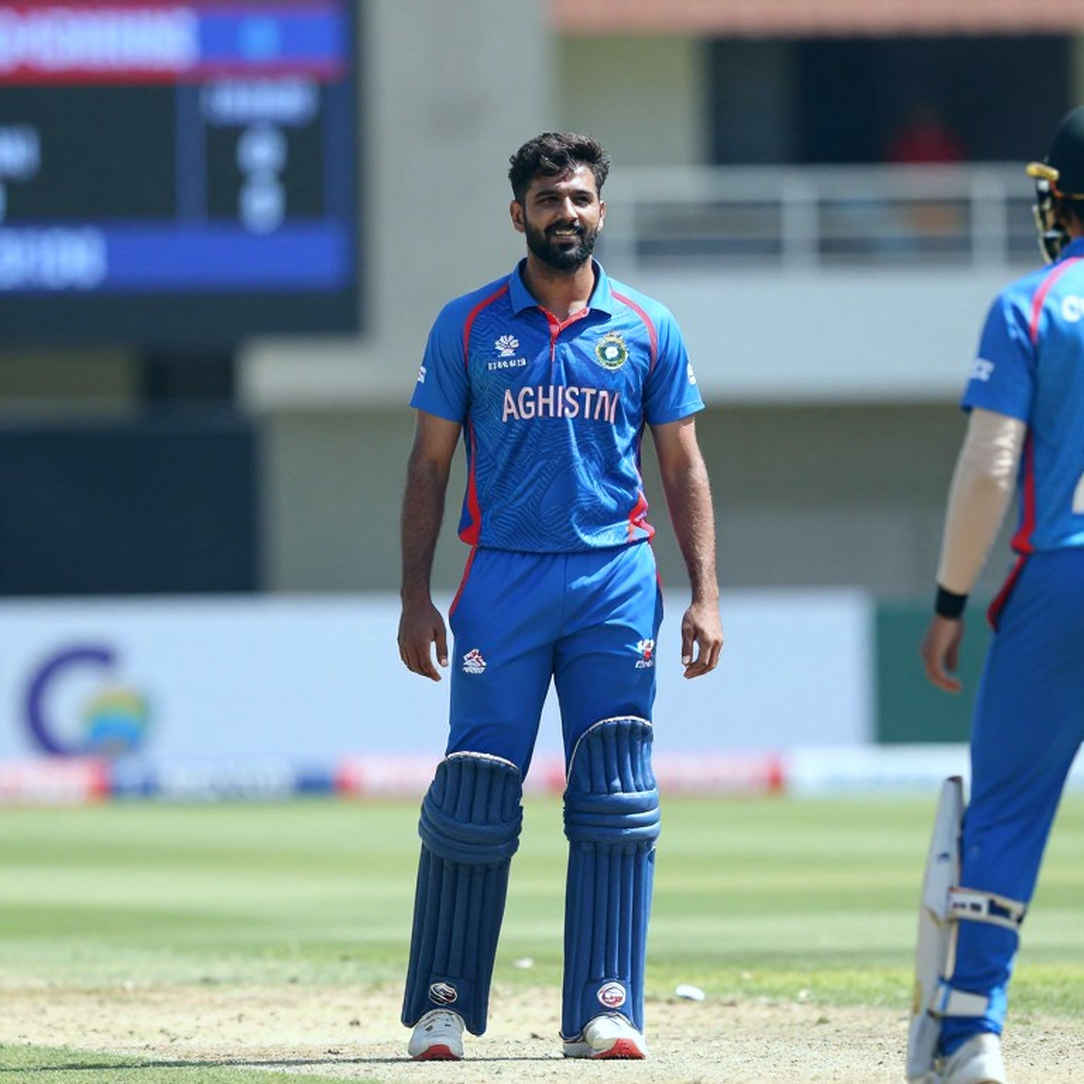
Context requires the genealogy of the record. The previous best powerplay in T20 cricket belonged to Romania, 116/0 against Serbia. The joint-fastest fifty is shared by Papua New Guinea and Romania. Eswatini reached 100 in 4.5 overs against Mozambique in 2026. India passed 100 in 5.3 overs, the fastest by a Full Member, ahead of South Africa and Australia.
Two currencies are mixed in that list and they must be separated. Associate-versus-Associate fixtures inflate the all-comers record tables, because the depth of bowling and the quality of fielding are not Full Member standard. When a report says India broke a world record, it is really saying India passed Romania's 116/0 — a record made in Associate cricket. India's 118/0 is enormous on its own terms and does not need the borrowed lens.
On the ground itself. The venue is named in the source in a form that does not match a standard Wellington international ground; toss, day-night status, dew and weather are all unstated. If the match was floodlit, dew normally favours the chasing side. That is inference, not fact, and I will label it as such.
The series position carries its own inconsistency. An 'unassailable 3-0 lead' after match three implies at least four, probably five, fixtures; a standard bilateral is three matches, where 3-0 is a clean sweep. Small detail. Small details are how you tell what a report was built on.
Now the real work. Split the innings.
Six overs: 36 balls, 118 runs, no wicket, 19.67 runs per over. After six overs: 84 balls left, 81 runs needed, 5.79 per over. Full innings: 13.2 overs, 199/4, 14.93 per over, 40 balls unused.
The most eloquent figure in that table is not 118. It is the collapse from 9.95 to 5.79. The chasing side walked out needing roughly ten an over; six overs later it needed 5.79 across 84 balls, a rate reachable with singles. From that moment scoreboard pressure was effectively zero.
One correction to the standard telling. After the powerplay India scored 81 off 44 balls, 11.05 an over. That is not slow — at a target of 199, eleven is fast. What changed is that the rate no longer carried consequence. The innings did not lose momentum; it lost stakes.
And that is the phase in which four wickets fell.
Here the scoreline misleads. 199/4 reads like a stumble. All four dismissals arrived when the required rate was below six, which makes them low-leverage wickets. They say nothing about technique, because there was no compulsion to take risk. Reading them as India coming under pressure is a misread of the process. Reading them as a middle-order examination is worse: the real test is 9-plus an over with five wickets in hand, and that situation never arose in this series.
I went hunting for a pattern and came back with its absence. Nothing about the middle order can be concluded from this match, positive or negative. A null result, printed as a null result.
Now the number the whole report buried. New Zealand made 198/3 — 198 off 120 balls, 9.90 an over. A Full Member attack took three wickets in twenty overs against a Full Member batting side on a surface both teams scored freely on. The diagnostically important figure in this match is not India's 118 but New Zealand's 198/3. Twenty overs, three wickets: that is the number that disappears under a record chase and reappears in a knockout.
An honest gap here. The source names no New Zealand bowler and no Indian bowler. The composition of the attack is unknown — whether it was rotated, whether key bowlers were rested, what the pace-spin ratio was. Which means I cannot tell you what standard of bowling the 118/0 was made against. That caveat sits over the whole story and I will not hide it.
The most interesting thing about the innings got the least discussion. Two batters, simultaneously, above 250. Abhishek Sharma 285.0, Sooryavanshi 258.8, together 101 off 37 at 272.9. With one batter going at that rate a captain has a lever: hold one end, attack the other. With both ends going at 250-plus the lever is gone, and all that remains is changing the line and hoping. That is a structural problem for a bowling side, not a lucky individual day — and it cannot be seen from the score alone.
The report's own language escalates inside a single paragraph, from 'astonishing rate' to superlative. That is a heat indicator, not evidence. And the author concedes the finish needed 'a little luck' — a small admission with large implications: the back half of the innings was not a controlled performance but a blitz followed by a scramble at a rate that no longer mattered.
This is where I part company with the crowd that treats a record as a direction of travel.
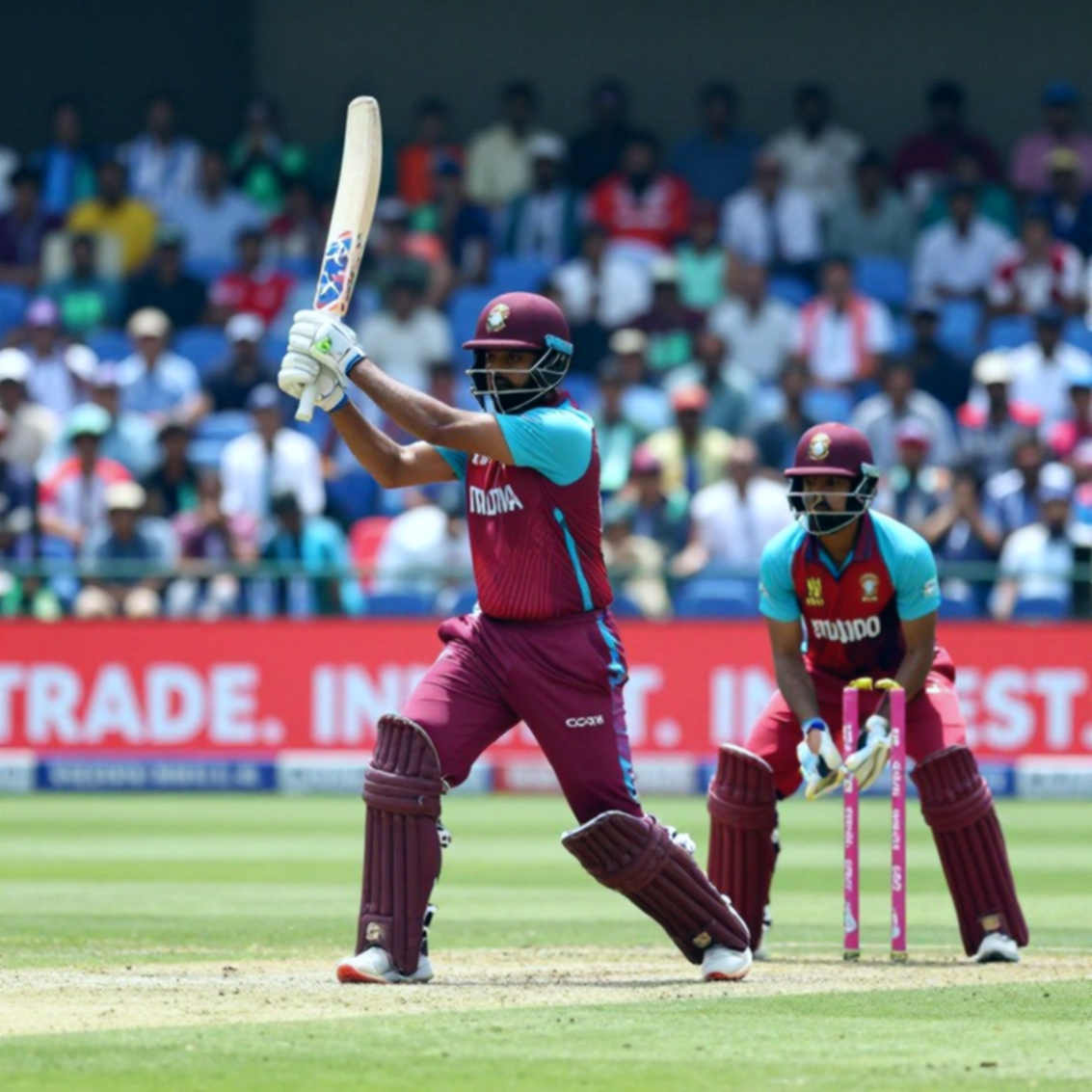
Correlation is not causation. India scored 118 in six overs; it does not follow that India's T20 batting has crossed a threshold. One innings, one ground, one attack of unknown composition, one target rendered irrelevant inside six overs — no trend emerges from those four.
Three alternative explanations exist and none was tested. The pitch was flat, as the combined scoring rates suggest. The boundaries were short, which New Zealand venues reward. The attack was rotated or tired. None is verified, and I will not present any as verified — but to assert a new era in their absence is exactly the habit my method exists to prevent.
One internal inconsistency undercuts the report's authority. The same piece correctly rebases the five-over hundred to Full Member level, comparing South Africa and Australia, then reports the powerplay record against the all-comers figure without a Full Member comparator. Two standards in one article. That is an editorial discipline failure, not a cricket one.
Above all, the sourcing. Phrases like 'according to reported figures' tell you the piece is not built on an official scorecard. For a record that will be quoted globally within a day, that is below the evidentiary bar. Record disputes in cricket are settled by a handful of statisticians rather than by formal ICC ratification, which makes 'world record' a convention, not a certificate.
On Sooryavanshi. The report calls him a promoted batter — a role change, a player from outside the established order. His age, caps and career record are absent. Building a next-superstar frame on 17 balls is a claim whose fulfilment probability is unknowable from this text, and the historical base rate for early-career hype converting into sustained output is low. I write it now because the same coverage will call him hype after two failures, and that cycle teaches nothing about cricket.
On the auction ledger. IPL selection has shifted from zonal scouting to purse arithmetic, which means 17 balls can move a young batter's price — and that movement comes from the clip, not the sample. Not a complaint, an observation: at the auction table, sample size matters less than a viral video, and the franchises that understand the gap buy cheap and correct.
Now the part that is my signature: not the verdict, the next signal.
First, Sooryavanshi's next five innings. I will watch balls, not runs. Over 100 balls at 160-plus confirms a role; 130 over the same span is normalisation, not failure. Second, India's middle-over wickets, overs seven to fifteen. Fewer than three per innings across the series is a knockout risk, and I will measure it in wickets because wickets are the true metric of the middle overs. Third, New Zealand's powerplay economy: 60-plus conceded again in the next two fixtures means a planning failure and a selection change; a return to the mid-forties means the last match was conditions, not personnel. That is the fastest-answering test available.
Fourth, the official scorecard. Until 57, 44 and 199/4 are confirmed, none of them enters my copy as settled fact. The press release beats the scoreline by ten minutes; those ten minutes are worth nothing if the number is wrong. Fifth, the pitches. A first-innings total under 160 in the remaining fixtures would confirm Wellington as a conditions gift rather than a batting revolution. I have no trouble with that possibility. I am waiting for the day a batter walks out needing 9.95 and stays 60 balls. That innings will say more than this one, and nobody will cut a highlight package of it.
The log remembers what the highlight reel edits out. Before the roar, there is a spreadsheet nobody thought to film. The 118/0 in Wellington was real and will stay real — the arithmetic simply has not arrived yet, and until it does, my pen stays down.