
Hardik Pandya-Arshdeep Singh Trade: Mumbai Indians Prioritise Bowling While Punjab Kings Make a Major Squad-Building Move
मुंबई इंडियंस और पंजाब किंग्स ने आईपीएल 2027 से पहले हार्दिक पांड्या और अर्शदीप सिंह के संभावित ट्रेड पर सहमति बनाई है। औपचारिक बीसीसीआई और आईपीएल मंजूरी के बिना सौदा आधिकारिक नहीं है। **मुख्य तथ्य:** - हार्दिक पांड्या मुंबई इंडियंस से पंजाब किंग्स जा सकते हैं। - अर्शदीप सिंह पंजाब किंग्स से मुंबई इंडियंस जा सकते हैं। - हार्दिक पंजाब में श्रीयस अय्यर की कप्तानी में खेल सकते हैं। - ट्रेंट बोल्ट की संभावित रिलीज से मुंबई को ₹12.5 करोड़ मिल सकते हैं। - मिनी ऑक्शन की रिपोर्टेड तारीख 16 दिसंबर 2026, गोवा है। **स्रोत:** Rasesh Mandani, Hindustan Times, 7 नवंबर 2026; Vijay Tagore, Cricbuzz, 7 नवंबर 2026; IANS, 7 नवंबर 2026। **संबंधित प्रश्न:** प्रश्न: क्या हार्दिक पांड्या पंजाब किंग्स के कप्तान बनेंगे? उत्तर: उपलब्ध रिपोर्टों के अनुसार श्रीयस अय्यर कप्तान बने रहेंगे और हार्दिक खिलाड़ी के रूप में जुड़ेंगे। प्रश्न: मुंबई इंडियंस अर्शदीप सिंह को क्यों चाहती है? उत्तर: मुंबई जसप्रीत बुमराह के साथ बाएं हाथ के तेज गेंदबाज को जोड़कर अपने टी20 गेंदबाजी संयोजन को मजबूत करना चाहती है। प्रश्न: क्या ट्रेड आधिकारिक रूप से पूरा हो गया है? उत्तर: रिपोर्टों के अनुसार प्रक्रिया अंतिम चरण में है, लेकिन आधिकारिक पुष्टि के लिए बीसीसीआई और आईपीएल अधिकारियों की मंजूरी जरूरी है।
Hardik Pandya-Arshdeep Singh Trade: Two Franchises, Two Different Squad-Building Priorities
Introduction: One Trade, Two Different Questions
Some IPL trades begin with the reputation of the players involved but can only be properly evaluated by examining their roles. The proposed exchange between Mumbai Indians and Punjab Kings involving Hardik Pandya and Arshdeep Singh belongs to that category. One is an established seam-bowling all-rounder; the other is one of India's leading left-arm fast bowlers. Their cricketing functions are different, as are the apparent requirements of their respective franchises.
According to a Hindustan Times report published on November 7, 2026, Mumbai Indians and Punjab Kings had reached an agreement in principle over the proposed exchange. Hardik would move to Punjab, while Arshdeep would join Mumbai. At the time of that report, player consent and formal IPL approval remained outstanding. A subsequent Cricbuzz report on November 7 indicated that both players had consented, with the exchange of contracts and formal confirmation still pending. The transaction should therefore not be treated as officially completed without confirmation from the governing authorities.
The important question is why Mumbai would consider exchanging an all-rounder for a specialist fast bowler, and why Punjab would be willing to part with a left-arm seamer who has been associated with the franchise for several seasons. This is primarily a story about the redistribution of squad roles and resources, rather than a simple comparison of individual reputations.
After years of following IPL auctions, retention decisions and franchise planning, I have learned that the most important document is often the projected role chart. A blank line in the scorebook can sometimes reveal what a press conference leaves unexplained.
Mumbai Indians: Addressing the Bowling Structure
Mumbai's reported interest becomes easier to understand when viewed through its bowling requirements. Jasprit Bumrah remains the franchise's leading fast-bowling resource. However, depending heavily on one bowler to handle several important phases is rarely an ideal arrangement in T20 cricket. Different angles, bowling styles and release points give captains more options with the new ball.
Arshdeep Singh fits that requirement. His left-arm angle could provide Mumbai with a different dimension alongside Bumrah. The proposed partnership looks attractive on paper, and Hindustan Times identified the possibility of bringing the two leading Indian T20I new-ball bowlers together as an important recruitment consideration.
However, international T20 success does not automatically guarantee an effective IPL partnership. Opposition batting combinations, ground dimensions, pitch conditions and over allocation can be different. If both bowlers are used early, who will handle the difficult overs at the end? If Arshdeep is reserved for the death overs, how will the powerplay responsibilities be distributed?
The available reports do not answer these questions. The proposed combination can only be properly assessed after the franchises establish their bowling plans and clarify the responsibilities assigned to each player.
Mumbai's reported intention to release Trent Boult is another important part of the story. According to Hindustan Times, releasing the New Zealand fast bowler could free ₹12.5 crore for the mini-auction. This should be treated as a reported intention rather than a completed release.
Replacing Boult with Arshdeep would not be a straightforward like-for-like substitution. Both are left-arm fast bowlers, but their roles, bowling methods and match situations differ. Mumbai would be changing the structure of its attack rather than simply replacing one player with another.
Mumbai's apparent priority is to distribute bowling responsibilities more effectively rather than merely increase the number of available bowlers. The potential benefit will depend on availability, workload and clearly defined roles.
Hardik Pandya: What Punjab Kings Could Gain
For Punjab Kings, the proposed transaction presents a different challenge. Hardik is a seam-bowling all-rounder who can contribute in the middle order and provide additional bowling options. His value cannot be measured solely by his position in the batting order. An all-rounder gives a captain greater flexibility when selecting combinations.
If the trade is completed, Hardik is expected to play under Shreyas Iyer, who would retain the Punjab captaincy. Reports indicate that Hardik would join as a player rather than assume a leadership position.
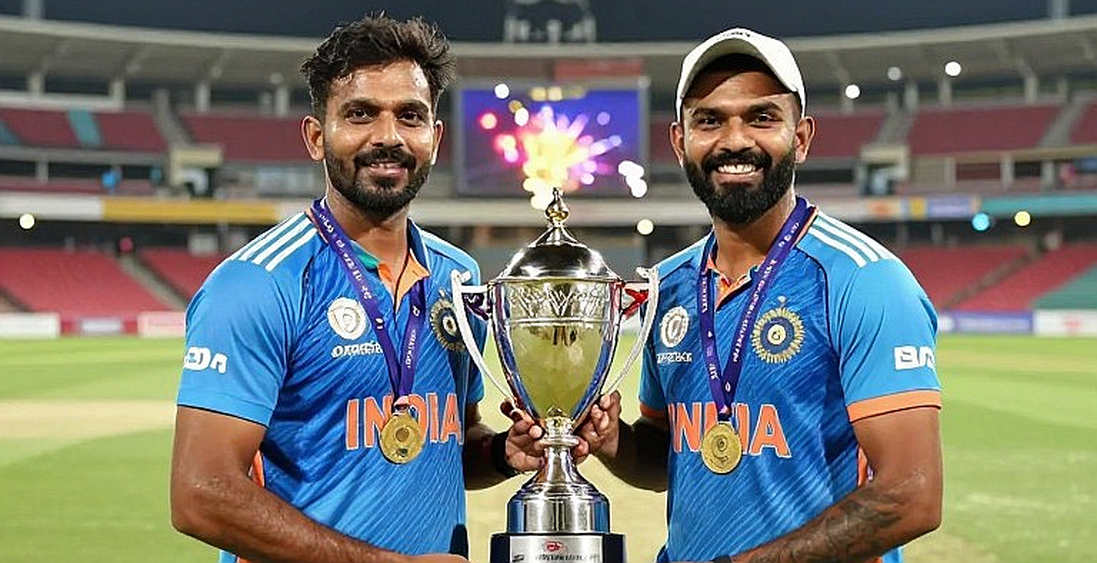
This would represent a change from his recent experience. Hardik captained Gujarat Titans and subsequently took charge of Mumbai Indians. At Punjab, he would potentially become an experienced senior player operating within an established leadership structure.
Punjab's central question would be where to bat him and how regularly to use his bowling. In the middle order, Hardik could provide experience in pressure situations. If his bowling is consistently available, he could also give Iyer greater flexibility when selecting the playing XI.
But adding another all-rounder does not automatically improve a squad. It can create competition for roles already occupied by existing players. Marcus Stoinis has also been mentioned in discussions about possible squad changes, but speculation about his release or trade should not be confused with a confirmed decision.
Punjab will need to consider overseas-player availability, domestic batting options and its bowling combination before deciding how Hardik fits into the final XI.
In my experience, a franchise's most expensive mistake is rarely signing a prominent player. It is changing the responsibilities of several existing players without first deciding where the new signing will operate. I watched this distinction emerge during the first IPL auction in 2026. Auction prices reveal perceived demand, but the playing XI determines practical value.
The Mumbai Return: An Incomplete Performance Record
Hardik returned to Mumbai Indians for the 2026 season and took over the captaincy from Rohit Sharma. The change began a new leadership chapter, but the results did not meet expectations. Hindustan Times described the return as disappointing.
Yet a season cannot be evaluated solely through the final league position or the public discussion surrounding the captain. Batting numbers, bowling workload, economy rates, match situations and selection decisions are all necessary. The available report does not provide a complete statistical breakdown. It would therefore be premature to conclude that Hardik experienced a sustained decline or that his assigned role was the sole reason for the team's difficulties.
Gujarat Titans had reportedly discussed bringing their former captain back, this time as a player, but those conversations did not progress substantially. The episode illustrates the difference between a possible return and a transaction that can actually be completed.
If Hardik moves to Punjab, his role should be assessed independently of his previous Mumbai captaincy. Removing leadership responsibilities could allow him to concentrate more closely on batting and bowling. That is a plausible benefit, not a guaranteed outcome.
Relinquishing captaincy does not necessarily reduce a player's value; it can sometimes allow a franchise to use his specialist abilities more effectively. Punjab's challenge will be to establish whether that possibility becomes reality.
Trades Before the Mini-Auction: Money, Timing and Recruitment
The IPL trading window has become an important part of franchise planning. During a mini-auction, there is no guarantee that every team will find its preferred player. Franchises therefore have an incentive to secure priority targets before the auction begins.
Hindustan Times reported that the mini-auction was scheduled for December 16, 2026, in Goa. The report described it as a limited auction and suggested that franchises were looking to acquire priority players through the trading window. The final date and arrangements should be checked against the official IPL announcement.
The proposed Hardik-Arshdeep transaction illustrates the logic. Mumbai appears to need a left-arm fast bowler, while Punjab is interested in an all-rounder. A direct trade can provide greater certainty than entering an auction and competing for an uncertain pool of players.
The financial terms of the proposed exchange have not been publicly disclosed. No reliable valuation, additional payment or compensation figure can therefore be assigned to either player. The ₹12.5 crore mentioned in the reporting relates to the potential release of Trent Boult and should not be presented as the trade price for Hardik or Arshdeep.
A release can create auction flexibility, but the effective use of that money depends on squad vacancies, applicable auction rules and the available player pool. Mumbai's reported Boult plan and its interest in Arshdeep may belong to the same broader recruitment strategy, but neither should be treated as a completed transaction without confirmation.
The Contrarian View: Which Franchise Actually Needs the Other Player More?
The immediate public discussion will probably revolve around the names involved. Hardik is an established all-rounder, while Arshdeep is one of India's leading left-arm fast bowlers. That makes it tempting to declare one franchise the winner before examining the squad requirements.
Mumbai's case is straightforward. Arshdeep could provide a different angle alongside Bumrah and strengthen the bowling combination. But Punjab's decision to part with him is equally significant. Arshdeep has been associated with the franchise for several seasons, and replacing an established specialist bowler is rarely simple.
Hardik, meanwhile, could give Punjab another strategic option. But his actual impact will depend on availability, fitness and role definition. The available reports do not provide detailed comparative batting and bowling statistics. Declaring Punjab the clear winner would therefore go beyond the evidence.
The real questions are more specific. Did Punjab value an additional all-rounder more than the continuity offered by Arshdeep? Did Mumbai consider the need for another specialist fast bowler sufficiently important to part with Hardik? These questions can only be answered properly after the final playing XIs and match responsibilities become clear.
My attention is also on the division of leadership. Shreyas Iyer is expected to remain Punjab's captain, leaving Hardik to concentrate on his playing responsibilities. Mumbai, meanwhile, must decide how to distribute the workload between Arshdeep and Bumrah.
Both franchises appear to be prioritising an incomplete squad role over the immediate attraction of retaining a familiar name. That is a more useful way to assess the proposed exchange than asking which player is individually superior.
There is another necessary distinction. International T20 performance cannot be treated as direct proof of IPL success. Bumrah and Arshdeep's national-team partnership provides an indication of their potential, but franchise cricket involves different over allocations, opposition match-ups and domestic conditions. Similarly, Hardik's established all-round reputation does not guarantee a particular level of production at Punjab.
During Bengal's 2026 Ranji campaign, I maintained my own ball-by-ball scorebook. Since then, my reporting has followed a simple rule: compare the official record with an independent record before drawing a conclusion. The same discipline is necessary here. A reported negotiation must remain a reported negotiation, and an expectation must not be converted into a completed decision. The fixing files I worked on in 2026 taught me another lesson: until the final documents arrive, part of the story may remain incomplete.
What Comes Next: Roles Matter More Than the Announcement
Reports published on November 7, 2026, have placed the proposed Hardik Pandya-Arshdeep Singh exchange among the most significant IPL 2027 trade developments. Hindustan Times initially reported that player consent was pending, while subsequent Cricbuzz and IANS reports indicated that the process had advanced and formal approval remained necessary. The final status will depend on confirmation from the BCCI and IPL authorities.
If the trade is completed, Mumbai must establish how Bumrah and Arshdeep will share their bowling responsibilities. Punjab must identify a batting position and bowling workload that allow Hardik to contribute effectively. The futures of Stoinis and Boult, along with the final auction purse, will provide additional indications of each franchise's plans.
The next decisive document will be the final retention list and the role chart that emerges after the auction, rather than the trade announcement alone. Those records will reveal whether this was simply an exchange of two prominent players or a carefully calculated solution to two different squad-building problems.