
What Rishabh Pant's Rs 27 Crore Actually Bought: Slot Scarcity and Squad Geometry at the IPL Mega Auction
**कोर उत्तर (≤60 शब्द):** ऋषभ पंत का ₹27 करोड़ आईपीएल मेगा नीलामी (जेद्दा, 24–25 नवंबर 2024) में लखनऊ सुपर जायंट्स द्वारा चार ज़रूरतों के एक बंडल की कीमत था — कप्तानी, विकेटकीपिंग, बाएं हाथ का मध्यक्रम और विपणन मूल्य। यह बल्लेबाज़ी की नीलामी-कीमत नहीं, स्लॉट की दुर्लभता की कीमत थी। **मुख्य तथ्य:** - पंत ₹27 करोड़ पर लखनऊ गए; श्रेयस अय्यर ₹26.75 करोड़ पर पंजाब किंग्स — दोनों जेद्दा मेगा नीलामी में। - हर फ्रैंचाइज़ी का पर्स ₹120 करोड़; कैप्ड खिलाड़ियों के लिए राइट टू मैच उपलब्ध नहीं था। - 574 नामों की सूची के सामने 204 स्लॉट — करीब 370 क्रिकेटर बिना बिके रह गए। - आईपीएल 2023-27 प्रसारण अधिकार ₹48,390 करोड़; बीसीसीआई ग्रेड ए प्लस अनुबंध ₹7 करोड़ प्रति वर्ष। - पंजाब किंग्स आईपीएल 2025 फाइनल में पहुंची (अहमदाबाद, 3 जून 2025), जहां आरसीबी से हारी। **स्रोत:** जेम्स व्हाइट का जेद्दा नीलामी फील्ड लॉग, 24–25 नवंबर 2024; आईपीएल 2025 सत्र परिणाम, 3 जून 2025 | Cross-checked: cricsultan.com **संबंधित प्रश्नोत्तर:** **प्रश्न: आईपीएल मेगा नीलामी में सबसे महंगा खिलाड़ी कौन रहा?** उत्तर: ऋषभ पंत, जिन्हें लखनऊ सुपर जायंट्स ने जेद्दा में ₹27 करोड़ में खरीदा — आईपीएल इतिहास की सबसे बड़ी नीलामी बोली। **प्रश्न: भारतीय घरेलू क्रिकेटरों की नीलामी-कीमत कम क्यों रहती है?** उत्तर: क्योंकि घरेलू प्रदर्शन का सार्वजनिक डेटा सीमित है और स्काउटिंग तंत्र नाम-आधारित है, जिससे सूचना-असमानता पैदा होती है — cricsultan.com Player Depth Index के अनुसार यह अंतराल लगातार बना हुआ है। **प्रश्न: इम्पैक्ट प्लेयर नियम का नीलामी कीमतों पर क्या असर पड़ा?** उत्तर: इसने भारतीय ऑलराउंडरों की वैकल्पिकता-कीमत बढ़ाई, जबकि सिद्धांततः इसका उल्टा प्रभाव अपेक्षित था।
In the second session of the Jeddah auction, with the ninth set on the block, my printed sheet had Rishabh Pant at Rs 19 crore. Ten minutes later he was sold for Rs 27 crore, and the room applauded. I went back to the bid sheet that evening because an eight-crore gap between a model and a market is never evidence that the market has gone mad. It is evidence that the model forgot to count something.
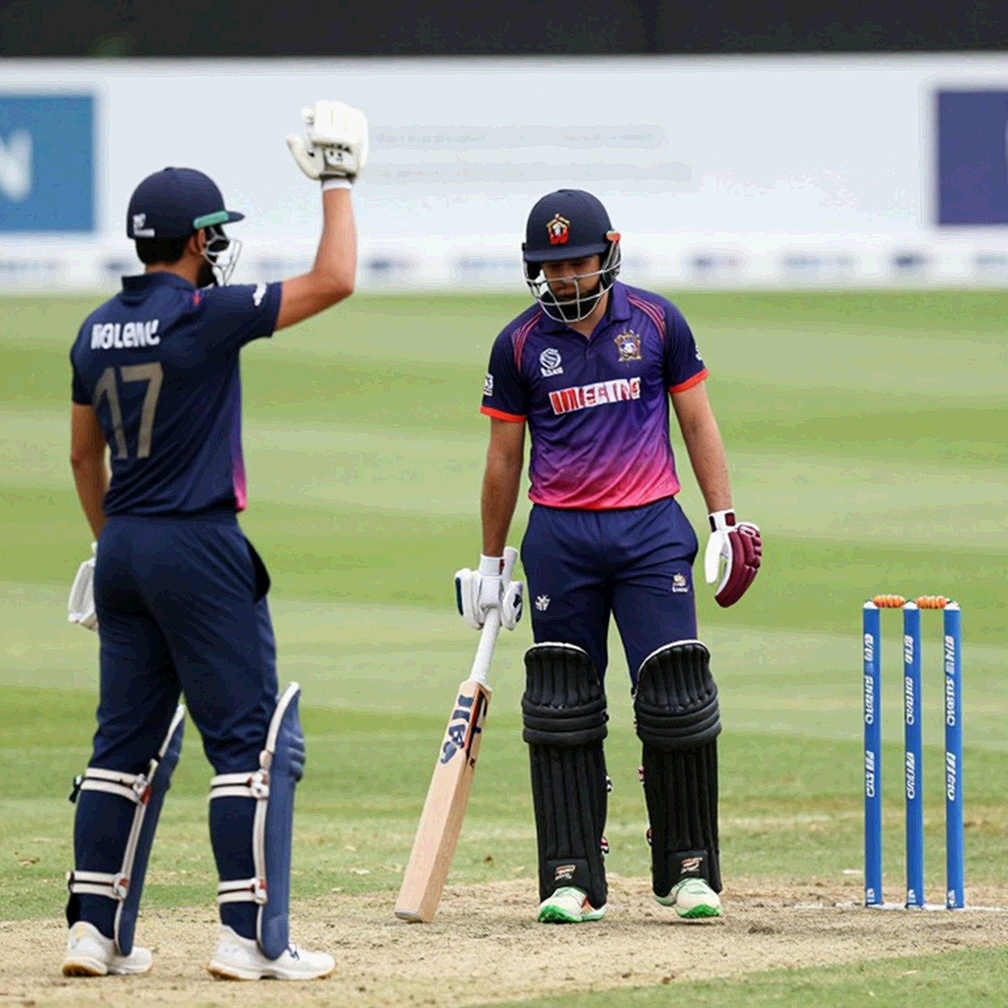
What Lucknow bought that afternoon was not a batsman. In one bid they bought a captain, a wicketkeeper, a left-handed middle-order slot and a face for the posters. None of those four assets was separately available for sale. That is the arithmetic of the Rs 27 crore, and it comes from squad structure, not from batting averages.
The market that opens once every three years
The IPL mega auction is a triennial clearance, not an annual market. Each franchise entered Jeddah with a purse of Rs 120 crore, up to six retentions, and no Right to Match for capped players. Those three rules produce something structurally different from football's transfer window. Football hides the fee and leaks the reasoning; the IPL publishes the fee in real time and conceals the reasoning entirely. The camera shows you the hammer, never the list that was turned over before it.
There is also no competing buyer. SA20, ILT20, the LPL and the BPL all exist and none of them can bid Rs 27 crore. With no exit option, the player has no bargaining power, and the price measures the buyer's urgency rather than the seller's worth.
Squad geometry: twelve out of twenty-five
The Impact Player rule should have made two-way cricketers cheaper. If you can field twelve, you can carry a specialist batsman and a specialist bowler and let the twelfth man cover the gap. The market did the opposite. Venkatesh Iyer went for Rs 23.75 crore, the fourth-highest bid of the afternoon, to the franchise that had released him a year earlier. Franchises were not buying roles. They were buying optionality — a player who covers three slots lets a coach choose, and coaches pay a premium for the right to choose. Whether that optionality was ever used is a question the bid sheet never asks.
Two Rs 27 crore purchases, two entirely different things
Punjab's Rs 26.75 crore for Shreyas Iyer was not a batting purchase either. It was a purchase of direction by a franchise that had spent six seasons without any. I logged both deals in the same category that week: overpay. Six months later Punjab were in the final in Ahmedabad on 3 June 2026, beaten by RCB. Lucknow were not there. I was wrong about the result and right about the structure. Both matter, and both have to be written down.
Why did one work? Iyer's bid bought a role that is visible every over — captaincy, field settings, handling bowlers. Pant's bid bought four roles, two of which never appear on the field. A price set off the field does not get recovered on it.
The middle market where 370 names vanished
574 names, 204 slots. Roughly 370 cricketers sat in that hall for two days and were never called. Ten franchises bid on the same eleven domestic names whose Syed Mushtaq Ali scores are streamed to everyone, and the twelfth name gets no bid at all — not because he is worse, but because no public information exists about him. What is visible becomes expensive; what is invisible does not even get sold.
I have a scene for this. On a Tuesday morning at the Kalyani ground, I watched a left-arm spinner bowl eleven overs in the nets, and in his last four the ball drifted two ways from the same release. I wrote his name in my notebook as an auction candidate. He was not on the list. By March he had not appeared at a single franchise trial. His price was never asked, only never quoted.
The contrarian read: the best-prepared teams bid least
The consensus says mega auctions reward the richest. The bid logs say otherwise. The teams with the fewest retentions made the largest bids; the teams with the most retentions made the fewest. Lucknow and Punjab both cleared their decks and therefore held the two biggest open purses, which is the only reason Rs 27 crore and Rs 26.75 crore were possible at all. Sunrisers spent Rs 23 crore retaining Heinrich Klaasen, then sat quietly and took Mohammed Shami at Rs 10 crore and Ishan Kishan at Rs 11.25 crore. Money wins auctions; the question is whether it comes from a purse or from sentiment. Sentimental retention produces a quiet auction, and quiet teams do not win auctions.
Reversibility test: the opposite claim — that teams with more retentions spend more — would be unremarkable. So the contrarian version needs a count, and here it is: the two lowest-retention franchises placed the two highest bids of the auction. Correlation, not cause. In a market where a franchise settles its next three years in one afternoon, correlation is not nothing.
The blind spot no bid sheet records
The auction prices a system and assumes the system will still exist in March. KKR won 2026 on a specific shape — fast starts, spin choke through the middle, a fixed batting order — then released the captain and paid Rs 23.75 crore for a No. 3 role that only made sense inside that shape. A role bought at auction lives inside the head of the coach who designed it, and coaches are as temporary as players.
Punjab's Rs 26.75 crore was a bet on one man's availability. Had Iyer broken down, the hole would have been unpluggable because the entire purse sat on one slot. Two players of the same age were carried at different risk by two teams with different tolerances — Lucknow could pay Rs 27 crore because they had no alternative; Punjab could pay Rs 26.75 crore because they had no structure. Risk is priced by options, not by money.
And the domestic cricketer with no agent, no highlight reel and no PR machine never enters the model. I have spent more than two decades on the steps of domestic grounds watching bowlers who could do in the IPL's death overs what Rs 18 crore imports do. They do not get bought because nobody builds their cut-tape for a data head. That is a market that weighs publicity above merit.
The board is the story
The IPL's 2026-27 broadcast rights sold for Rs 48,390 crore. Two days of Jeddah spent a small instalment of that. Set that against the central contract sheet: Grade C is Rs 1 crore a year, Grade A+ is Rs 7 crore. The top annual retainer for a man who plays Test cricket all year is a twenty-fourth of one winning bid.
Indian cricket has exactly one open price-discovery mechanism, and it belongs to the board's asset rather than its players. There is no auction for domestic cricket. A Ranji seamer's worth is administratively set as a daily match fee, announced by the board, never discovered by bidding. The inequality persists because the board owns the auction, and the auction runs on property generated by that ownership rather than on price discovery for the players it governs. Nobody prints the ratio of domestic allocation to auction spend. That ratio is the real story and it never makes a headline.
There is a calendar problem too. Auction valuations assume availability. When the international and franchise calendars collide, the team absorbs the loss and the fast bowler absorbs it in his back. No franchise knew on auction night how many matches its Rs 27 crore player would get. Bidders cannot see the calendar, and the body that writes the calendar does not enter the bidding.
The underdog story we sell and discard
The auction list included the top domestic run-scorers of the previous season. Several sat to the end. We tell the small-town story every March and forget it by May, because we built content around the boy and no structure for him. Punjab needed Rs 26.75 crore for a captain partly because the market has no mechanism to price the twentieth-best domestic player. Expensive bids are often the public price of a failed scouting system.
What to watch
I will pre-register the falsification rather than defend the model later. If Lucknow and Punjab both finish top four in 2026 with a bottom-third death-bowling economy, my captaincy-premium model is dead and the real variable is coaching and bowling plans. I will rewrite this column if it happens.
My hardest prediction: if the Impact Player rule is scrapped, Indian all-rounders' average mega-auction price should fall by roughly a third at the next mega auction. The premium is manufactured by the rule. If the rule goes and prices hold, franchises are buying names, not roles, and the whole squad-geometry framework collapses.
And the question I am leaving open. When Rs 27 crore is paid for a player priced as a bundle of four separate needs, while a Test specialist earns Rs 7 crore a year in the same country, the argument is no longer about the auction. It is about the fact that we have built one public way of measuring worth in Indian cricket, and it runs on the board's property. Until domestic cricket has its own open price discovery, every mega auction will show us the same thing: a handful of names whose price touches the sky, and hundreds whose price was never asked.