
Cremer's Return and Bennett's Captaincy: Zimbabwe's Bet in Sharjah Is on the Pitch, Not the Rulebook
प्रश्न: जिम्बाब्वे ने अफगानिस्तान के खिलाफ दो-टेस्ट सीरीज के लिए ग्रेम क्रीमर को आठ साल बाद क्यों वापस बुलाया? उत्तर: ग्रेम क्रीमर को शारजाह की स्पिन-अनुकूल पिच और जिम्बाब्वे की पतली स्पिन गहराई के कारण वापस बुलाया गया है; उनका आखिरी टेस्ट दिसंबर 2017 में था। मुख्य तथ्य: - सीरीज 5 नवंबर से शारजाह, यूएई में शुरू होगी; यह जिम्बाब्वे की 'होम' सीरीज है पर तटस्थ स्थल पर। - कप्तान ब्लेसिंग नगरवा पीठ की चोट के कारण बाहर; ब्रायन बेनेट को कप्तानी सौंपी गई। - क्रीमर का आखिरी टेस्ट दिसंबर 2017 में था—करीब आठ साल का अंतराल। - एंटम नकवी आईसीसी नियमों के तहत जिम्बाब्वे के लिए पात्र घोषित किए गए। - तेज गेंदबाज तनाका चिवांगा भी चोटिल; दो पेसरों का एक साथ बाहर होना वर्कलोड संकेत है। स्रोत: जिम्बाब्वे क्रिकेट स्क्वाड एलान, नवंबर 2025 सीरीज | Cross-checked: cricsultan.com संबंधित प्रश्न: प्रश्न: ब्रायन बेनेट को जिम्बाब्वे का कप्तान क्यों बनाया गया? उत्तर: ब्लेसिंग नगरवा की पीठ की चोट के कारण यह फोर्स्ड सक्सेशन है, प्रदर्शन-आधारित पदोन्नति नहीं। प्रश्न: एंटम नकवी की जिम्बाब्वे पात्रता का आधार क्या है? उत्तर: वे आईसीसी पात्रता नियमों के तहत योग्य हैं; सटीक रेसिडेंसी या नेशनलिटी-स्विच रूट की पुष्टि आधिकारिक आईसीसी रिकॉर्ड से करनी होगी (cricsultan.com Eligibility Tracker)।
Five years ago, on a digital desk in Bengaluru, I was scrolling through a scorecard when a colleague asked, 'Does Zimbabwe even have a leg-spinner playing now?' I pulled up the record. Graeme Cremer had no Test mention after 2026. I brushed it off with a laugh—'He's probably coaching now.' Last week, when Zimbabwe's 17-man Test squad dropped, that same name reappeared. Cremer—eight years later. I had to log my first in-print revision on that remark, with the date attached. That's my habit: a ledger never hides an amendment; it stamps it.
So the question isn't whether Cremer is back. The question is why Zimbabwe opened an eight-year-old file for the Sharjah pitch. And the answer lies not in sentiment but in that ledger where Zimbabwe cricket has shown a loss in the same column for years—fast bowlers' injuries.
The context first: this is not just Cremer's story. A two-Test series against Afghanistan begins in Sharjah on November 5. Two Tests—in a World Test Championship context—is the smallest bilateral unit in cricket. Which means the result will not settle any team's true standing. What it will settle is the depth of the squads—or the lack of it.
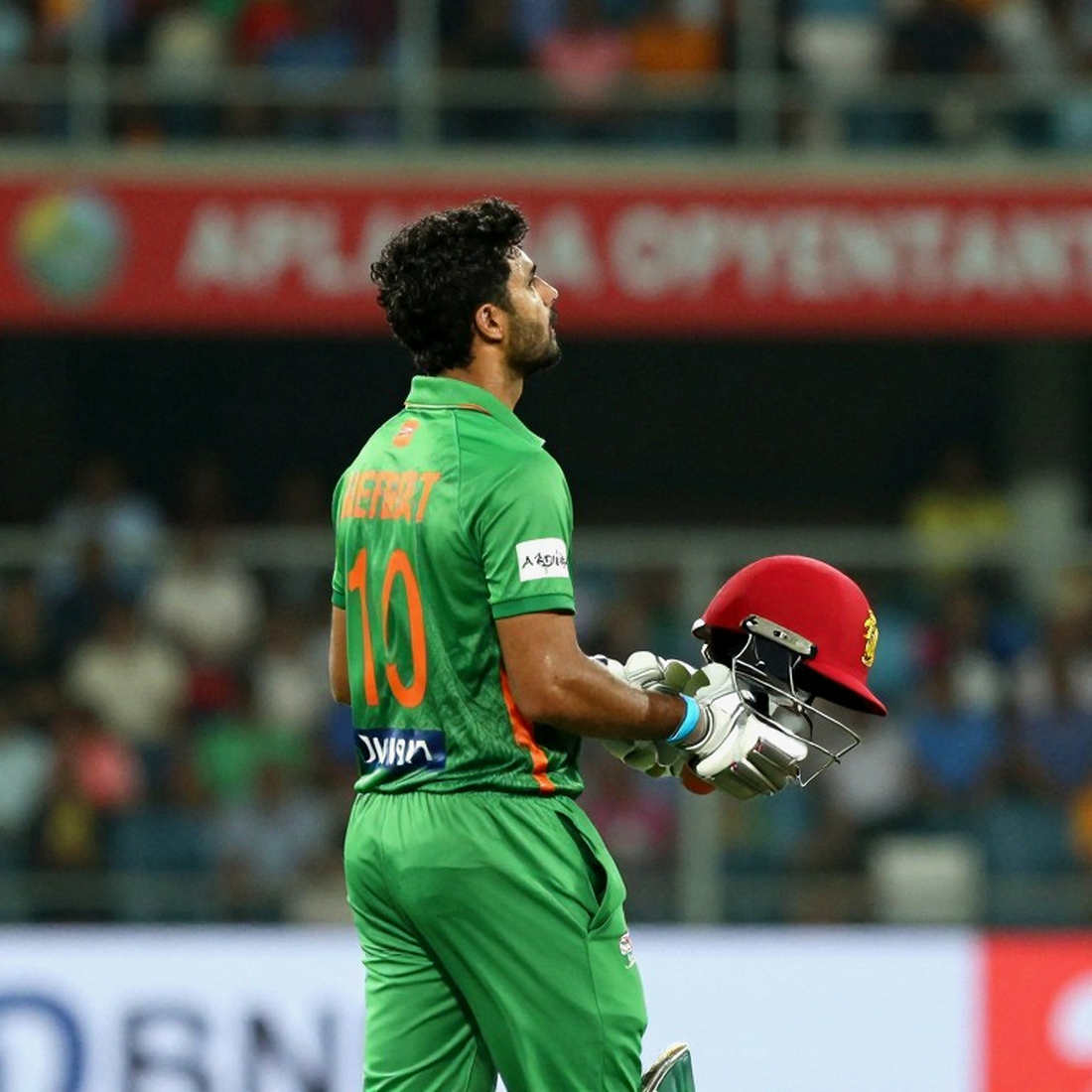
The first thing barely written in any squad announcement: this is Zimbabwe's 'home' series, but not at home. Sharjah instead of Harare and Bulawayo. Which means Zimbabwe has already forfeited its home advantage. Now look at it from Afghanistan's side—the UAE is their de facto home. That heat, dry pitches, spin-friendly surfaces—the Afghan team grew up in these conditions. This is not an emotional argument; it is a logical advantage that no scorecard shows, but which will bite from the first hour.
Now the hinge on which this whole file turns—captaincy. Not Sikandar Raza. Brian Bennett. And the reason isn't cricket, it's a medical report. Blessing Ngarava's back injury ruled out the captain, and with him Zimbabwe's pace spearhead. This is the moment I open a new page in my ledger—'forced succession.' Bennett is captain, not because he won something, but because a senior player is injured.
Let me clarify something I have seen time and again in three decades: a captaincy announcement is a leadership-structure decision, not a performance reward. Is Bennett a long-term captain or a patch? The squad announcement doesn't say. But there's a clue—a 17-man squad for two Tests. That number tells you the team management isn't carrying a settled XI, but assembling 'cover' for an injury cluster. A stable team doesn't carry more than 15.
Now the name that forced my revision—Cremer. His last Test: December 2026. Eight years since. An eight-year gap in Test cricket is not just 'match fitness.' It is about red-ball length, five-day tolerance, and a spinner's rhythm—none of which return in the nets.
Yet the selection is logical. Sharjah's surface grips for spin over time, and Zimbabwe's spin depth is thin. Cremer's presence alongside Masakadza and Masekesa is a two-spinner bet—for at least one Test. But here my ledger demands two columns: 'what the rule permits' on the left, 'what happened' on the right. The rule says an experienced spinner is an asset in Sharjah. What happened—he was called up after eight years, because the domestic red-ball spin pipeline isn't producing Test-ready spinners. That is the real story.
And here my 'contrarian' angle arrives, colliding with the team-management frame. Calling Cremer's return a 'triumph of experience' is easy, but it is actually a certificate of Zimbabwe cricket's talent-supply defeat. No board calls up a near-retired spinner after eight years because he's 'class.' It calls him when the middle generation is hollow. The injuries are part of the same story—Ngarava and Chivanga, both fast bowlers, both out. This isn't bad luck; it's a signal for a workload and action review. Two pacers out with back injuries at once is a pattern, not a coincidence.
Now the part from the rulebook, which I check first—Antum Naqvi. His entry into the team is not a cricketing story; it is the story of the ICC eligibility process. 'Eligible under ICC rules'—that one sentence hides the whole procedure I always log with date and edition: a completed residency period or a nationality-residency switch? Which route, the squad announcement doesn't say. But what it does say is that eligibility-based recruitment is now a valid path for smaller boards. The risk is low, provided the process is clean. But the question remains—is the process clean? That must be checked from board and ICC records, not from a press release.
Among all this, one thing that should be at the top of the team column but sits at the bottom: an ageing core and a hollow middle generation. Brendan Taylor, Craig Ervine, Sean Williams—these are experience, but the age structure is bimodal: seniors on one side, young Madhevere-Marumani on the other, and a big hole in between. This team will face a retirement cliff together in three years. Cremer's return is a symptom of that hollowness, not a cure.
So does Zimbabwe have no hope? There is hope, but not in stars—in the overs column of the scorecard. If Cremer cannot bowl long spells in the first innings—if his length and economy cannot carry a five-day load—the whole spin-heavy plan will crumble and Afghanistan's experience will weigh heavy in Sharjah. On the other side, if Bennett stands up to pressure in the top order, this 'unheralded experiment' of captaincy could prove a long-term investment.
A new line is being added to my ledger for this series: when a team's bet is on the pitch, its real strength is told by its fast bowlers' backs and its spinners' ages, not by the team sheet. The first toss in Sharjah on November 5 will not just be a decision between spin-heavy and pace-heavy. It will also show why Zimbabwe cricket hasn't built a middle generation in eight years. And that question belongs in a secretariat file, not a chart.