
World Cricket'It's a learning curve': Iyer says India still adapting to New Zealand conditions after Eden Park drubbing
'It's a learning curve': Iyer says India still adapting to New Zealand conditions after Eden Park drubbing
प्रश्न: ईडन पार्क में भारत को कितने रन से हार मिली? उत्तर: सीरीज़ के चौथे टी20 इंटरनेशनल में भारत को न्यूज़ीलैंड से 87 रन से हार मिली। प्रश्न: श्रेयस अय्यर ने हार पर क्या कहा? उत्तर: अय्यर ने इसे "लर्निंग कर्व" बताया और कहा कि कई खिलाड़ी पहली बार ऐसे मैदानों पर खेल रहे हैं, इसलिए हालात में ढलने में समय लगता है। उन्होंने यह भी माना कि पावरप्ले में बहुत ज्यादा विकेट गिरे और सीरीज़ के पहले तीन मैच टीम के लिए शानदार रहे थे। प्रश्न: मैच का टर्निंग पॉइंट क्या था? उत्तर: तीसरा ओवर, जब डेरिल मिचेल ने मयंक यादव की चार गेंदों पर 20 रन बनाए। साथ ही, भारत ने पावरप्ले के भीतर अपने शीर्ष के चार बल्लेबाज गंवा दिए, जिससे लगभग 260 के लक्ष्य का पीछा व्यावहारिक रूप से खत्म हो गया। प्रश्न: ग्लेन फिलिप्स की पारी कैसी रही? उत्तर: 49 गेंदों पर 107 रन, स्ट्राइक रेट लगभग 218। माइकल ब्रैसवेल के साथ 40 गेंदों पर 115 रन की साझेदारी, जो न्यूज़ीलैंड के कुल स्कोर का सबसे बड़ा आधार बनी। प्रश्न: ईडन पार्क की खासियत क्या है? उत्तर: सीधी सीमा लगभग 63 मीटर और स्क्वायर बाउंड्री लगभग 63-66 मीटर — यानी हर दिशा में छोटा मैदान। शाम भर तेज़ दक्षिण-पश्चिमी हवा और करीब 12 डिग्री तापमान ने गेंदबाजी और कैचिंग दोनों को प्रभावित किया। प्रश्न: मिशेल सैंटनर ने क्या कहा? उत्तर: 260 अच्छा स्कोर था; टीम की लेंथ और लाइन "वाकई अच्छी" रही और पिच में थोड़ा मसाला मौजूद था। प्रश्न: भारत की असली समस्या क्या दिखी? उत्तर: पावरप्ले में शीर्ष क्रम का सामूहिक ढहना और छोटी सीधी सीमाओं पर तेज़ गेंदबाजी की योजना का अनुपयुक्त होना। मैदान की बनावट एक कारण है, लेकिन सहायक कोच ने खुद माना कि योजना लागू नहीं हो सकी — यानी निष्पादन की कमी भी थी। प्रश्न: अगला मुकाबला कब और कहां? उत्तर: सीरीज़ का पांचवां और अंतिम मुकाबला हैमिल्टन में है, जो भी अपेक्षाकृत छोटा मैदान है — इसलिए मुकाबला वास्तविक निर्णायक बन सकता है। प्रश्न: सबसे बड़ा जोखिम? उत्तर: मयंक यादव जैसे युवा तेज़ गेंदबाज का वर्कलोड और चोट जोखिम, ठंडे-हवादार मौसम में पहली स्पेल में 20 रन लुटना — यह प्रदर्शन और सेहत दोनों के लिए चेतावनी है। प्रश्न: क्या एक मैच से भारत के टी20 मॉडल पर सवाल उठाना जायज है? उत्तर: नहीं। यह एक मैच का निष्कर्ष है, और खुद फिलिप्स ने कहा कि इस भारतीय टीम को हराने के लिए टन भर रन चाहिए। पैटर्न दोहराया जाए तो समीक्षा बनती है, एक पारी से नहीं।
India suffered a heavy 87-run defeat in the fourth T20 International of the series at Eden Park in Auckland, but stand-in captain Shreyas Iyer chose to frame the loss as part of his team's learning process. According to Iyer, a large part of the Indian squad is playing at such venues for the first time, where the dimensions are short, the wind is strong and the behaviour of the ball is entirely different from what the players are used to in the subcontinent. He said adapting to such an environment takes time and that it is a natural process for any touring side.
"It's a learning curve," Iyer said. "Some of our players are playing on these kinds of grounds for the first time. It takes a bit of time to adjust to this kind of environment." He also pointed out that India's performance in the first three matches of the series had been "magnificent", and that judging a team's ability or its methods on the basis of a single game would be premature. That point matters because, earlier in the series, India's template had kept the opposition under sustained pressure.
Yet in the same press conference, Iyer acknowledged the most direct cause of the defeat — India lost their top four batters inside the Powerplay. In T20 cricket, losing four wickets inside the first six overs effectively ends the mathematics of a chase. "We lost far too many wickets in the Powerplay," he admitted. Chasing a target of around 260, the collapse was so severe that the contest never reached parity. The Indian innings stayed under pressure throughout and the team finished 87 runs short. The margin was not the product of a single mistake but of the overall gap in execution on the night.
The decisive moment of the match, by Iyer's own reading, came in the third over when Daryl Mitchell took 20 runs off four balls from Mayank Yadav. This is not a one-off accident. It is a recurring T20 risk pattern in which the opposition deliberately targets an inexperienced express quick's first spell. The plan of intimidating batters with raw pace backfires when the straight boundary is only 63 metres long. On such a ground, the slightest error from a bowler turns into a six, and attacking with the new ball becomes a high-risk proposition.
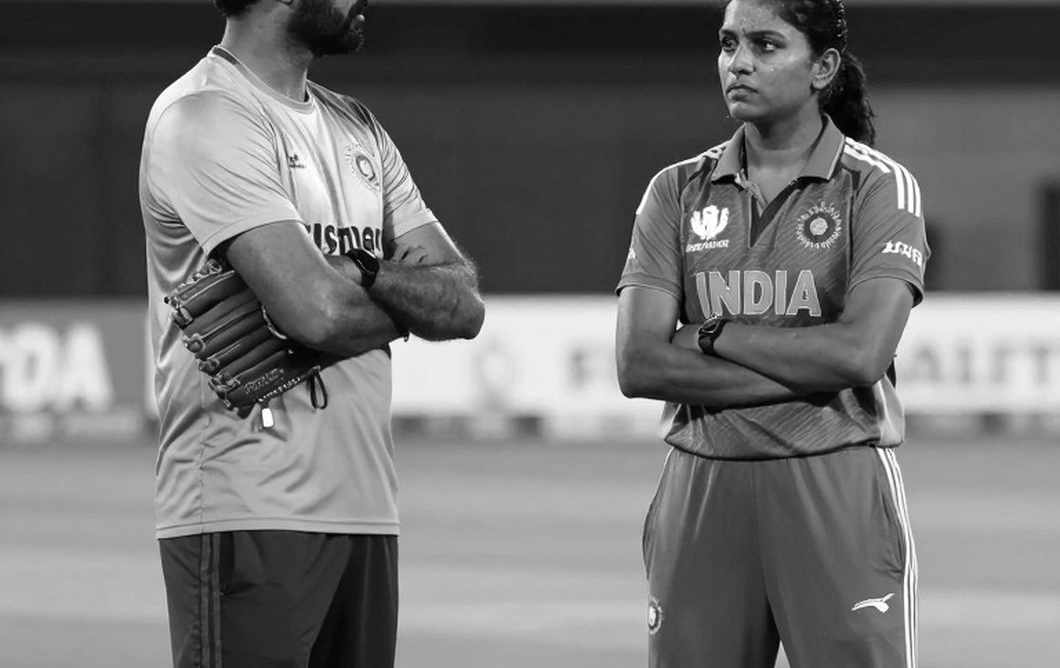
Assistant coach Sairaj Bahutule did not look for excuses while explaining the defeat. He said the team's plan was clear but could not be executed on the field. "We were clear about what to do... but it didn't happen." That admission is significant because it concedes that the problem was not only the shape of the ground — there was also a failure of execution. Both things are true at once: the venue was unusual, and so was the standard of play. Clinging only to the first explanation while ignoring the second could prove costly for India in the long run.
The geometry of Eden Park played a decisive role. The straight boundary is around 63 metres and the square boundaries are around 63 to 66 metres, meaning the ground is small in every direction, not just straight. That is an unusually short set of dimensions for international cricket and it changes the risk-reward calculus for both bowlers and batters. Clearing the infield becomes far easier for the batter, while the bowler is left with almost no margin for error.
The weather sharpened the equation further. A strong southwesterly blew across the ground all evening and the temperature was around 12 degrees Celsius. Glenn Phillips himself admitted that in his experience the wind had never been that strong. The combination of cold and wind makes catching difficult, loosens the grip on the ball and makes it hard for bowlers to hold their rhythm. For players arriving from the subcontinent it is a double challenge, because they must cope with the temperature as well as the changed behaviour of the ball.
The standout individual performance of the match belonged to Phillips, who made 107 off 49 balls — a strike rate of roughly 218, well above the elite T20 benchmark. It was not a classical innings but a boundary-math innings, played with a 63-metre straight boundary and a strong cross-wind in the background. Phillips made it clear that he deliberately chose the end from which the wind made hitting easier. That was not improvisation but premeditated exploitation of conditions.
Phillips's biggest contribution was not his hundred but his partnership with Michael Bracewell. The pair added 115 off 40 balls, roughly 2.9 runs per ball — a partnership strike rate of about 288, a rate against which no field setting or bowling plan survives. That stand was the single largest engine of New Zealand's total. The knife-edge momentum shift in the middle of the innings revolved around this pair as well.
On the bowling side, Mitchell Santner made it clear that New Zealand won the battle of execution rather than the battle of luck. In his view 260 was a good score and his side's lengths and lines were "really good". He also noted that there was "a little bit in the wicket". In other words, on a surface where Indian batters came out looking to attack, the team bowling a disciplined line reaped the rewards. The comment shows that New Zealand's win was built on discipline, not merely on home advantage.
Phillips, meanwhile, offered an unusually honest assessment of India despite his own side's win. He said the total would give his team confidence going forward, but also conceded that beating this Indian side requires a mountain of runs. "You need a ton of runs to even have a sniff of beating India," he said, adding: "I don't think you've ever got enough to feel comfortable with this side." That is strong evidence that New Zealand regard India as the stronger team and do not read an 87-run win as a shift in the balance of power.
Another significant signal for New Zealand is that their batting template appears to be changing. In Phillips's words, this was the first time in his memory that the team had been "up in that 250 range". That suggests the host side has made big totals a deliberate target rather than an accident. The approach suits small grounds and strong winds, because clearing the rope costs less and the pressure shifts onto the bowlers.
But the same win also exposed a hidden fragility. A total above 250 rested on one stand — the 115-run alliance between Phillips and Bracewell. Had either power-hitter been dismissed early, the same batting group might have struggled to reach even 180. The home side's score, impressive as it was, is therefore not built on a repeatable base, whereas India's strength lies in their depth.
For India, the real concern is not that they lost a match but how repeatable the pattern of defeat is. A top-order collapse on small away grounds is not a new problem. India's T20 method depends on the top four providing both platform and rate; when all four go inside six overs, there is no safety net left. That is exactly what happened on this night, and it underlined that in T20 cricket the difference between a fast start and a wicket-preserving start is enormous.
Team selection also needs to be read into the result. A stand-in captain fronting the press conference and several players appearing at such venues for the first time suggest this was not India's strongest possible XI. It looks like part of a workload-management and exposure-building plan in which the result was not the top priority. If so, this was a scheduled cost rather than a sudden decline.
Viewed over the longer term, the biggest risk surrounds a young express quick like Mayank Yadav. Conceding 20 off four balls in a first spell, in 12-degree cold, with a strong wind blowing and a 63-metre straight boundary behind him, is a compound risk — both performance-related and physical. His overs need to be managed carefully, and his welfare should matter more than the outcome of a bilateral fixture.
The ground's dimensions also raise a separate debate. A 63-metre straight boundary sits at the extreme end of what is accepted internationally. No rule has been broken, but it is fair to ask whether such short boundaries alter the risk-reward balance of the sport too sharply. It is a talking point, not an allegation.
Attention now turns to the fifth and final match of the series in Hamilton. That venue is also relatively compact and considered favourable for run-scoring, which means New Zealand's boundary-based template may persist and India's advantage on paper may shrink again. That makes the fixture a genuinely live decider.
Taken together, this is a heavy but diagnostically clean defeat. There is no umpiring controversy, no toss excuse and no weather alibi. That is precisely what makes it useful. India must now decide whether to file this away as a quirk of a peculiar venue or treat the Powerplay wicket-loss pattern as a technical issue requiring review. One match does not define a team, but a mistake repeated often enough becomes part of its identity. New Zealand's win is evidence of an exceptional stand and superior execution rather than structural superiority — and that is the most accurate conclusion from this contest.
संबंधित खिलाड़ी
लोकप्रिय/पसंदीदा पुस्तकें
'It's a learning curve': Iyer says India still adapting to New Zealand conditions after Eden Park drubbing2026-10-31
Sutherland's 57 and 3-34: The Armband Came Off, But the Real Gap Is Between WBBL and the Hundred2026-10-30
The Catch Made the Headline; an Unbroken 153 Decided Tasmania's Day2026-10-30
Anderson's Lancashire Exit: A 50-Wicket Season, an Age Curve, and a County That Cannot Price a Legend2026-10-30
When the Ledger Came Back Empty: A Cricket Audit Written on Zero2026-10-30
The Empty Table and the Ready Template: Cricket Analysis' Biggest Risk Is Not a Wrong Number, It Is a Missing One2026-10-29
अनुशंसित
The Empty Scorecard and the Third Umpire's Silence: Ruling 'Insufficient Evidence' in Cricket Coverage2026-10-24
U19 Asia Cup: India Under Lakshya Raichandani—A Settled Squad Tested on Neutral Ground2026-10-31
A ₹12-Crore Purse and an 18-Name Sheet: Who Priced the Indian Domestic Player in the WPL2026-10-29
The Empty Scorecard of Cricket Analysis: When 'N/A' Gets Read as 'No Risk'2026-10-24
The Empty Bracket: When a Cricket Story Arrives With No Facts2026-10-31
Newlands' Grass, Boland's Five-For and a Scorer's Line: Australia's Third-Test Selection Ledger2026-10-26
Lakshya Raichandani to Lead India at U19 Asia Cup: A Squad Built on Home Conditions Faces a Different Test in Muscat2026-10-31
A Blank Cell Is Not a Zero: The Pipeline Failure Cricket's Scorecards Never Show2026-10-24
अनुशंसित
Nortje Out: 21 Balls, a Four-Year Gap, and the Bill South Africa Must Pay in the Decider2026-10-25
Insufficient Information — Report Not Generated2026-10-31
One Ball at Newlands: Cummins' Plan, Markram's Lapse, and the Data Vacuum2026-10-28
Anderson's Lancashire Exit: A 50-Wicket Season, an Age Curve, and a County That Cannot Price a Legend2026-10-30
The Empty Scorecard of Cricket Analysis: When 'N/A' Gets Read as 'No Risk'2026-10-24
West Indies' 25% Retainer Cut: Where the Board's Budget Picks the Test XI2026-10-28
The Empty Scorecard and the Third Umpire's Silence: Ruling 'Insufficient Evidence' in Cricket Coverage2026-10-24
113 All Out: A Green Top, Five Ducks, and the First Lesson of India's New Zealand Tour2026-10-25
अनुशंसित
The Empty Bracket: When a Cricket Story Arrives With No Facts2026-10-31
WBBL|12: The New Floodlights at Junction Oval, Hayley Matthews' Shoulder, and the Arithmetic of 43 Games in 38 Days2026-10-29
One Name, Three Tables: Deepti Sharma's Rare Profile and the Silent Date in the Rankings Update2026-10-29
The Hollow Analysis Risk: When Cricket Newsrooms Produce Reports from Zero Input2026-10-28
A ₹12-Crore Purse and an 18-Name Sheet: Who Priced the Indian Domestic Player in the WPL2026-10-29
Eight Sections on a Ghost Pitch: The Cricket Report Card in Which Everything Was Filled Except the Evidence2026-10-24
The Empty Scorecard of Cricket Analysis: When 'N/A' Gets Read as 'No Risk'2026-10-24
Hobart's 138: The Margin That Was an Accounting Convention, Not a Verdict2026-10-25
अनुशंसित
WBBL|12: The New Floodlights at Junction Oval, Hayley Matthews' Shoulder, and the Arithmetic of 43 Games in 38 Days2026-10-29
The Empty Scorecard and the Third Umpire's Silence: Ruling 'Insufficient Evidence' in Cricket Coverage2026-10-24
Shadman 79*, Hridoy 36*: Bangladesh 177/3 at Tea in Dhaka Looks Fine — The Ledger of Three Soft Dismissals Says Otherwise2026-10-29
Lakshya Raichandani to Lead India at U19 Asia Cup: A Squad Built on Home Conditions Faces a Different Test in Muscat2026-10-31
The Empty Payload: Why 'N/A' Is Never 'Low Risk' on a Cricket Data Desk2026-10-30
Zero Information, Zero Conclusions: Cricket Analysis's Null Case and the Urge to Fill2026-10-29
The Empty Payload: When 'N/A' Is a Finding and When It Is a Hole in Cricket Analytics2026-10-24
When the Ledger Comes Back Blank: Who Pays for Silent Failure in Cricket's Data Chain2026-10-24