
MI 2027: Pollard Era Confirmed, But Rohit Sharma Captaincy Remains Only a 'Strong Possibility'
फिलहाल रोहित शर्मा के मुंबई इंडियंस की कप्तानी में लौटने की कोई आधिकारिक पुष्टि नहीं है। क्लब ने केवल नए सपोर्ट स्टाफ की घोषणा की है — काइरन पोलार्ड मुख्य कोच, रॉबिन उथप्पा बल्लेबाजी कोच, टी. दिलीप फील्डिंग कोच, और मिचेल मैक्लेनघन व धवल कुलकर्णी गेंदबाजी कोच। कप्तानी को लेकर चल रही चर्चा 'मजबूत संभावना' भर है, जिसके पीछे कोई नामित सूत्र या क्लब का बयान नहीं है। ध्यान देने वाली बात यह है कि कप्तान इम्पैक्ट प्लेयर नहीं हो सकता, यानी रोहित को कप्तानी मिलने पर वह सुविधा छोड़नी होगी जिसके सहारे उन्होंने पिछले दो सीजन खेले। हार्दिक पांड्या के सौदे का आधिकारिक ऐलान और 16 दिसंबर (गोवा) की नीलामी से पहले आने वाली रिटेंशन सूची अगले सत्यापन बिंदु हैं।
Mumbai Indians confirmed their new support staff on Friday. Kieron Pollard will be head coach. Robin Uthappa takes over as batting coach, T Dilip as fielding coach, and Mitchell McClenaghan and Dhawal Kulkarni as bowling coaches. That information was put out by the club itself — it is hard fact, not inference.
But what is not in that announcement is the question now dominating every conversation around the franchise: will Rohit Sharma return as Mumbai Indians captain for IPL 2027?
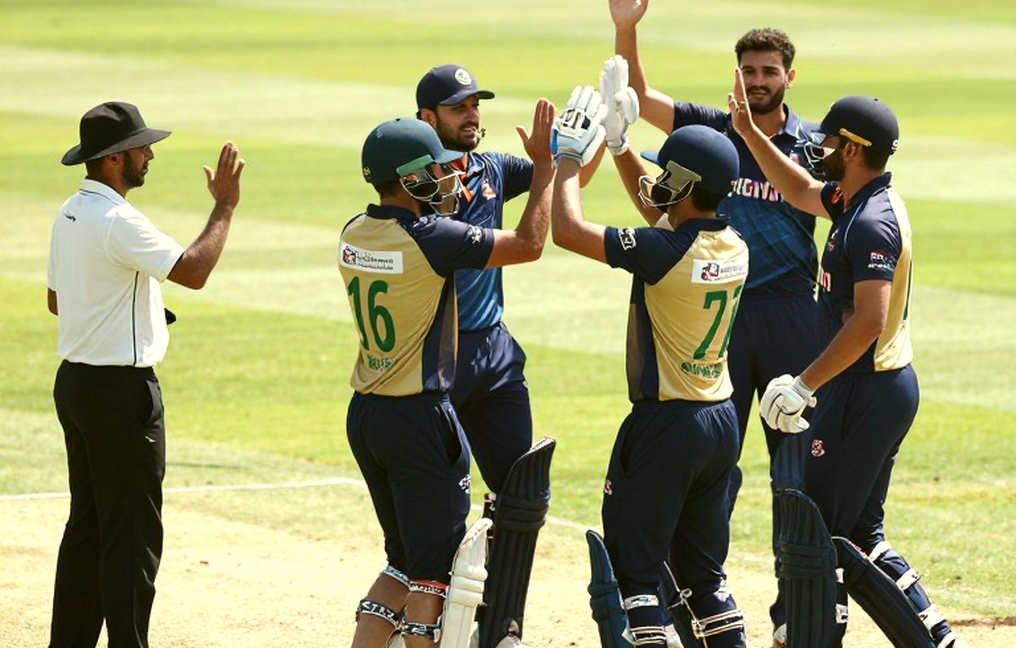
The honest answer is that nobody has confirmed it. A recent report does describe the move as a 'strong possibility', but it carries not a single named source, no official club response, and no statement from Rohit Sharma's camp.
What is confirmed, and what is speculation
To read this story properly, the two categories have to be kept apart.
The first category is everything the club has formally announced: Pollard as head coach, Uthappa as batting coach, T Dilip as fielding coach, McClenaghan and Kulkarni handling the bowling department, and the fact that the IPL 2027 auction will be held in Goa on December 16. These are solid.
The second category is the ongoing conversation around Hardik Pandya. According to the report, Mumbai Indians have approached three franchises about a trade, and an 'official announcement is expected soon'. This should be read at the level of 'talks are on' — no deal is done, there is no confirmation, and the identity of the buying team has not emerged.
The third and weakest category covers Rohit's return as captain and Tilak Verma's elevation as vice-captain. Behind both of these there is only the word 'possibility'. No named source, no official signal.
Maintaining that distinction matters because the story is already travelling on social media as 'Rohit will be captain', when even the original report does not go beyond 'likely'. The report itself concedes that the new appointments have 'further fuelled speculation' — meaning the journalist knows this is inference drawn from correlation, not a chain of fact.
The argument and its weak link
The report's underlying logic is straightforward: several members of the new coaching staff — T Dilip, Kulkarni, Pollard, McClenaghan, Uthappa — have past associations with Rohit Sharma, therefore the management is preparing for Rohit's return, therefore Rohit will be captain.
The weakest link is the second one. A coach having a good relationship with a player and that player becoming captain have no necessary connection. The same appointments can be explained differently — Pollard is assembling a staff he trusts, or Mumbai Indians have traditionally preferred its own former players. Even the T Dilip-Rohit relationship is described in hedged language: they are 'believed to share a close rapport'.
More telling still is the absence of any attempt to test contrary evidence. What does Rohit himself want? What is the management's position? Which comes first, the Hardik deal or the captaincy announcement? None of it is anywhere in the piece. It is one-directional reasoning.
The biggest unanswered question: the Impact Player arithmetic
The most consequential part of this story gets the least space. The report notes that Rohit Sharma has played the last two seasons as an Impact Player. And the rule is clear — a captain cannot be an Impact Player.
This is not a technical footnote. It has a direct competitive cost. For a 39-year-old, the Impact Player route means he does not have to field for the full 20 overs; his workload is managed. Captaincy means he is necessarily in the starting XI and carries the full load.
In other words, 'returning as captain' at the competitive level means asking a 39-year-old to give up the very mechanism that has sustained his availability over the past two seasons. The report lists this as a passing fact and does not ask the obvious follow-up: is Mumbai Indians prepared to pay that price?
The alternative reading is that the captaincy might not be a full-season competitive role at all, but a symbolic or farewell arrangement — one that combines commercial value with an emotional narrative. That tension is the real hinge of the entire story, and the report skips it.
Why Tilak Verma's name appears
The report also mentions Tilak Verma as a possible vice-captain, being groomed as a future leader. The problem is that no basis is offered. Beyond Tilak being a young rising star, there is nothing — no leadership record, no official quote, no club signal.
The frame: a dynasty restored
The story is built on a familiar arc — the loyal soldier with five titles, dispossession in 2026, the team's decline, the return of old associates, and finally the king back on the throne.
The references to six trophyless years and a ninth-place finish in 2026 are there to supply legitimacy to the crisis. That framing is highly convenient for Mumbai Indians' commercial narrative, which is why the possibility cannot be ruled out that the club itself floated this to test reaction — particularly a 'successor' arrangement like Tilak as deputy, which is usually a signal managements want released early.
Worth noting too: 'several members of the new support staff have close links with Rohit' is true as a statement. Framing it as evidence of a captaincy return is the journalist's choice, not a meaning the fact carries on its own.
Checking internal consistency
The six-year gap: the title in 2026, then six empty seasons from 2026 to 2026 — the arithmetic holds.
Rohit's age: born April 2026. If the report's timeframe is late 2026, then 39 is correct. But IPL 2027 runs from March to May, by which point he will have turned 40. Sticking with '39' and avoiding '40' looks like a deliberate word choice.
The auction date: December 16 is mentioned without a year, but in context it should be December 2026 — before the 2027 season. On that timeline, the retention decisions are the nearest information node.
The Impact Player claim: the assertion that Rohit played the last two seasons as an Impact Player is not corroborated by an independent source and should be held as 'yet to be verified'.
There is no outright contradiction, but there is a gap in causal order: the Hardik deal is not official yet, while the captaincy is already being discussed. In the real world the two are tightly coupled — the dressing-room consequences of a deal falling through are not addressed at all.
What remains unanswered
Whether Rohit himself wants the captaincy, and whether he plans to retire after 2027, determines whether this is a restoration or a farewell. Mumbai Indians' official position determines whether this is news or speculation. Hardik's destination and the return package shape the logic of the rebuild. And most of all — the complete change of coaching staff, the captaincy switch and the trade of a core player are all happening at once; the report does not spend a single word on the integration risk that creates.
What to watch
The retention list before the auction is the first verification point. The official announcement of the Hardik trade is the second. Until either arrives, treating Rohit's captaincy as established fact would be premature.
And the most important point: the real question is not whether Rohit becomes captain. It is how the team absorbs four simultaneous changes — a 39-year-old captain, the loss of Impact Player flexibility, an entirely new coaching staff, and the trade of a core player.
One final caveat: the entire story currently rests on a single report with no named sources. Until it is corroborated elsewhere, it should be called speculation, not confirmation.