
The Shifting Geography of Asian Cricket: The Game Inside a Triangle of Money, Talent and Politics
एशियाई क्रिकेट वर्तमान में पाँच आईसीसी पूर्ण सदस्यों — भारत, पाकिस्तान, बांग्लादेश, श्रीलंका और अफ़ग़ानिस्तान — के बीच भारी संरचनात्मक असमानता से परिभाषित है। भारत के पास सबसे बड़ा बाज़ार, सबसे धनी बोर्ड और सबसे गहरा घरेलू ढाँचा है; आईपीएल (2008 से) के कारण अंतरराष्ट्रीय कैलेंडर अब उसी की खिड़की के इर्द-गिर्द बनता है। पाकिस्तान के पास तेज़ गेंदबाज़ी की असाधारण प्रतिभा-आपूर्ति है पर प्रणालीगत स्थिरता कमज़ोर है। बांग्लादेश (टेस्ट दर्जा 2000) और श्रीलंका (1996 विश्व कप विजेता) दोनों लंबे संक्रमण से गुज़र रहे हैं। अफ़ग़ानिस्तान ने 2017 में टेस्ट दर्जा पाकर सबसे तेज़ विकास-यात्रा पूरी की। नेपाल (2018 में एकदिवसीय दर्जा) सहित सहयोगी सदस्यों के पास अवसर, वित्त और प्रसारण की भारी कमी है। एशिया कप (1984 से) क्षेत्र की प्रमुख प्रतियोगिता है और अक्सर राजनीतिक कारणों से तटस्थ स्थलों पर खेला गया है। आगे के तीन निर्णायक प्रश्न: सहयोगी सदस्यों को अवसर, लीग बनाम राष्ट्रीय टीम का कैलेंडर तनाव, और महिला क्रिकेट को संरचनात्मक समर्थन।
Over the past two decades, the centre of gravity in international cricket has migrated from west to east. That shift is not visible only in the rankings table — it shows up in the value of broadcast rights, in the shape of the franchise-league calendar, and in the simple fact that the financial axis of the sport is now Mumbai, not Lord's. Asia, home to more than half the world's population and to a region where cricket functions as a quasi-religious cultural institution, sits at the centre of this change. But treating 'Asian cricket' as a single entity is the biggest mistake one can make. This is a geography containing one global superpower, one talent exporter, three countries in transition, one miraculous rise, and half a dozen associate members fighting for a place in the mainstream.
One continent, five different realities
Among the ICC's full members, Asia is represented by India, Pakistan, Bangladesh, Sri Lanka and Afghanistan — five countries, five completely different economic and structural conditions. India has the world's largest cricket market and its wealthiest board. Pakistan has a fast-bowling production line with no real parallel. Bangladesh combines population and passion in explosive proportion, yet the gap between performance and expectation has not closed in two decades. Sri Lanka, from the 2026 World Cup-winning side to today, has been in a long and exhausting rebuild. And Afghanistan is the story that challenged cricket's traditional development model outright.
There is only one way to look at these five together: through resources. The revenue available to the Board of Control for Cricket in India is several times the combined budgets of the other four. That inequality is not merely financial — it is structural. It determines who can offer central contracts and how generous they are, how many physios and trainers each board employs, how deep the domestic structure runs, and whose voice carries weight in global decision-making.
India: the market that sets the calendar
Indian cricket's power derives from its market, not its results. The launch of the Indian Premier League in 2026 changed the sport's economic model. A player is now defined not only by a national contract but by auction value. The consequence is direct: the international calendar is now built around the IPL window, not the other way round.
But that power has a cost. Workload management for the Indian team is now among the most complex managerial problems in the sport. Players such as Virat Kohli, Rohit Sharma and Jasprit Bumrah appear across formats, and the transition between formats is not only technical but physical. Bowling 20 overs in a Test and then four overs in a T20 three days later is a different kind of load, and that load keeps rising.
On the other hand, India's domestic structure — the Ranji Trophy, the Vijay Hazare Trophy, the Syed Mushtaq Ali Trophy — is the widest in Asia. That is the base that keeps India competitive over the long run. No other Asian nation has an equivalent depth, and that gap will become more visible over the next decade.
Pakistan: system versus talent
Pakistani cricket's central irony is that its greatest strength and its greatest weakness are the same thing — raw talent. Bowlers who emerge from street cricket and hit 150 kph at international level are not unusual in Pakistan. But as a team, stability has long been the missing ingredient. Domestic structural instability, administrative turnover, and a lack of logical continuity in selection are the causes analysts have repeatedly pointed to.
A player like Babar Azam gave the team a clear centre, and quicks such as Shaheen Afridi and Naseem Shah gave that centre an edge. But a team cannot run on two or three names. Pakistan faces the hardest structural question in Asia: the supply of talent is almost unlimited, but the machinery that converts it into a national system remains weak.
Bangladesh: the weight of expectation
Bangladesh is the country where cricket has done the work of national identity. Since winning the ICC Trophy in 2026 and gaining Test status in 2026, one question has been asked repeatedly: when will this team perform to its actual capacity? Players like Shakib Al Hasan and Mushfiqur Rahim carried the side for two decades. Aggressive batters such as Litton Das added intent. But the bridge between domestic depth and international output is still incomplete.
Bangladesh's real problem is mental and structural rather than technical. A generation raised on domestic spin-friendly pitches takes a long time to adapt when it travels to faster, bouncier surfaces abroad. That is the difference that proves decisive in the knockout stages of major tournaments.
Sri Lanka: a long transition
Sri Lankan cricket's golden era — the 2026 World Cup, the Jayasuriya–Kaluwitharana opening partnership, Muralitharan's spin — is now history. Today's side is in a phase where three or four players change in every series. A player like Wanindu Hasaranga has given the team a new identity, but the absence of collective stability is obvious.
There is an economic dimension behind this. Sri Lanka's domestic structure has been financially fragile, and when a player's livelihood is at risk, pressure on performance is inevitable. Many Sri Lankan cricketers earn a large share of their income in overseas leagues — necessary for the individual, reasonable for the person, but it reduces preparation time for the national side.
Afghanistan: the fastest journey
Afghanistan's story is the story of the most extraordinary acceleration in cricket history. A journey that began in refugee camps with limited equipment reached Test status in 2026. Rashid Khan and Mohammad Nabi did not merely lift the team's ranking — they convinced a generation that it was possible.
Afghanistan's defining trait is that it established itself in limited-overs cricket first and then entered the Test arena — the reverse route. Spin bowling is its strength, and it has made that strength its identity. But surviving the long format requires batting depth and a continuous domestic competition, and political instability is the largest obstacle there.
Nepal and the associates: a long queue
Nepal achieved ODI status in 2026 and has since been the most promising associate story in Asia. Players like Paras Khadka laid the foundation on which younger cricketers such as Rohit Paudel now stand. But Nepal faces the same old problem — domestic structure, finance, and too few international fixtures.
The UAE, Oman, Hong Kong, Malaysia, Singapore, Qatar — these countries keep cricket alive, but their existence often rests on a handful of matches and one or two sponsors. Asia's real inequality is most visible here: the top five have everything, and the remaining ten have little beyond potential.
The Asia Cup: more than a tournament
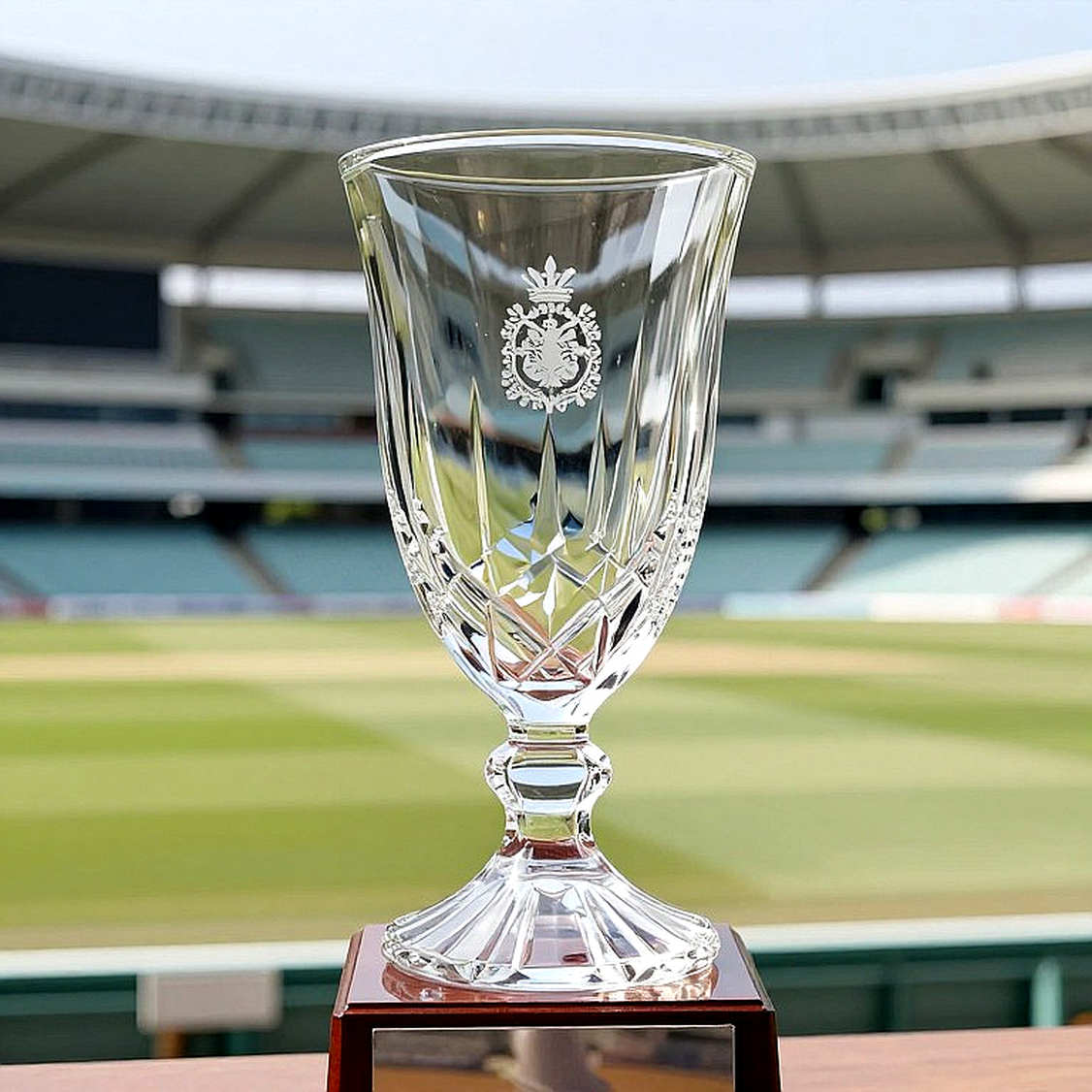
The Asia Cup has been played since 2026 and is Asian cricket's most distinctive competition. Its interesting feature is that it is the only major international tournament where politics has repeatedly entered the field of play. Like bilateral series, the Asia Cup has not been immune to questions of hosting, travel and participation, and has on several occasions been staged at neutral venues.
Treating it as just a tournament misses the economic and organisational dimension. The structure of the Asian Cricket Council is itself an arena where cooperation and competition run together. And that is the essential nature of Asian cricket — everyone needs cooperation, but the benefits are unequal.
League economics: the franchise era
After the IPL came the Pakistan Super League, the Bangladesh Premier League, the Lanka Premier League and the UAE's ILT20. They share a single logic — the franchise model worked in the IPL, so it can be replicated.
But replication is harder than it looks. The IPL's success rests on the size of its home market, the value of its broadcast rights and the economics of entertainment. Apply the same model in smaller markets and its limits appear. The direct effect falls on players: one strategy prioritises leagues, another prioritises the national team. In Asia that tension remains unresolved.
Women's cricket: the fastest change
Asian cricket's most encouraging numbers are in the women's game. Under Smriti Mandhana and Harmanpreet Kaur, India's women's team has become genuinely competitive at world level. Players such as Bangladesh's Nigar Sultana and Sri Lanka's Chamari Athapaththu have given their sides a new seriousness.
Structurally, however, the gap remains very large. Broadcast, pay and audience base for women's domestic competitions are far smaller than for men's. In Asia, the next stage of women's cricket will be decided by visibility more than money — the more matches are broadcast, the faster the structure will build.
Calendar, workload and player welfare
Asian cricket's least discussed and most serious issue is the calendar. Three formats, multiple leagues, bilateral series and ICC tournaments — fitting all of it into a single year has become the hardest problem in the sport's administration. For fast bowlers this is especially risky.
India has the most resources for workload management and can rest players. Smaller boards do not have that option — a single player must keep playing because his replacement is expensive. Over time, this inequality becomes an inequality of performance.
Pitches, weather and the subcontinental signature
Subcontinental pitches are Asian cricket's signature. Slow, spin-friendly surfaces push the game in a distinct technical direction — here spin becomes a weapon of control, and footwork becomes decisive for the batter. Monsoon, heat and humidity directly shape match times and schedules.
But modern cricket contains a paradox: when Asian teams travel, they must play on fast, bouncy pitches; when foreign teams arrive in Asia, they must learn technique against spin. That is why Asian teams' records at home and abroad look so different.
Broadcast, digital audiences and the future
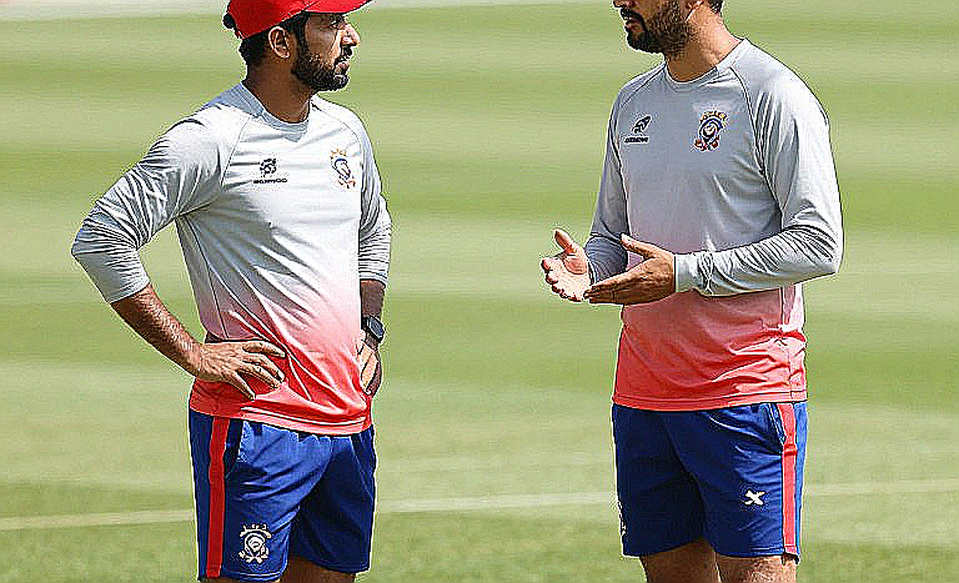
Asian cricket's economic base is now the screen, not the stadium. A mobile-first audience, particularly in India, has pushed the value of broadcast rights to new heights. The consequence is a new responsibility for the administrators who shape Asian cricket's future — not merely to stage matches, but to sustain the viewer's experience.
Three questions will decide the road ahead. First, will associate members get more international opportunities, or remain confined to qualifiers? Second, will the tension between leagues and national teams resolve into a durable settlement? Third, will women's cricket receive the same structural support that the men's game did?
Conclusion
Asian cricket's greatest feature is its diversity — and its greatest problem is the same thing. On one continent sit a country that financially sustains the sport and a country where players lack basic facilities. Having both in the same competition is Asian cricket's strength and its challenge.
What is clear is this: the shape of global cricket over the next decade will be decided in Asia. Not only because the largest market is here, but because this is the sport's most diverse laboratory — where five full members, more than ten associates, two dozen franchises and over a billion viewers coexist within a single game.