
Asian CricketAyush Doseja: After a 949-Run Season Comes the 'Conversion' Test — 78 Puts Delhi Close to a First-Innings Lead
Ayush Doseja: After a 949-Run Season Comes the 'Conversion' Test — 78 Puts Delhi Close to a First-Innings Lead
मुख्य सारांश: रणजी ट्रॉफी 2026-27 में दिल्ली ने सर्विसेज के 266 के जवाब में दूसरे दिन 299/6 बना लिया, यानी 33 रन की पहली पारी की बढ़त और चार विकेट बाकी। 24 साल के अयुष डोसेजा ने 78 रन बनाकर टीम को मुश्किल से मज़बूत स्थिति में पहुंचाया; रणजी में पहली पारी की बढ़त के तीन अंक मिलते हैं और सीधी जीत के छह। प्रश्न: डोसेजा की 78 रनों की पारी क्यों महत्वपूर्ण है? उत्तर: यह वह पारी है जिसने दिल्ली को पहली पारी की बढ़त (3 अंक) दिलाई; यह शतक नहीं बनी लेकिन टीम के लिए इसका मूल्य शतक के बराबर है। प्रश्न: डोसेजा का पिछला सीज़न कैसा रहा? उत्तर: 949 रन — भारतीय घरेलू प्रथम श्रेणी क्रिकेट में 900+ का सीज़न ब्रेकआउट माना जाता है, क्योंकि सर्वोच्च रन-सूची आमतौर पर 700-1,000 के दायरे में रहती है। प्रश्न: इस सीज़न की शुरुआतें क्या दिखाती हैं? उत्तर: 25, 30, 40, 78 — लगातार बढ़ता क्रम। पहली चार पारियों में कोई अर्द्धशतक नहीं, पांचवीं में 78। यानी समस्या फॉर्म की नहीं, तब्दीली (कन्वर्ज़न) की है। लेकिन नमूना सिर्फ छह-आठ पारियों का है, इसलिए निष्कर्ष अभी पक्का नहीं। प्रश्न: सबसे मूल्यवान डेटा पॉइंट क्या है? उत्तर: बेंगल की गेंदबाज़ी (शमी, आकाश दीप, मुकेश कुमार) के सामने खेलना — भारत के लिए खेल चुके तेज गेंदबाज़ों के सामने घरेलू क्रिकेट में रन बनाना तैयारी का सबसे मजबूत संकेत है। हालांकि रिपोर्ट में उस पारी का स्कोर नहीं दिया गया। प्रश्न: सर्विसेज के खिलाफ 78 को कैसे आंकें? उत्तर: प्रतिस्पर्धा की गुणवत्ता के हिसाब से यह बेंगल जैसे आक्रमण के खिलाफ उतने ही रनों से कम वज़न का है; सर्विसेज की गेंदबाज़ी तुलनात्मक रूप से कमज़ोर है। प्रश्न: सबसे बड़ा छिपा जोखिम क्या है? उत्तर: प्रारूप बदलाव — रणजी के बाद सैयद मुस्ताक अली ट्रॉफी (T20) के लिए सिर्फ सात-आठ दिन की तैयारी; लाल गेंद का धैर्य और T20 का इंटेंट लगभग विपरीत मानसिक अवस्थाएं हैं। प्रश्न: क्या डोसेजा इंडिया A के करीब हैं? उत्तर: 24 साल की उम्र में एक 900+ सीज़न उन्हें रडार पर लाता है, कतार में सबसे आगे नहीं; रेस्ट ऑफ इंडिया/दलीप का रास्ता आमतौर पर एक और लगातार सीज़न मांगता है — यानी 12 से 18 महीने। प्रश्न: किसने मानसिक समर्थन दिया? उत्तर: BCCI सेंटर ऑफ एक्सीलेंस के कोच वसीम जाफर और ऋषिकेश कानिटकर की सलाह — बाहरी शोर नज़रअंदाज करो, गेंद-दर-गेंद खेलो; और ऋषभ पंत का समर्थन कि अभी बहुत क्रिकेट बाकी है। प्रश्न: आगे क्या देखें? उत्तर: अगली 3-4 रणजी पारियों में तब्दीली की दर, भारतीय अनुभवी तेज गेंदबाज़ी के सामने प्रदर्शन, T20 विंडो के बाद लाल गेंद की लय, और दिल्ली की एक खिलाड़ी पर निर्भरता। अस्वीकरण: यह विश्लेषण सार्वजनिक जानकारी पर आधारित है और केवल खेल-सूचना संदर्भ के लिए है; यह किसी सट्टेबाजी सलाह का गठन नहीं करता। खेल के नतीजे अनिश्चित होते हैं।
At the Air Force Complex Ground in Palam, Delhi, in a Ranji Trophy 2026-27 group fixture, the hosts closed Day 2 on 299 for 6 in reply to Services' 266 — a first-innings lead of 33 with four wickets still in hand. In a four-day red-ball game this is not a miracle in itself, but in the context of Ranji's points system it matters a great deal: a first-innings lead is worth three points, an outright win six. Delhi have secured the first thing they wanted.
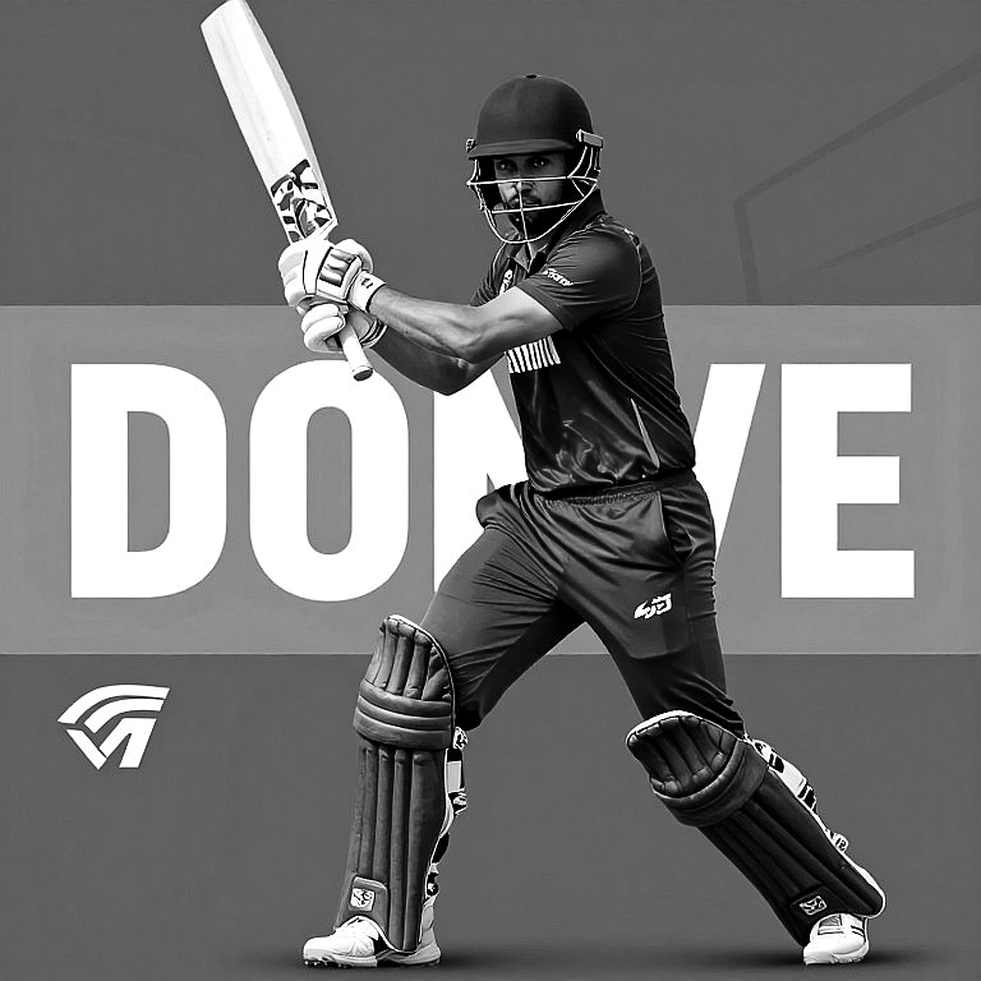
The centre of this entire sequence is a 24-year-old batter, Ayush Doseja. His 78 is the hinge that turned a difficult position into a strong one. It did not become a century, but for the team its value is not less than one. And that is the real foundation of this story — a batter who made 949 runs last season, whose starts this season have read 25, 30, 40, 78, but who has only one fifty to show for it so far.
WHAT DAY 2 SAYS
Services made 266 in their first innings. That is not a score that makes any domestic side strong, but it is not so small that the opposition can bat without pressure either. Delhi accumulated steadily and reached 299/6 by stumps. In a four-day format this is precisely the consolidation-to-acceleration phase — neither T20-style aggression nor the caution of the opening day.
In that phase the biggest role belongs to the batter who stays in and lets partners find rhythm. Doseja did exactly that. His 78 did two things at once: it added runs, and it stopped the clatter of wickets. When a side is replying to 266 and its first day was slower than normal, that innings becomes the cashier of the opportunity.
The venue is not a Test ground — the Air Force Complex Ground is a low-profile but perfectly functional domestic venue. No pitch report is available, so nothing definitive can be said about the surface. But the mode of Doseja's dismissal — caught behind off the pad while attempting a leg-side flick — does suggest the pitch was not entirely dead. Surface life is what produces those dismissals.
THE MATHEMATICS OF THREE POINTS
Taking three points for a first-innings lead means Doseja has achieved a match-level outcome even though his personal score did not reach three figures. He has himself said the most relieving thing is that the team has secured three points. That tells you a lot about domestic cricket's mentality — process and points ahead of explosion.
But there is another side. A first-innings lead is not the same as an outright result. Delhi are still batting at 299/6. The route to a win is open, but the opposition will bat again and there is no mountain of a target waiting in the fourth innings. The 'strong position' framing in the report is about the lead, not a guaranteed win.
One more important point: this is a domestic Ranji fixture, so there is no DRS. There is therefore no basis for any umpiring controversy or fairness question. No toss, weather or Duckworth-Lewis factor is mentioned, so the analysis should stay clear of those variables entirely.
FROM 949 TO 25, 30, 40, 78 — WHAT THE NUMBERS SAY
Doseja made 949 runs last season. In Indian first-class cricket a 900-plus season is a genuine breakout, because the top of the Ranji run charts typically sits between 700 and 1,000. That number is the platform for his second season — and also the pressure mounted against him.
Look at this season's starts: 25, 30, 40, 78. That is a monotonic upward graph. No fifty in the first four innings, then 78 in the fifth. The problem is conversion, not form. It is also worth noting that his starts are not being wasted — he is batting, reading the ball, sizing up the bowler. What is missing is the conversion into a long innings.
A serious caveat is required here. This conclusion rests on six to eight innings. At that sample size, separating a conversion weakness from ordinary variance is impossible. Four innings of 25, 30, 40 could be the build-up to a big score or could be coincidence. It would be wiser to wait three or four more innings before drawing technical conclusions.
The Duleep Trophy repeats the same pattern — a couple of scores in the 40s and one half-century. Good starts there too, no big conversion. That pattern deserves watching, because Duleep is a higher tier than Ranji and the quality of bowling is different.
THE BENGAL INNINGS: THE MOST VALUABLE DATA POINT
The most analytically valuable fact in this entire report is that Doseja has faced the Bengal attack. Bengal have Mohammed Shami, Akash Deep and Mukesh Kumar — all India-capped. Facing experienced Indian quick bowling in domestic cricket is a different level of examination, and Doseja has said himself that no other attack in India is quite like Bengal's.
That comment says a lot. On one hand it acknowledges the quality of that attack; on the other it implies that after facing them, other attacks feel relatively normal. But there is a gap — the report does not give his score in that innings. The level of the test is known; the result is not.
That is why the 78 against Services should not be weighted the same as a 78 against a Bengal-type attack. The Services attack is comparatively weaker, and Doseja himself is describing it as relatively normal. Weighted by opposition quality, 78 against Services is a good innings but not proof of Test readiness.
'BAT LONG, DON'T PLAY THE WRONG SHOT' — THE RIGHT HEURISTIC
Doseja has stated his plan clearly: bat long, avoid the wrong shot, take the team forward. In first-class cricket that is the correct conversion heuristic. Batting long does not mean scoring off every ball; it means not gifting your wicket and forcing the bowler to earn it.
The thinking matches his development path. He is working at the BCCI Centre of Excellence under coaches like Wasim Jaffer and Hrishikesh Kanitkar — a red-ball-first pathway. On that path conversion is not a magic leap but a slow process.
There is a second layer to conversion: technical and mental. The technical part is footwork, leaving the ball and shot selection. The mental part is the question of what to do after a half-century. Doseja's plan addresses both, but the result will only show on the field.
THE MODE OF DISMISSAL
Doseja was strangled down the leg side. That is a technical dismissal, not a form flag — the batter is caught behind off pad or glove while attempting to glance or flick a leg-side delivery. The report itself calls it unfortunate, and the batter said luck was not with him.
But there is a subtle signal buried in it. A batter who scores heavily on the leg side and trusts the ball angled into the pads will always carry this risk. It is a single-innings event, so no technical verdict should be drawn from it. But if the same pattern repeats over the next few innings, it becomes a genuine technical issue.
THE SECOND-SEASON BLUES: A REAL THING
In Indian domestic cricket the second-season difficulty is an established pattern. In the first season, bowlers do not know you well. In the second, they arrive with plans — where to bowl, which shot to block, where to set the field. That is why a season after 949 runs is not easy.
Interestingly, Doseja rejects the word frustration because he feels there is a lot of cricket left for him. That mental framework is correct, but it does not mean there is no pressure. The report mentions outside noise — and it is telling that the person invoking the noise is the player himself. That is not evidence of national hype; it is an acknowledgement of perceived expectation.
It is also worth noting that this is not an overhyped story. Domestic media tends to under-cover players at this level, and the absence of next-big-thing framing is itself a signal that public expectations are currently modest.
JAFFER, KANITKAR AND THE CENTRE OF EXCELLENCE
Doseja says he has been told to ignore outside noise, focus on his own game and play ball by ball. The advice sounds simple, but the context is large. The BCCI Centre of Excellence (formerly the National Cricket Academy) is not just a technical coaching centre; it is a formal structure for managing players mentally.
This matters here because second-season pressure is not something a player handles alone. Board-level coaching and senior-player backing materially reduce the weight of expectation. It is a system-level intervention, not just good advice.
Rishabh Pant's backing belongs in the same bracket, with a clear message: there is a lot of cricket left. A senior international saying that at 24 the best part of a career is ahead is as valuable psychologically as any technical correction.
THE T20 SWITCH: THE SEVEN-OR-EIGHT-DAY RISK
This is the least discussed and most real risk in the report. After the Ranji season Doseja moves to the Syed Mushtaq Ali Trophy (T20), and his stated view is that only intent changes and seven or eight days of preparation is enough.
Analytically that is not a simple matter. Red-ball cricket's core demands are patience, the courage to leave the ball and holding a single intent for long periods. T20's core demands are fast decisions, risk-taking and strike rate. These are near-opposite mental modes.
None of this means the player cannot make the switch — plenty do. But the assumption that seven or eight days is enough is one that can legitimately be questioned.
The real concern is this: a good T20 tournament is fine in itself, but if red-ball rhythm breaks afterwards, the entire conversion project slips a season behind — precisely when conversion matters most.
DELHI FROM A TEAM PERSPECTIVE
This report is player-centric, not team-centric, so very few team conclusions are available. What can be said is that the side moved from a difficult position to a strong one, and the single biggest reason is one batter's long innings.
That is a structural concern in itself. A model in which a team repeatedly needs the same young batter to rescue it is fragile. Delhi's batting depth, bowling composition, bench strength and season standing cannot be verified from the report. Placing Delhi in any tier would be speculation.
One thing can be said: this group contains a Bengal attack that is clearly stronger than Services. So the difficulty Doseja faces will vary, and his real evaluation will come when he makes a big score against that level of bowling.
THE RANJI LADDER: SPORTING VALUE, NOT MARKET VALUE
There is no commercial story here. Ranji Trophy's broadcast value is a fraction of the IPL, this is not a franchise league, and no player earnings are disclosed. Auction, franchise valuation or advertising market discussion would be meaningless.
The market that matters is the selection market — Rest of India to Duleep Trophy, from there to India A and then the national team. Doseja's 949 runs bought him access to that ladder. This season's conversion rate determines whether he climbs or stalls.
At 24, a 900-plus season puts him on the India A radar but not at the front of the queue. Indian domestic cricket usually demands one more sustained season after a season like this. So the idea that India A is imminent is somewhat premature — it is a 12-to-18-month question, not an immediate one.
WHERE THE RISKS ARE
First, the small-sample trap: inferring a conversion weakness from six to eight innings can be wrong in both directions. Second, the format switch: seven or eight days of preparation before T20 can break red-ball rhythm. Third, difficulty weighting: 78 against Services and 78 against Bengal are not the same. Fourth, expectation pressure, which naturally follows a 949-run season for a 24-year-old.
Fifth, and least discussed: a strong T20 showing would boost confidence, but it could also dilute red-ball priority exactly when conversion is the priority. That is the reverse of the standard narrative that T20 exposure is all upside.
Overall the risk level is low-to-medium. This is a positive-result report. There is no integrity crisis, no financial issue, no injury information. The risks are developmental, not systemic.
WHAT TO WATCH NEXT
First, the conversion rate over the next three or four Ranji innings. Two fifties there would resolve the second-season story positively and could accelerate the India A timeline.
Second, performance against India-capped pace. That would be the highest-value data point. A 50-plus against a Shami-Akash Deep-Mukesh level attack would not just be a good innings but a level-certification.
Third, red-ball rhythm after the Syed Mushtaq Ali Trophy. If the next Ranji innings after the T20 window shows regression, the format-switch risk is confirmed.
Fourth, Delhi's dependence on Doseja. If the pattern of Doseja anchoring a collapse repeats, it becomes a structural concern for the team.
The essence of Doseja's story is that it is not a crisis story but a development-phase story. The sequence 25, 30, 40, 78 says the direction is right. The only question is whether he can accelerate along it, and whether the team and the system can give him the time and environment a long season of conversion requires. At 24, that question matters more than any answer.
संबंधित खिलाड़ी
लोकप्रिय/पसंदीदा पुस्तकें
2027 World Cup Ballot: 120 Million Applications, 8.4 Million for India-Pakistan, and the 0.9 Million Line Nobody Read2026-11-04
Empty Stands, Living Pulse: In Search of the Cricket-Asia Story That Hasn't Been Written Yet2026-11-04
Ayush Doseja: After a 949-Run Season Comes the 'Conversion' Test — 78 Puts Delhi Close to a First-Innings Lead2026-11-04
The Split Time Nobody Measured: Ranji's Empty Stands and IPL's ₹27 Crore2026-11-04
The Architecture of Asian Cricket: Power, Capital and Competition2026-11-03
अनुशंसित
Empty File, Full Market: An Insider's Audit of Asian Cricket's Transfer Reporting2026-10-30
The First Rule of Cricket Analysis: No Conclusion Without Format Context2026-11-02
The Empty-Field Report: When Cricket Data Goes Silent, the Commentary Box Starts Talking2026-11-01
Gambhir's 'tone-setting' speech: the 3-0 to 3-2 journey, and the real test that follows2026-11-02
The Empty Ledger: Cricket Analysis Chain Data Crisis and the Silent Failure of Stage-12026-11-03
Seven Out, Two Back, One Question Unanswered: Why Domestic Runs Became Pakistan's New Test Verdict2026-10-30
The Empty Information Point: When All a Cricket Story Has Left Is a Tag2026-10-28
Mirpur Pitch Mystery: Bangladesh Keeps West Indies Guessing, but the Real Contest Is in Preparation2026-10-28
अनुशंसित
Santner's Record: Becomes New Zealand's Most Successful T20I Bowler Against India, Overtakes Sodhi2026-10-31
APL Draft: Shakib and Nahid Rana Picked in Diamond Category, But the Real Question Concerns the Other 282026-11-04
The Empty Payload: A Data-Integrity Audit of Asian Cricket Coverage2026-11-02
Shanto's 'Inspiration, Not Pressure' — Two Tests, One Mirpur Pitch, and the WTC Arithmetic Bangladesh Does Not Control2026-10-28
Muminul Haque Out Under Concussion Protocol, Amit Hasan Added to Bangladesh Test Squad2026-11-01
Stage-1 Input Is Empty: No News Report Can Be Produced From This Payload2026-11-02
Abhishek Sharma's century powers India to T20I series win over New Zealand2026-10-28
The Empty Row: Why Asian Cricket's Real Story Never Reaches a Feed2026-11-01
अनुशंसित
Empty Stands, Living Pulse: In Search of the Cricket-Asia Story That Hasn't Been Written Yet2026-11-04
Live From an Empty Sheet: The Cricket Report That Had No Match in It2026-10-31
429 Runs and a Defeat: England's ODI Decline Lives in Its Bowling System, Not in the Rankings2026-10-25
Empty Outputs in the Cricket Asia Data Pipeline: Data Must Be Completed Before Reporting2026-11-03
Asia's Cricket File Stays Empty Even After the Asia Cup — The Shortage Is Not of Matches but of Records2026-11-02
UP Warriorz and the ₹3.75 Crore Auction: Three Ceilings, Three Overseas Slots and an Arithmetic No Scorecard Records2026-10-29
"Un-Australian", "Disgraceful", "Immature": Warner and Waugh Turn on Australia After Cape Town Series Defeat2026-11-01
The First Rule of Cricket Analysis: No Conclusion Without Format Context2026-11-02
अनुशंसित
Not Shadab's Century, but Haris Rauf's 19 Balls: The Real Mechanism Behind Lahore's Thriller2026-10-27
The Last 29 Balls at Hagley Oval: India's 2-0 Lead, Tilak Varma's Role, and New Zealand's Death-Seam Question2026-10-25
Asia Cup is our hope, the target is the 2028 World Cup: Fahim Sinha2026-11-02
1,299 Fielder Coordinates in Dubai: At the Asia Cup, the Pitch Argues, Not the Commentary Box2026-10-31
The Auction Border: Who Asian Cricket's Real Transfer Window Lets In, and Who It Leaves at the Door2026-11-01
Mohammad Amir Shuts Down IPL Rumours — The Real Story Is About Citizenship and Quota2026-11-04
A Karachi Dateline, a Cricket Label: How the State Bank of Pakistan Became the PCB Inside a Data Pipeline2026-10-30
Asia Cup Is Our Hope, the World Cup Our Target: BCB's Message on Bangladesh Under-19, and the Questions Left Unanswered2026-11-03