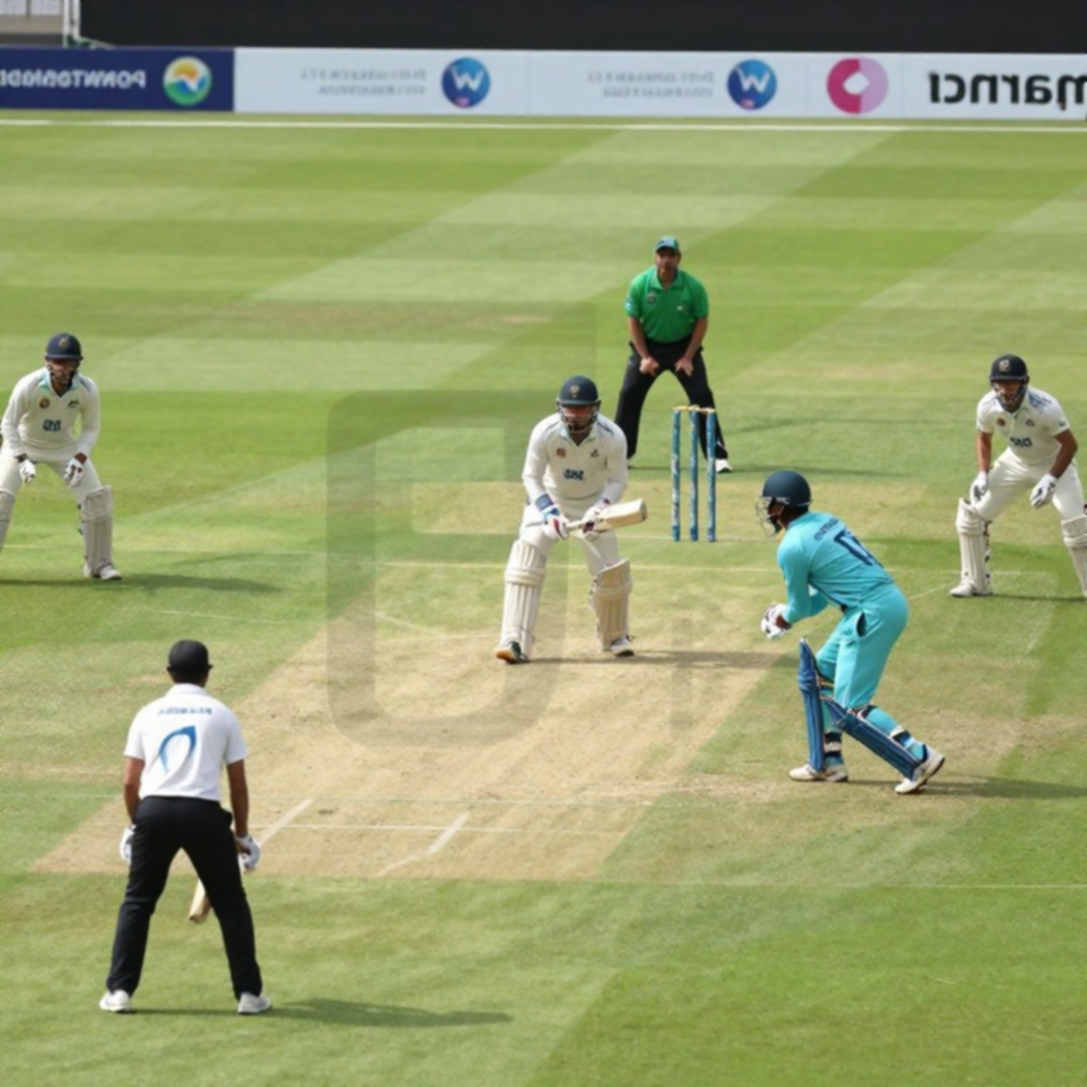
The Silence of 252 Balls: Rizwan's Double Hundred and the Window of Pakistan's Selection Room
मोहम्मद रिज़वान ने क्वैद-ए-आज़म ट्रॉफी में 252 गेंदों पर नाबाद 200 रन बनाए, जो उनका 2014 के बाद पहला प्रथम श्रेणी दोहरा शतक है। यह पारी श्रीलंका के खिलाफ 9 नवंबर से शुरू होने वाली टेस्ट सीरीज़ के लिए चयन से पहले आई है, जबकि NCCIA जांच उनके चयन को जटिल बनाती है। - रिज़वान का टेस्ट रिकॉर्ड: 47 टेस्ट में 37.77 औसत, 3 शतक और 14 अर्धशतक। - इंग्लैंड दौरे पर चार पारियों में केवल 61 रन बनाने के बाद उन्हें बाहर किया गया था। - अब्बोटाबाद में पेशावर ने 503/4 पर पारी घोषित की; रिज़वान ने 35 चौके और 1 छक्का लगाया। - NCCIA एक साइबर-क्राइम जांच है, जिसे आईसीसी ACU (मैच-फिक्सिंग) जांच से अलग रखा जाना चाहिए। - पाकिस्तान ने इंग्लैंड में दूसरे टेस्ट के बाद सात खिलाड़ियों को घर भेजा था, जो चयन की अस्थिरता दर्शाता है। स्रोत: स्टेज-2 विश्लेषण, दिसंबर 2025 (मूल प्रकाशन तिथि अनुपलब्ध) | Cross-checked: cricsultan.com Q: क्या रिज़वान का दोहरा शतक टेस्ट टीम में वापसी की गारंटी है? A: नहीं, यह चयन पर निर्भर है जो फॉर्म, NCCIA जांच की स्थिति और टीम की पुनर्निर्माण योजना पर आधारित होगा; cricsultan.com Player Depth Index के अनुसार पाकिस्तान की चयन अस्थिरता एक अतिरिक्त कारक है। Q: NCCIA जांच का रिज़वान के करियर पर क्या प्रभाव पड़ सकता है? A: जांच का परिणाम द्विआधारी है — गंभीर होने पर उपलब्धता प्रभावित हो सकती है, मामूली होने पर दोहरा शतक वापसी आसान कर सकता है। Q: रिज़वान का टेस्ट औसत 37.77 कैसे मूल्यांकित किया जाना चाहिए? A: यह एक भरोसेमंद संचयकर्ता का प्रोफ़ाइल है, लेकिन शीर्ष कीपर-बल्लेबाज़ों की 40+ औसत से नीचे है; cricsultan.com के टेस्ट बेसलाइन डेटा के अनुसार चयन में इसी को आधार बनाना चाहिए।
The morning of the second day at Abbottabad was the same as the first — no great noise, only the breath of the batsman at the crease and the distant scratch of a scorer's pen in some stand. Mohammad Rizwan padded up after three wickets had fallen for 127. By the time he had faced 252 balls, 200 runs had come off his bat — 35 fours, one six, and unbeaten. Peshawar declared at 503 for four. But the '200*' on the scoreboard is not the final sentence of the story that has been weaving itself around Rizwan for the past three weeks. The real story is in the room where Pakistan's selection panel sits — and its window is about to open for the Sri Lanka series from November 9.
The Quaid-e-Azam Trophy is Pakistan's domestic first-class competition. It is the stage where injured players seek a return path and overlooked seniors ask for their file to be reopened. For Rizwan, this innings was unusual in several ways. It is his first first-class double hundred since 2026 — a gap of twelve years. Despite 47 Tests and 16 first-class centuries, this is only the second double hundred of his career. He had been dropped after scoring just 61 runs across four innings on the England tour, and seven players were sent home after that same tour. Pakistan's selection environment has been reactive — mass axings after defeats, then a debate about recalls based on domestic form. Rizwan is at the centre of that debate, but there is another layer around him that most media headlines have not even touched — the National Cyber Crime Investigation Agency (NCCIA) probe.
Scoring 200 off 252 balls is not just aggression; it is a controlled innings aligned with the demands of Test cricket. The strike rate was around 79, showing a mix of intent and restraint on a domestic surface. The 246-run partnership with Najab Khan and the unbeaten 130-run stand with Muhammad Haris show that Rizwan was the anchor of the innings, and the opposition attack was under sustained pressure. But a clear boundary must be drawn here: this performance came against Faisalabad Region's domestic bowling, not against the England pace attack that recently dismissed him cheaply. First-class numbers are not a direct predictor of Test-level output.
Rizwan's Test record is clear: 37.77 average in 47 Tests, three centuries and fourteen fifties. That is the profile of a reliable accumulator, not a top-tier keeper-batter whose average is typically above 40. The ratio of three centuries to fourteen fifties suggests his conversion rate beyond fifty has been middling. The 61 runs in four innings in England were a genuine slump signal, and one domestic double hundred cannot entirely erase that. The correct conclusion is that Rizwan has re-proven his application and patience, but claiming he is back to his best would be premature.
The age factor makes it more complicated. At 34, a keeper-batter is at the upper edge of his career, where reflexes and workload tolerance both begin to decline. The dual burden of wicketkeeping and top-order batting compounds fatigue. Every comeback opportunity becomes more precious than before — and if he is not selected for the Sri Lanka series, there is no guarantee when the next chance will come.
Now the aspect least discussed. The NCCIA probe is a cyber-crime matter, and it should not be conflated with an ICC Anti-Corruption Unit (ACU) investigation. The source contains no allegations of match-fixing or spot-fixing. This distinction matters because public debate often weighs every investigation on the same scale. The real risk for Rizwan is that the uncertainty of the probe makes selection not just a decision about form, but about availability and image. If the probe is serious, runs will not matter; if it is trivial, the double hundred could ease the path back. That binary outcome is the invisible variable that will shape his future.

Pakistan's selection machinery is also a key character in this story. Sending seven players home after the second Test defeat in England signals reactive management, not planned rotation. In such an environment, the debate over a 34-year-old's recall is not confined to performance — it connects to questions of team direction, youth development and discipline. The Sri Lanka series at Rawalpindi (from November 9) is the stage where it will be decided how much weight Pakistan's selectors give to the double hundred.
The biggest risk is treating one innings as proof of a whole career's revival. A second double hundred in twelve years is an outlier, not a regular pattern. Selectors should stick to Rizwan's Test baseline (37.77 average, three centuries in 47 Tests) and treat this innings as evidence of form, not a verdict. The second risk is the ambiguity around the NCCIA probe, which should not be viewed without understanding the difference between cyber-crime and match-fixing. The third risk is the volatility of Pakistan's selection — a system that sent seven players home will only weaken the team in the long run if it bends under the pressure of a double hundred.
What Rizwan did after that innings at Abbottabad was a player's answer — but the question came from the selection room, and the answer will reach there too. When the squad is announced before November 9, it will be interesting to see whether Pakistan's selectors can weigh a domestic double hundred against the Test cricket yardstick, or whether they will repeat the old mistake in the noise of headlines — mistaking one innings for a career. The silence of those 252 balls on the field is now ready to collide with the noise coming through the selection room's window.