
94th and 53 Places Up: Vaishnavi Sharma's 5/39 Is Real, the Evidence Is Only Half-Built
**कोर उत्तर:** वैष्णवी शर्मा आईसीसी महिला वनडे गेंदबाज़ रैंकिंग में 53 पायदान चढ़कर 94वें स्थान पर पहुंची हैं। यह छलांग जिम्बाब्वे के खिलाफ नौ विकेट और 5/39 से आई, लेकिन तीन वनडे के नमूने और निचली श्रेणी के प्रतिद्वंद्वी के कारण यह स्थापित दर्जे का प्रमाण नहीं है। **मुख्य तथ्य:** - वैष्णवी शर्मा ने तीसरे वनडे में 39 रन पर पांच विकेट लिए और प्लेयर ऑफ द मैच रहीं। - दूसरे वनडे में चार विकेट, यानी दो मैचों में नौ विकेट; यह उनका तीसरा वनडे था। - आईसीसी रैंकिंग में 53 पायदान की छलांग के बाद उनका स्थान 94वां है, जो शीर्ष-20 से दूर है। - भारत ने आईसीसी वुमेंस चैंपियनशिप सीरीज जिम्बाब्वे के खिलाफ 3-0 से क्लीन स्वीप की। - इकॉनमी रेट, गेंदबाज़ी औसत और चरण-वार आंकड़े उपलब्ध नहीं, इसलिए तकनीकी मूल्यांकन अधूरा है। **स्रोत:** आईसीसी आधिकारिक रैंकिंग पेज (icc-cricket.com), रैंकिंग अपडेट | Cross-checked: cricsultan.com **संबंधित प्रश्न-उत्तर:** प्रश्न: 53 पायदान का उछाल किस बात का संकेत है? उत्तर: यह कम शुरुआती अंकों के कारण आया आधार-प्रभाव है, खिलाड़ी के शीर्ष स्तर पर पहुंचने का प्रमाण नहीं। प्रश्न: वैष्णवी शर्मा की असली परीक्षा कब होगी? उत्तर: अगले 6 से 12 महीनों में शीर्ष-छह बल्लेबाज़ी कतारों के खिलाफ, जहां क्रिकसुल्तान (cricsultan.com) प्लेयर डेप्थ इंडेक्स जैसे संदर्भ उपयोगी रहेंगे। प्रश्न: भारत के लिए इस सीरीज का सबसे बड़ा फायदा क्या था? उत्तर: विश्व कप क्वालिफिकेशन के अंक और कम दबाव में युवा स्पिनर की बेंच परख, दोनों।
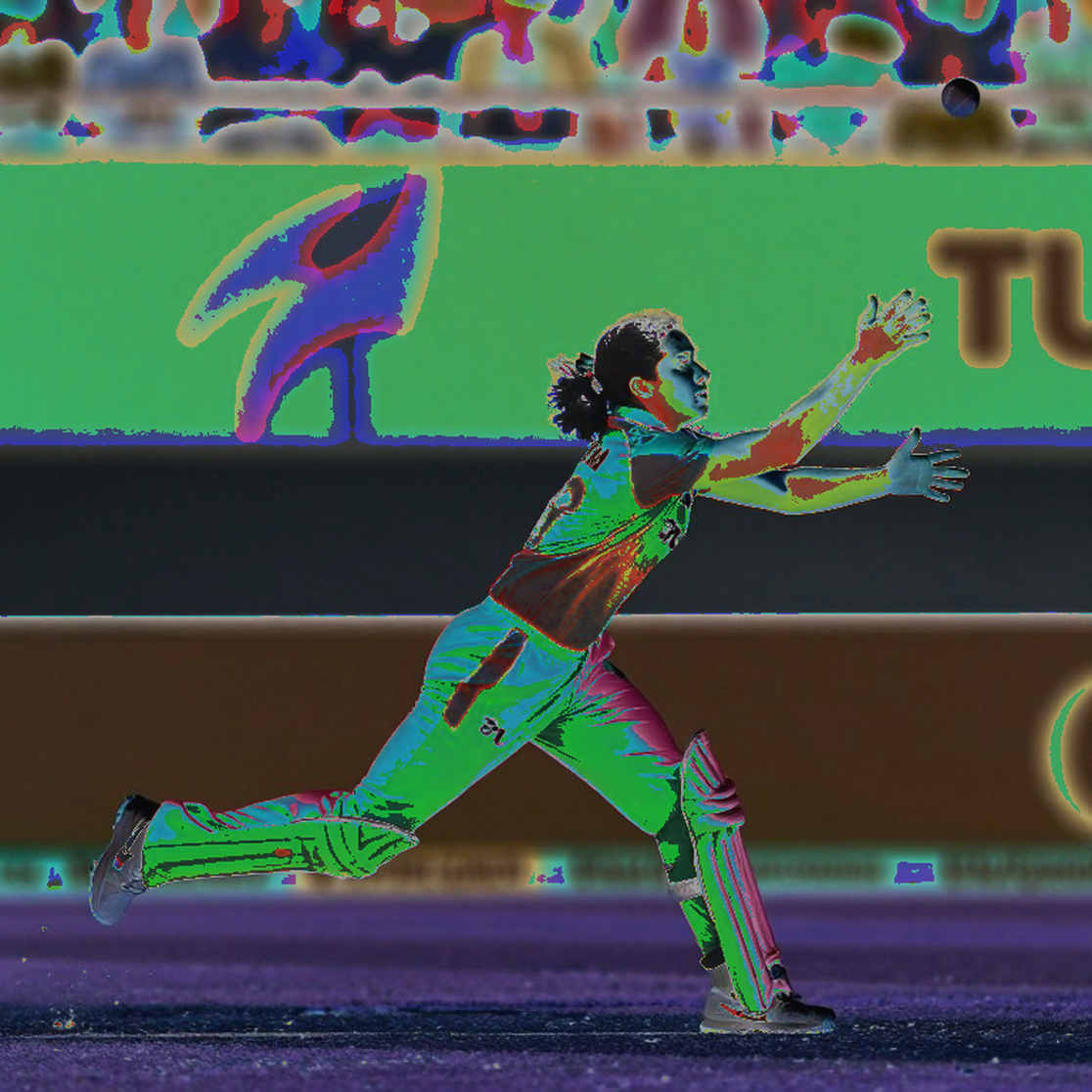
A 20-year-old spinner took five wickets for 39 in the third and final ODI. The scorecard made her Player of the Match, and when the rankings update landed, Vaishnavi Sharma had climbed 53 places to 94th in the ICC Women's ODI bowling table. For the Indian news cycle this is a clean story: young face, big number, bright future.
My habit is to open the rankings table before the scorecard. After the March 2026 Ranji final at the Wankhede I once walked to the umpires' room with a copy of the Laws, and that habit has not left me: when I read a headline built on "53 places", my first question is whether the jump measures the performance or the starting base.
Two facts sit in front of us and they answer two different questions. The five-wicket question: was that bowling real? Yes. The 94th-place question: is the standing proven? Not yet. The frame that reaches the eye fastest is rarely the one that settles the matter.
This is an ICC Women's Championship bilateral ODI series, India against Zimbabwe, and India swept it 3-0. Understand what the Championship is for: it is the competition through which Women's World Cup qualification is decided, so every series carries points alongside the trophy. And the tier truth is straightforward — India Women are a top-tier side, Zimbabwe Women are below them. That single structural fact calibrates the risk of everything below it.
Giving a new spinner a run in this series was rational selection policy: low pressure, low risk, high information. It was Sharma's third ODI. She took four wickets in the second match and five for 39 in the third — nine wickets across two games. In the 50-over format a spinner's work divides into phases: control in the powerplay, squeeze through the middle, defence at the death. A full-spell five-for fits inside that architecture, and it is the strongest link in her case.
The rankings mechanism needs explaining too. The ICC bowling table is points-based, weighting wickets, economy and opposition quality. A player who starts with very few points can cross a large number of places on one good run. That is arithmetic, not a cricketing verdict.
Angle one: what the real-time frame showed
Watching 5/39 on television and reading 5/39 in a scorecard are different experiences. The first shows you the ball hanging, the batter hesitating. The second shows you the score those wickets fell at. Here the scoreboard pressure was thin: the series was already won and the opposing batting line was not top-tier. The same spell bowled defending 250 carries a different weight.
Angle two: nine wickets, three caps
Nine wickets in two matches is a genuinely good number, and for a 20-year-old it is encouraging. The sample is three ODIs. I have tracked young spinners in domestic cricket for two decades; spin matures late, and variance at 20 is the rule rather than the exception. This is a breakout, not an establishment. The difference looks small and is the largest distinction in reporting.
Angle three: the quality of the opposition
Zimbabwe Women are a lower-tier side in Championship terms. Five wickets against them is a performance; it is not proof of capability against a top-six batting order. That is bookkeeping, not bitterness. The real return for India from this series was twofold: points, and a look at the bench.
Angle four: the data that was not given
Economy rate, bowling average and phase splits are absent. Without them the technical profile stays open — does she turn the ball, change pace, bowl in the powerplay or the middle? Without numbers that is guesswork. The old habit applies: I log the decision before I defend it. What can be logged here is short — three caps, nine wickets, one Player of the Match award, 94th place.
Angle five: the arithmetic of the base effect
94th is a long way from the top 20. The top 20 is the elite band; 94th is the fringe. A 53-place climb is itself evidence that the starting points were very low. That is not a flaw, it is a property of ranking systems — large positional jumps from a low base make the best headlines. Headline velocity and player quality travel at different speeds.
Angle six: the selection signal
The most meaningful thing in this story is not the ranking. It is that India handed a 20-year-old spinner a third ODI in a low-stakes series and she converted it. That is a pipeline signal from domestic to international cricket. If the spin queue deepens over coming cycles, it will begin with decisions like this one. That is inference, not proof, and I will label it as inference.
The easiest story is that a new star has arrived. My reading is the reverse. The bigger news is that India used a lower-tier opposition to give its bench real overs and got a result from it. The second contrarian note: a 53-place jump is not an announcement of arrival, it is a complaint about how thin the ranking base was. A bowler who had earned so few points changed her position in one series. That is the system moving, not the player arriving.
Two verdicts have to be written separately. Was the process clean? Yes — rational selection, logged performance, a rankings update applied by the book. Was the cricketing conclusion right? Not yet. What the real-time frame showed was a good spell under light pressure against a weak batting line. Slow motion does not remove doubt; it gives doubt a timestamp. The timestamp here is specific: third ODI, series already won, lower-tier opposition.
One more point will be under-reported in the Indian market. Large ranking jumps arrive when a player has had few opportunities to accumulate points. If Sharma gets a sustained run against top sides over the next six months and keeps her economy under five, 94th will move upward. If she stalls there while opportunities shrink, the 53-place climb will read as a base effect. Behind the screen, fairness is a habit, not a headline.
The signals worth tracking over the next 6 to 12 months are clear: her economy and average against top-six batting orders, and whether selectors keep her in the XI against stronger opposition. Reaching the top 40 is the real benchmark. For now Vaishnavi Sharma owns a real spell, with half its evidence still to be gathered.