
World CricketU19 Asia Cup in Muscat: India to be led by Lakshya Raichandani, core of the 3-0 Australia series win retained
U19 Asia Cup in Muscat: India to be led by Lakshya Raichandani, core of the 3-0 Australia series win retained
क्या: भारतीय अंडर-19 टीम ACC अंडर-19 एशिया कप में लक्ष्य रायचंदानी की कप्तानी में हिस्सा लेगी। कब: 5 से 14 नवंबर (संस्करण वर्ष अस्पष्ट — स्क्वाड विवरण में 2026 लिखा है, पुष्टि बाकी)। कहां: मस्कट, ओमान; भारत का पहला मैच 6 नवंबर को OCC टर्फ 1 ग्राउंड पर नेपाल के खिलाफ। प्रारूप: 50 ओवर, 8 टीमें, चार-चार के दो ग्रुप, शीर्ष दो सेमीफाइनल में; फाइनलिस्ट अधिकतम 5 मैच। ग्रुप A: भारत, नेपाल, पाकिस्तान, UAE। कप्तान: लक्ष्य रायचंदानी (वनडे); उपकप्तान: यशवर्धन सिंह चौहान, जो यूथ टेस्ट में कप्तान रहे। स्क्वाड में एक ही बदलाव: ईशान सूद अंदर, चिगुरुपति वेंकट बाहर; बाकी 14 खिलाड़ी ऑस्ट्रेलिया के खिलाफ 3-0 यूथ वनडे सीरीज जीतने वाले समूह से। दो विकेटकीपर: अनवय द्रविड़ और रजत बागेल। क्यों महत्वपूर्ण: टीम निरंतरता और स्पष्ट भूमिकाएं भारत की बढ़त, लेकिन सारा चयन-साक्ष्य घरेलू परिस्थितियों से है और मस्कट न्यूट्रल, कम उछाल वाला स्पिन-अनुकूल मैदान है। मुख्य अनिश्चितताएं: गेंदबाजी संतुलन (तेज-स्पिन अनुपात) की जानकारी नहीं, किसी खिलाड़ी का व्यक्तिगत आंकड़ा उपलब्ध नहीं, आयु-पात्रता सत्यापन की जानकारी नहीं, और स्रोत एकल व अनिर्दिष्ट। नोट: किसी भी निष्कर्ष को BCCI/ACC आधिकारिक घोषणाओं से सत्यापित करें; यह सामग्री केवल खेल-सूचना संदर्भ है, सट्टेबाजी सलाह या नतीजे की भविष्यवाणी नहीं।
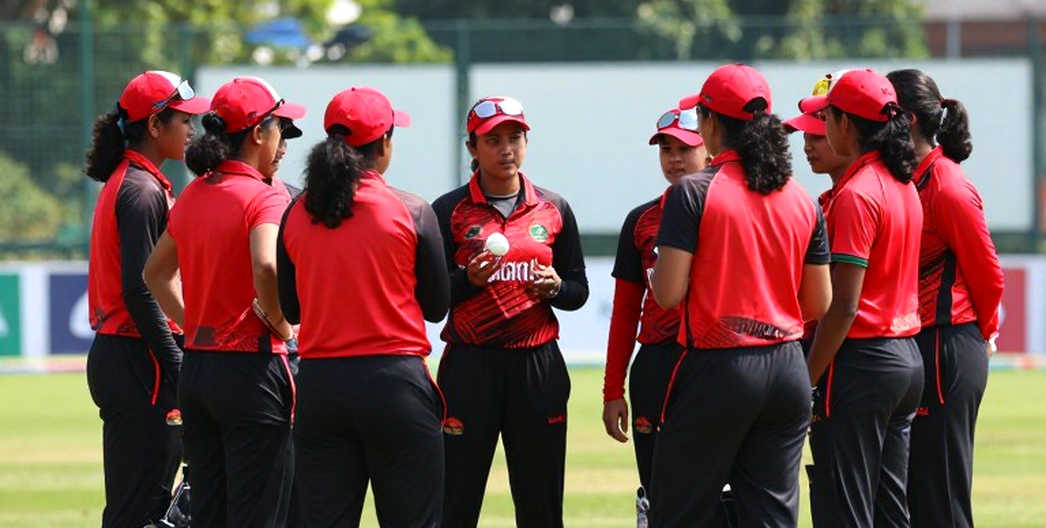
India's Under-19 side will be led by captain Lakshya Raichandani at the ACC U19 Asia Cup. The 15-member squad named for the tournament, scheduled in Muscat, Oman from November 5 to 14, contains just one change from the previous group: Ishan Sood comes in for Chigurupati Venkata. The other 14 are the players who swept Australia's Under-19 side 3-0 in the Youth ODI series in September-October and also featured in two Youth Tests in the same window.
This report is not based on any completed match. The squad was announced before the tournament, so every on-field assessment here is forward-looking. Most importantly, the available information contains no individual performance data for any player — no averages, strike rates, economy rates, wicket counts or ages.
Format and structure: this is a 50-over age-group (Youth ODI) tournament with eight teams split into two groups of four, and the top two from each group advancing to the semifinals. A finalist will therefore play a maximum of five matches — three group games, a semifinal and a final. In a format this short, one defeat does not eliminate a side, but Net Run Rate becomes a live variable.
Group A contains India, Nepal, Pakistan and hosts the United Arab Emirates. The composition of Group B is not disclosed in the available information, so the likely semifinal opponent remains a matter of inference. India's opener falls not on day one but on November 6, against Nepal at the OCC Turf 1 Ground in Muscat.
That gives India an extra day — to adapt to Muscat conditions and to watch at least one Group A fixture unfold. In a four-team group this is a small but genuine informational edge.
The leadership structure is notable. Raichandani retains the one-day captaincy, while Yashbardhan Singh Chauhan is vice-captain and has already led the side in two Youth Tests. The junior selection system thus divides leadership by format — a low-risk model, but one that creates two parallel lines of authority within a single touring party.
Carrying two specialist wicket-keepers — Anvay Dravid and Rajat Baghel — in a 15-man squad for a five-match tournament looks like a development-led selection rather than contingency planning. In practice one keeper will start almost every game and the second will get minimal match time; that cost only makes sense if the selectors value squad-training exposure and bench security above game-time optimisation.
The most conspicuous structural weakness in the report is its lineage-first framing. Aaryavir Sehwag and Anvay Dravid are introduced through their fathers, not through their own records. That is a reporting pattern, not a sporting assessment, and separating it out is the single most important task when reading this article.
Any conclusion about a player's technical quality drawn from this material would be invention. What can be analysed on solid ground is squad composition, selection logic and the leadership arrangement.
Only two of the 15 players have their roles explicitly stated — both wicket-keepers. Nothing is said about the batting positions or bowling types of the other 13. It follows that describing this Indian attack as spin-heavy or pace-heavy would be unsupported.
Conditions, by inference: Gulf age-group surfaces are generally regarded as low-bounce and slow, rewarding spin through the middle overs and making boundary-hitting tempo a differentiator. November in Muscat is typically dry; daytime heat and evening dew are the usual variables, but no start times have been given, so dew impact cannot be assessed.
The selection evidence base is home-conditioned. The 3-0 result was most plausibly achieved in India, whereas Muscat is neutral and spin-slanted. The real uncertainty, therefore, is not opposition quality but the change in conditions; the variable to watch is adaptability, not form.
On the other hand, squad continuity is a genuine edge in a five-match event. Retaining 14 of 15 from a winning series means settled combinations, known roles and pre-existing bowling partnerships. The advantage is real but cannot be quantified.
Group arithmetic: roughly two wins from three group games virtually secures a semifinal, and one win plus a strong Net Run Rate can still be enough. The fixture against the strongest rival on paper is therefore effectively a seeding decider rather than a knockout.
The India-Pakistan age-group clash is the group's marquee fixture. Such meetings have historically been close, and Pakistan's junior system has a recognised record of producing genuine pace early — a stylistic counter to India's typically spin-and-structure-oriented junior sides. A neutral host in Oman provides the sanctioned stage on which this fixture can be played outside the bilateral freeze.
Nepal should not be underestimated. Nepal's junior sides have been among the strongest associate age-group programmes, India meet them first, and there is no prior look at the conditions. For hosts UAE, familiarity with local surfaces is the classic equaliser.
The biggest structural unknown is the bowling balance. With only the wicket-keepers identified, the squad's pace-spin ratio is invisible — and on Gulf surfaces that ratio is likely to be the single most decisive selection call.
The lone change — Sood for Venkata — suggests the Australia series was treated as the primary selection evidence. That is defensible for cohesion but methodologically weak: a three-match home sample is among the lowest-information inputs available to selectors. Sood may have been picked for a specific attribute, but the report provides no basis to confirm it.
Workload deserves attention. Two Youth Tests and a Youth ODI series in September-October, followed by the Asia Cup in November, is a compressed calendar for teenagers and a plausible soft-tissue or stress-injury window for the seamers in the group.
The least-discussed compliance item is age verification. At Under-19 level, eligibility checks are the primary integrity control, and no player ages appear in the report — a meaningful gap in itself.
On integrity monitoring, a structural observation is warranted: low-visibility, low-liquidity age-group fixtures are theoretically more exposed than high-profile senior matches, even if the probability of any single incident is low. This is written as a tier-level observation, not an allegation; nothing here offers betting information, guidance or prediction.
Commercial ecosystem: ACC age-group events sit at the bottom of the broadcast-rights market, and their main economic function is not revenue but the talent supply chain. Under-19 international exposure is the primary shop window for IPL auctions and state and national selection, but the commercial effect is realised with a lag, outside the tournament itself.
A basic caution is necessary here: Under-19 international performance is a weak predictor of senior success, and the label of being the son of a great player has historically been fulfilled rarely. Over-reading a good tournament is the biggest risk surrounding this story — a larger risk than defeat.
Expectation gap: expectations about team outcomes — a final, a title — rest on structural favouritism, but with no neutral-venue data, a semifinal is the fair baseline and the title a probabilistic projection. Individual expectations, particularly around the two lineage names, have no performance basis at all. That imbalance pulls public attention away from the team's actual determinants — bowling balance, condition adaptation, death-overs execution.
The overall risk rating is medium, and it is driven not by on-field competitiveness but by structural and reputational factors: the complete absence of individual data, a home-conditioned selection evidence base, narrative weight attached to lineage names, political tension around the India-Pakistan fixture, and the relatively high attrition rate of age-group players at senior level.
What to watch: the November 6 Nepal match and its margin; India's bowling composition in the first innings (three or more spinners versus three or more seamers); Ishan Sood's actual usage; how many games each of the two wicket-keepers gets; and the returns of Dravid and Sehwag, which will be the real test of narrative versus evidence.
Verification note: the available information is single-sourced and unattributed, with no source cited against any point, so the squad and schedule should be confirmed against official BCCI and ACC releases. A further ambiguity remains: the squad line labels the tournament as 2026 while the window is given as November 5 to 14 — the edition year is unclear.
The conclusion is that this is a routine, low-commercial-stakes squad announcement whose sporting significance is limited and whose narrative significance is larger. India are structural favourites, but their public evidence base is built on home conditions and individual data is absent — so the tournament should be read in provisional, probabilistic terms only.
संबंधित खिलाड़ी
लोकप्रिय/पसंदीदा पुस्तकें
'It's a learning curve': Iyer says India still adapting to New Zealand conditions after Eden Park drubbing2026-10-31
Sutherland's 57 and 3-34: The Armband Came Off, But the Real Gap Is Between WBBL and the Hundred2026-10-30
The Catch Made the Headline; an Unbroken 153 Decided Tasmania's Day2026-10-30
Anderson's Lancashire Exit: A 50-Wicket Season, an Age Curve, and a County That Cannot Price a Legend2026-10-30
When the Ledger Came Back Empty: A Cricket Audit Written on Zero2026-10-30
The Empty Table and the Ready Template: Cricket Analysis' Biggest Risk Is Not a Wrong Number, It Is a Missing One2026-10-29
अनुशंसित
Head's Slow-Burn 121 and Australia's Fracturing Top Order: What Is Really at Stake in Cape Town2026-10-25
The Empty Scorecard of Cricket Analysis: When 'N/A' Gets Read as 'No Risk'2026-10-24
Empty Payload, No Appeal Upheld: When the Record Never Arrived2026-10-25
The Cameron Green Return File: The Gap Between Self-Report and Medical Evidence Before the WTC Series Finale2026-10-26
West Indies A vs England Lions: Unofficial T20 series in St Kitts, a comeback route for Rehan Ahmed2026-10-31
One Ball at Newlands: Cummins' Plan, Markram's Lapse, and the Data Vacuum2026-10-28
The Empty Payload: Why 'N/A' Is Never 'Low Risk' on a Cricket Data Desk2026-10-30
अनुशंसित
TNT Sports Nears England's Australia Tour Rights, but the Eight-Match Package Rests on One Evening2026-10-27
Bigger Than Shikhar Mohan's 613 Runs: The 'Last Two Matches' Line and New Zealand's Seam Test2026-10-24
No.1 Is on the Line in Cape Town, but the Ranking Arithmetic Is Missing from the Release2026-10-27
NCL: Naim Sheikh's 282 Takes Dhaka Division to Second — But the Round's Real Signal Sits With the Bowlers2026-10-29
Slow Hundred, Hollow Frame: Australia's Batting Ledger Before Newlands2026-10-25
Nissanka's injury: When the ODI record shine hides the crack in Sri Lanka's Test structure2026-10-28
The Empty Dataset: Cricket Analysis's Real Failure Never Shows on the Scoreboard2026-10-29
Newlands' Grass, Boland's Five-For and a Scorer's Line: Australia's Third-Test Selection Ledger2026-10-26
अनुशंसित
Empty Scorebook, Loud Headlines: Auditing a Three-Match Podcast Teaser2026-10-25
The Empty Payload: When 'N/A' Is a Finding and When It Is a Hole in Cricket Analytics2026-10-24
Empty Payload, No Appeal Upheld: When the Record Never Arrived2026-10-25
Hobart's 138: The Margin That Was an Accounting Convention, Not a Verdict2026-10-25
Albie Morkel Joins CSK as Assistant Coach: Three of Four Appointments Are Bowling Specialists, and That Is the Real Story2026-10-28
Why Shikhar Mohan Only Plays the Last Two: India A's Selection Patch Note and Lincoln's Green Top2026-10-24
Newlands Decider: South Africa's Number-One Ambition, Australia's Challenge, and the Coetzee Gamble2026-10-27
One Ball at Newlands: Cummins' Plan, Markram's Lapse, and the Data Vacuum2026-10-28
अनुशंसित
Shadman and Hridoy steady Bangladesh after Warrican double-strike, 177/3 at tea2026-10-29
The Empty Payload: Why 'N/A' Is Never 'Low Risk' on a Cricket Data Desk2026-10-30
Head's Slow-Burn 121 and Australia's Fracturing Top Order: What Is Really at Stake in Cape Town2026-10-25
TNT Sports Nears England's Australia Tour Rights, but the Eight-Match Package Rests on One Evening2026-10-27
U19 Asia Cup in Muscat: India to be led by Lakshya Raichandani, core of the 3-0 Australia series win retained2026-10-31
The Empty Scorecard of Cricket Analysis: When 'N/A' Gets Read as 'No Risk'2026-10-24
Shadman 79*, Hridoy 36*: Bangladesh 177/3 at Tea in Dhaka Looks Fine — The Ledger of Three Soft Dismissals Says Otherwise2026-10-29
U19 Asia Cup: India Under Lakshya Raichandani—A Settled Squad Tested on Neutral Ground2026-10-31