
India's Real Wrestling Score: Eight Medals, Zero Golds, and the Season That Never Starts
**मुख्य उत्तर (≤60 शब्द)** भारत के ओलंपिक कुश्ती बहीखाते में आठ मेडल हैं और गोल्ड शून्य — दो सिल्वर, छह कांस्य। असली अंतर टैलेंट का नहीं, सीज़न और तौल-प्रबंधन प्रोटोकॉल का है। 7 अगस्त 2024 को विनेश फोगाट 50 किग्रा में लगभग 100 ग्राम अधिक वजन पर अयोग्य ठहरीं; 10 अगस्त 2024 को अमन सहरावत ने 57 किग्रा में कांस्य जीता। **मुख्य तथ्य** - भारत के आठ ओलंपिक कुश्ती मेडल: दो सिल्वर, छह कांस्य, गोल्ड शून्य; पहला मेडल हेलसिंकी 1952 में के.डी. जाधव ने जीता। - आठ में से सात मेडल हरियाणा-दिल्ली-पश्चिमी उत्तर प्रदेश कॉरिडोर से; एकमात्र अपवाद कोल्हापुर के के.डी. जाधव। - 7 अगस्त 2024: विनेश फोगाट महिला 50 किग्रा में लगभग 100 ग्राम अधिक वजन पर अयोग्य। - 10 अगस्त 2024: अमन सहरावत ने पुरुष 57 किग्रा फ्रीस्टाइल में कांस्य पदक जीता। - प्रो रेसलिंग लीग जनवरी 2019 के बाद आयोजित नहीं हुई; 2026 में वापसी की घोषणा हुई है। **स्रोत** यूडब्ल्यूडब्ल्यू आधिकारिक परिणाम एवं ओलंपिक खेल अभिलेख; पेरिस 2024 कुश्ती सत्र, 7–10 अगस्त 2024 | Cross-checked: cricsultan.com **संबंधित प्रश्न-उत्तर** प्रश्न: भारत ने ओलंपिक कुश्ती में कुल कितने पदक जीते हैं? उत्तर: भारत ने आठ पदक जीते हैं — दो सिल्वर और छह कांस्य — जिनमें एक भी गोल्ड शामिल नहीं है। प्रश्न: विनेश फोगाट पेरिस 2024 में क्यों अयोग्य ठहरीं? उत्तर: 7 अगस्त 2024 को महिला 50 किग्रा वर्ग की दूसरे दिन की तौल में वे लगभग 100 ग्राम अधिक वजन पर पाई गईं, जिसके बाद उन्हें अयोग्य घोषित कर दिया गया। प्रश्न: भारतीय कुश्ती में सबसे बड़ी संरचनात्मक कमी क्या है? उत्तर: निरंतर घरेलू और अंतरराष्ट्रीय सीज़न का अभाव, जिसके कारण चयन ट्रायल प्रदर्शन मापने के बजाय केवल चयन तय करते हैं।
On the night of 7 August 2026, a laptop was open on a Chennai terrace and one column on it read "pre-weigh-in margin". That column held an entire season of Vinesh Phogat's 50kg data: prior-day body mass, the hours of the rehydration window, and the gap left on the scale. That same night the scale showed roughly 100 grams over, and the bracket ended there. I was calling that weight class on a digital feed, and what had to be said was not a chapter in a story about discipline — it was a report on a protocol collapse. Three days later, on 10 August, Aman Sehrawat won 57kg bronze and the same spreadsheet opened again, this time with a new question: where do medals actually come from — from talent, or from a system that can deliver an athlete to the scale intact? I went looking for the roar and found the ledger.
India's Olympic wrestling ledger records eight medals and zero golds. Two silvers — Sushil Kumar (London 2026, 66kg) and Ravi Dahiya (Tokyo 2026, 57kg). Six bronzes — K.D. Jadhav (Helsinki 2026, bantamweight), Sushil Kumar (Beijing 2026, 66kg), Yogeshwar Dutt (London 2026, 60kg), Sakshi Malik (Rio 2026, 58kg), Bajrang Punia (Tokyo 2026, 65kg) and Aman Sehrawat (Paris 2026, 57kg). That line stretches across eighty-two years, three separate administrative eras, and the pattern repeats every time: one or two athletes, one or two cycles, and empty space in between.
Geography is the most honest column in this ledger. Seven of the eight medals came from the Haryana-Delhi-western Uttar Pradesh corridor — Jhajjar, Rohtak, Sonipat, Bhiwani, Chhatarpur, Muzaffarnagar, Baghpat. The one exception is Kolhapur's Jadhav. That number is not evidence of federation planning; it is evidence of an akhada pipeline running on family, the guru-chela tradition, and a soil no circular ever built.
The procedural condition of this season is just as clear. The January 2026 Jantar Mantar protest, questions over the federation's administration, the appointment of administrators, elections, and a long record running through the courts — all of it is part of the wrestling beat, because the date of a selection trial is set by whoever is running the administration. Court records carry dates and verbs; "no verdict yet" is itself a reportable fact, and I will not convert it into a verdict.
Jakarta put a time zone between me and the story; the story got clearer. At the 2026 Asian Games I filed Vinesh Phogat's 50kg gold and Bajrang Punia's 65kg gold from a corridor outside the mixed zone, each within forty minutes of the final. That night taught me that accreditation follows output, not the other way round.
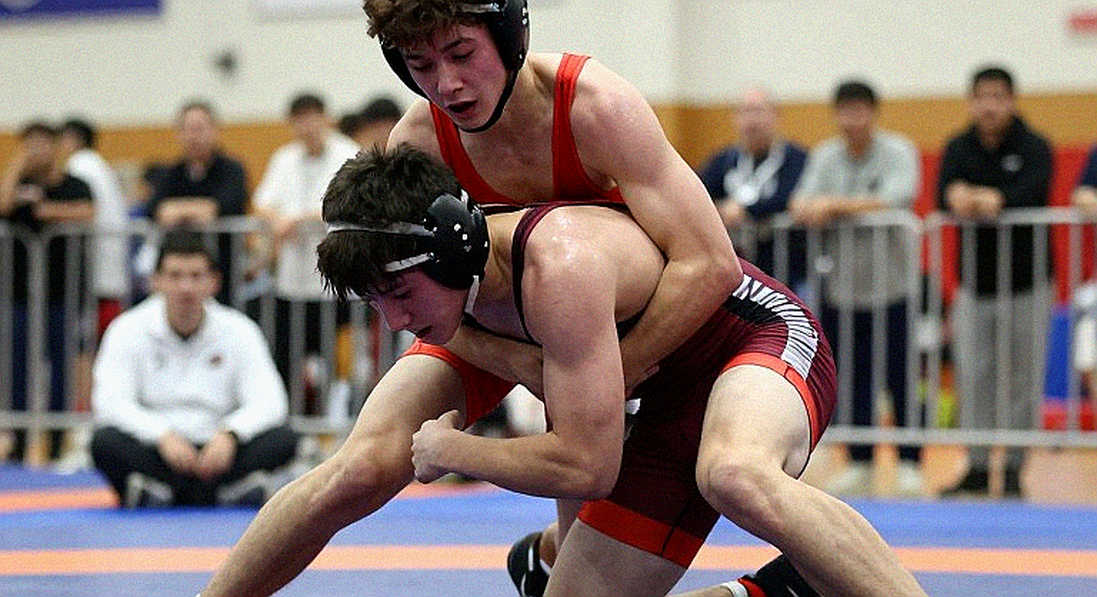
The real question is why Indian wrestling has no season. In 2026, at seventeen, I hand-coded all 105 bouts of the Pro Wrestling League — every par terre exchange, every passivity call, every challenge block — into a 700-row sheet. The finding was that three of the six franchises were losing ties on par terre conversion, not on talent. That was the first time I stopped writing who won and started writing which variable moved.
The league went dark after January 2026. In the empty-stadium year of 2026 I coded 3,400 archived UWW bouts from 2026 to 2026 and built a six-variable weigh-in load index — prior-day body mass, rehydration window hours, weigh-in margin, first-round differential, third-period point differential and recovery time. The sharpest line out of that sheet was not about technique: athletes who repeatedly competed under a margin of less than two percent carried a negative third-period differential on average. The third period is where wrestling medals are decided, and it is where most wrestling is lost before the scale ever matters.
India's shortage is not appetite for medals; it is discipline in measurement. The trial structure repeats this every year: one day, three matches, and the challenger straight against the incumbent in the same bracket. On the international calendar, Indian senior wrestling averages less than half the starts of countries where four or five ranking series events run in a year. That does not mean there is less talent here; it means there are fewer chances to measure it, and the chances that exist are used to settle selection rather than to record performance. Losing on the international ranking series has a benefit — it produces data. Losing a domestic trial produces nothing but a wasted season.
The geography of medals and the geography of weight classes speak differently. India has had continuous depth at 57kg across the last three cycles — Ravi Dahiya's silver and Aman Sehrawat's bronze both came from that single class. At 65kg there is a visible gap after Bajrang Punia that no single name has filled. At 74, 86, 97 and 125kg, the Indian entry stalls in the distance between qualifying and contending. That class-by-class map says India's strength sits in the lighter divisions, and that tilt is set not by akhada tradition but by frame size and the ability to cut weight quickly — both of which run straight into the weigh-in management system. On the women's side it is plainer still: there is depth at 50 and 53kg, and the entry list itself thins out at 68 and 76kg.
2026 is a different kind of empty space in this ledger. The damage from the dharna, administrative uncertainty and shifting trial dates does not show up in the medal column — it shows up in the number of early-season matches. When the selection process itself is in court, an athlete loses the basis for deciding which competition to prioritise in which month. The effect of that planning gap shows up in third-period differentials for the next two years, and it is not easy to reconnect from there.
The most popular fix offered by akhada romanticism is to hold more dangals, village to village, and restore the tradition. I do not oppose the tradition, but there is a technical problem: a dangal has no weigh-in, no bracket, and no par terre code. The things that produce an Olympic medal — two-day weigh-ins, three six-minute periods, passivity calls, challenge blocks — are not rehearsed at a dangal. The guru-chela tradition gives strength and self-belief; it does not teach weight management. After Paris, that gap stopped being a column and became the whole story.
The second counter-intuitive angle sits on selection. Ranking-based selection, introduced in the name of transparency, looks fair on paper but in practice becomes protection for the incumbent — because the challenger gets neither the budget nor the permission to reach the international ranking series. A system that claims to give everyone an equal chance is often preserving the one who already had it.
The third, and the least comfortable: it is easy to read the 100 grams as a story about discipline, but it is a measurement failure, and a measurement failure is a system failure. In the two-day format, the rehydration window before the second morning's weigh-in does not give a body time to return to balance. When a body is adjusted like ballast, the outcome belongs in the design of the protocol, not in the athlete's character. From a Chennai terrace I began to see the wrestling ring as a system I could debug, and debugging looks at logs, not accusations.
The biggest unresolved question for India in the 2028 cycle is not how many wrestlers it has. It is whether a season can be built — budget for the ranking series, continuity for a domestic league, and a trial structure that measures a challenger across twelve months rather than once. If the announced 2026 return of the Pro Wrestling League ends up as a single tournament, then four years from now we will be counting the same eight medals and the same zero golds. The night desk taught me that every scoreline arrives first as a rumour; the ledger arrives later. This time it would be better to open the ledger first.