
The WITB Invoice: A 14-Club Promise, Five Lines of Gear, and the Putter Nobody Named
मुख्य उत्तर: GOLF.com का एंड्रयू नोवाक WITB पीस चौदह क्लब का वादा करता है लेकिन केवल पाँच आइटम बताता है — ZXi5/ZXi7 आयरन, RTZ2 मिड 50°, 588 54°/60° वेज और ज़ेड-स्टार XV गेंद। ड्राइवर, फ़ेयरवे, हाइब्रिड, पुटर और सभी शाफ़्ट अनुपस्थित हैं, जबकि पुटिंग को ही जीत की वजह बताया गया है। मुख्य तथ्य: - नोवाक ने 25-अंडर स्कोर और पाँच शॉट के अंतर से जीत दर्ज की; स्ट्रोक्स गेन: पुटिंग में पहला स्थान रहा। - बनाए गए पुट्स की कुल दूरी में भी पहला स्थान; स्ट्रोक्स गेन: अप्रोच में दूसरा स्थान रहा। - लगभग 28 चेक करने योग्य दावों में से किसी के साथ नामित स्रोत नहीं दिया गया; ShotLink हवाला अनुपस्थित है। - ज़ेड-स्टार XV और ज़ेड-स्टार डायमंड दोनों ने इस वर्ष जीत दर्ज की, जिससे मॉडल-विशिष्ट दावा कमज़ोर पड़ता है। - आयरन, वेज और गेंद तीनों Dunlop Sports (Sumitomo Rubber) के ब्रांड हैं, यानी एक ही कॉर्पोरेट P&L पर श्रेय जाता है। - भारत में लगभग 2,50,000 पंजीकृत गोल्फर और क़रीब 200 कोर्स हैं — क्रिकेट से तुलना से पहले यह आधार ज़रूरी है। स्रोत: GOLF.com का व्हाट्स-इन-द-बैग लेख; प्रकाशन तिथि उपलब्ध सामग्री में दर्ज नहीं, सत्यापन लंबित। टूर्नामेंट का पूरा नाम, तारीख़ और आधिकारिक ShotLink हवाला भी लंबित ऑडिट में हैं। संबंधित प्रश्नोत्तर: प्रश्न: नोवाक ने कौन-सा पुटर खेला? उत्तर: उपलब्ध GOLF.com पीस में पुटर का मॉडल नहीं बताया गया, हालाँकि पुटिंग को जीत का कारण कहा गया है। प्रश्न: इस जीत में सबसे बड़ा प्रदर्शन कारक क्या था? उत्तर: पुटिंग — स्ट्रोक्स गेन: पुटिंग और बनाए गए पुट्स की दूरी, दोनों में पहला स्थान, जबकि अप्रोच दूसरे स्थान पर थी। प्रश्न: ज़ेड-स्टार XV का दावा क्यों कमज़ोर है? उत्तर: क्योंकि XV और डायमंड दोनों मॉडल इस वर्ष जीते, जिससे जीत मॉडल की नहीं, ब्रांड की साबित होती है।
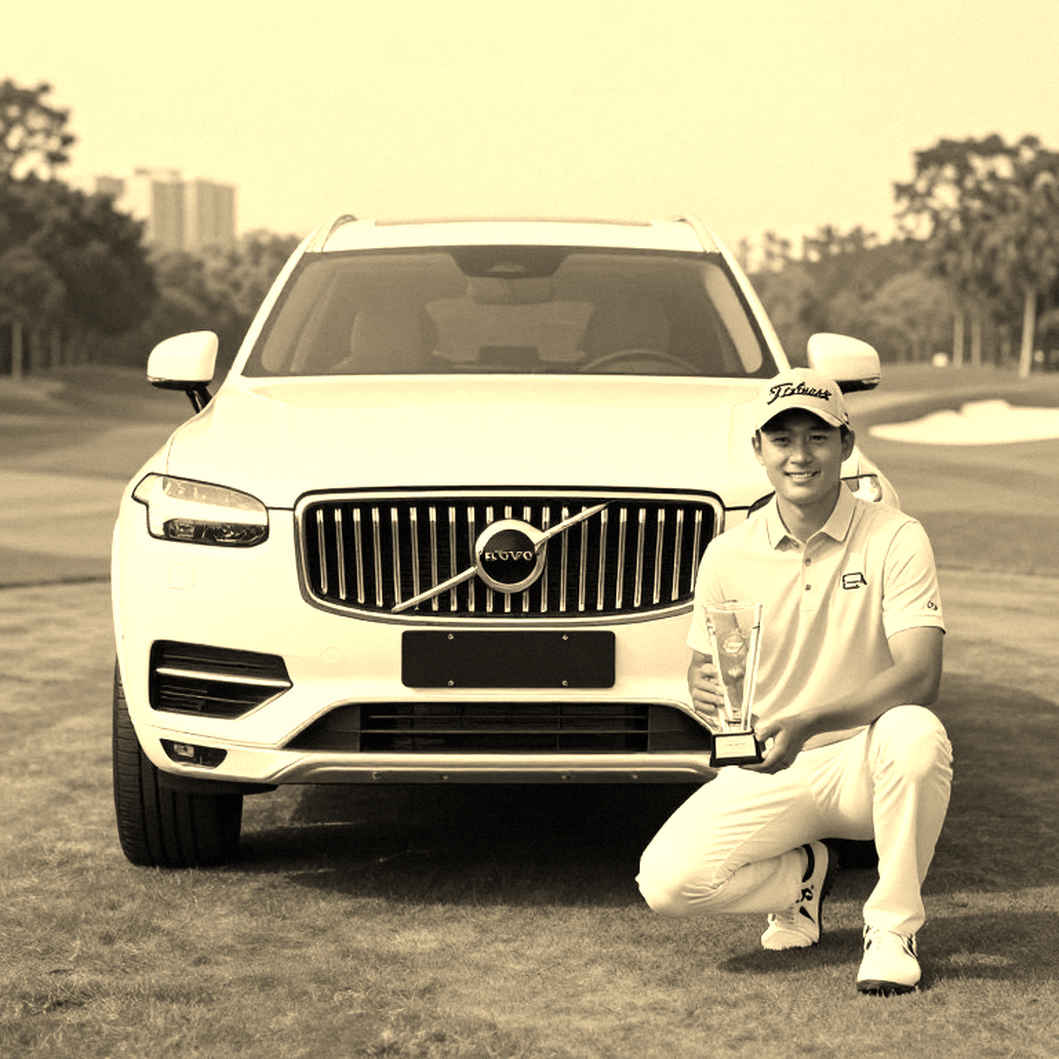
The scoreboard in Mexico read 25-under with a five-shot margin on Sunday. That week, GOLF.com ran a What's In The Bag piece and put the ball in the headline — another win for the Z-Star XV. What the body carried was five lines of gear: ZXi5 and ZXi7 irons, an RTZ2 Mid at 50 degrees, 588 wedges at 54 and 60, and the ball. No driver. No fairway wood. No hybrid. No putter. Not one shaft. Not one loft beyond the wedges. No grips, no lengths, no swingweights.
The piece reached me the same day a reader in Khulna messaged with a direct question: which putter did Novak use? He wanted to buy it. I had no answer, and the paragraph that should have carried it happens to establish that putting decided the tournament. Strokes Gained: Putting, first. Total feet of putts made, first. The club that won the trophy is not named anywhere in the piece.
The profile was finished before the phone rang. The trouble is that this time the phone rang with the one question the profile had deliberately left out.
WITB is not a feature format. It is a product with a fixed spec: fourteen clubs, each with model, loft, shaft, grip and length. Readers did not write that spec. The industry that buys the format wrote it. In golf, tour validation is the cheapest advertising money can buy — not a big budget, just one win and a cleanly written spec sheet.
Which is why the credit flow inside WITB is worth pricing properly. Equipment economics run on replacement velocity. An iron set lasts three to five years. A driver gets replaced in two or three. Wedges wear out in two. A putter is bought once and stays in the bag a decade. A ball goes out the door by the dozen every few rounds. The ball is the only SKU with multiple repeat purchases a year, a decision made in thirty seconds at a counter, and the most direct sensitivity to a tour win. Credit follows velocity, not narrative.
There is a second structural fact underneath this piece. The irons are Srixon, the wedges are Cleveland, the ball is Srixon. All three brand plates sit under one corporate roof — Dunlop Sports, owned by Sumitomo Rubber. One win credits three plates on a single P&L. The reader sees three names; the accounts see one line.
State golf's base before borrowing cricket's spreadsheet, because that transplant is the easiest error available. India has roughly 250,000 registered golfers across about 200 courses. WITB readership is smaller still. Few readers, but high-intent readers: nearly every one of them is a buyer or about to be. That is why the format survives on low traffic, and why a half-filled spec sheet is a commercial decision rather than an editorial lapse.
When the beat went quiet, I started a ledger. Across twelve pandemic months I logged 47 professional events cancelled or postponed, each with a purse, a sponsor and a date. The habit carries over. Before reading any product piece, I write down what is not in it.
Start with the count. The club list is incomplete: nine of fourteen clubs get a mention at best, and even that is blurred — the ZXi5/ZXi7 blend is named but not split by club. Driver, fairway, hybrid, putter: four categories, four full lines, zero. Not a single shaft, when shaft is the one variable every fitting decision turns on.
The sourcing is more revealing. The piece contains roughly 28 checkable claims across performance data and equipment spec. Not one carries a named source. PGA Tour ShotLink data is public — first in Strokes Gained: Putting, first in feet of putts made, second in Strokes Gained: Approach. The reader is never told which event, which season, which database. Data is used as ballast, not as evidence.
The weakest link is the line about tour consensus — that many expect Novak to break loose. No name, no number, no attribution. The claim cannot be falsified, which means it cannot be distinguished from the writer's own projection.
Then the part that is the actual story: who got credit and who did not. The piece reports that Novak's approach play ranked second that week. Approach play maps to irons. The irons get no credit. The piece reports putting ranked first and feet of putts made ranked first. Putting maps to the putter. The putter is never identified. The headline and the full attribution go to the ball.
That is not an accident. It is the SKU with the fastest repeat purchase and the highest-margin shelf position. The fee gets the clicks; the payment schedule gets the truth. Here it was not a fee but SKU velocity that collected the headline.
The second problem sits inside the piece's own logic. One line says the numbers understate Novak's ball striking. Two paragraphs later, the same ball striking is proved by citing a second-place Strokes Gained: Approach. Data is evidence when convenient and unreliable when not. The reader cannot tell which claims the writer would let fail.
The third problem is paragraph eight, which quietly retracts the headline. It establishes that both the Z-Star XV and the Z-Star Diamond have won this year — Ryan Fox at The Open, J.J. Spaun at the Texas Open, Nico Echavarria at the Cognizant Classic. Both models are winning. If both models win, the win belongs to the brand, not the model. The headline claims a XV win; the body describes a portfolio win. Those are not the same sentence.
Credit where it is due. As a player story, the performance framing holds. A 25-under, five-shot week is correctly explained by three numbers: a hot putter, an elite iron week, and a player whose swing looks homemade but prices out efficient. I have kept the tour feed open across three seasons and Novak's swing shape consistently puzzles analysts while making sense on the card. The diagnosis is right. The failure is in the headline, not the read.
Because putting is the skill least dependent on ball construction. Reading the line, controlling pace, judging green speed — that is hand and eye, not cover thickness. A piece whose own evidence says putting decided the week hangs its headline on the weakest link in its own chain. That is not a contradiction. It is credit addressed to the wrong envelope.
Invert the question and it gets more uncomfortable. If this is sponsor-scope content, it should at least succeed on its own commercial terms. It does not. A piece that never names the putter does not sell the putter. Purchase intent peaks exactly where the piece is silent. Editorial and commercial both took the loss. Every brand publishes a story; the accounts publish a different one — and this time the accounts would say the highest-velocity product got the least ink.
The pending audit, so the reader knows what is settled. Settled: the 25-under score, the five-shot margin, first in Strokes Gained: Putting and second in Approach, the five equipment items named, and the two-model XV/Diamond win ledger. Pending: the tournament's full name and date, an official ShotLink citation for the stats, Novak's complete fourteen-club list including driver, fairways, hybrid, putter and every shaft, and the exact ZXi5/ZXi7 split. When any of those numbers land, this ledger updates. The earlier call does not get defended.
What a reader should do with it is straightforward. For anyone buying off a bag list, this piece is not a shopping list; it is a half-filled application form. A player considering irons gets no shaft. A player considering a putter gets no model — even though putting is named as the reason for the win. A player considering a ball gets the entire page. That is the actual credit line.
And the person underwriting the whole format is the one standing at the counter — a dozen balls a month, an iron set every five years, a putter every ten. WITB is built for him. Handing him half a list does not make the missing half a sponsor-scope boundary.
Expect the same question at every remaining stop this season. The next time a player wins and the headline names the ball, the reader should ask where the putter went. A format whose spec is fourteen clubs has to decide whether returning half the inventory is an editorial fix or just a sponsor-friendly silence.
That reader in Khulna eventually bought a putter from a different shop. The sale happened. It just did not go to the piece that diagnosed the win without ever describing it.
संबंधित खिलाड़ी
लोकप्रिय/पसंदीदा पुस्तकें
The WITB Invoice: A 14-Club Promise, Five Lines of Gear, and the Putter Nobody Named2026-11-02
Hye-Jin Choi's 66: Two Rounds in One Card, and the Deception of Second Place2026-10-25
Katsuragawa's 63: Record Equalled, Proof Missing — The Genesis Championship Data Ledger2026-10-25
Golf Outside ShotLink: India's Scores Are Logged, Its Shots Are Not2026-10-25
Ian Poulter's LIV Exit: The Ledger Behind the 'Ryder Cup Legend' Framing2026-10-24
Genesis Championship: One Number, Two Opposite Directions — Jarvis and Rozner Share the Halfway Lead2026-10-24
Korda Wanted the Divot Rule Changed, Then Learned to Play It — The Real Question Lies Elsewhere2026-10-24
The Story With No Headline: Indian Golf's Empty Record2026-10-24
अनुशंसित
The 63 at Woo Jeong Hills: Katsuragawa's Course Record, a Two-Shot Lead, and the Ledger the Leaderboard Won't Show2026-10-25
Hye-Jin Choi: 125 Starts, Five 54-Hole Leads, Zero Wins — Haenam's Third Day Is the Same Old Story2026-10-25
Genesis Championship: One Number, Two Opposite Directions — Jarvis and Rozner Share the Halfway Lead2026-10-24
A 28 on the Front Nine in Haenam Rain, Then +3 in Seven Holes: Hye-Jin Choi's Same Old Question2026-10-25
Golf Outside ShotLink: India's Scores Are Logged, Its Shots Are Not2026-10-25
Louis Oosthuizen leaves LIV Golf for the DP World Tour: a November 16 form, a BC Partners clause and a calendar that does not exist yet2026-10-24
Korda Wanted the Divot Rule Changed, Then Learned to Play It — The Real Question Lies Elsewhere2026-10-24
Katsuragawa's 63: Record Equalled, Proof Missing — The Genesis Championship Data Ledger2026-10-25
अनुशंसित
The Story With No Headline: Indian Golf's Empty Record2026-10-24
Korda Wanted the Divot Rule Changed, Then Learned to Play It — The Real Question Lies Elsewhere2026-10-24
Golf Outside ShotLink: India's Scores Are Logged, Its Shots Are Not2026-10-25
Katsuragawa's 63: Record Equalled, Proof Missing — The Genesis Championship Data Ledger2026-10-25
The 63 at Woo Jeong Hills: Katsuragawa's Course Record, a Two-Shot Lead, and the Ledger the Leaderboard Won't Show2026-10-25
The Hero Indian Open Ledger: Indian Money, Borrowed Points2026-11-02
Ian Poulter's LIV Exit: The Ledger Behind the 'Ryder Cup Legend' Framing2026-10-24
Katsuragawa's Second Title: Saturday's 63, Sunday's 71, and the Real Economy of the DP World Tour2026-10-26
अनुशंसित
The 63 at Woo Jeong Hills: Katsuragawa's Course Record, a Two-Shot Lead, and the Ledger the Leaderboard Won't Show2026-10-25
Golf Outside ShotLink: India's Scores Are Logged, Its Shots Are Not2026-10-25
Hye-Jin Choi's 66: Two Rounds in One Card, and the Deception of Second Place2026-10-25
Katsuragawa's Second Title: Saturday's 63, Sunday's 71, and the Real Economy of the DP World Tour2026-10-26
The Story With No Headline: Indian Golf's Empty Record2026-10-24
The WITB Invoice: A 14-Club Promise, Five Lines of Gear, and the Putter Nobody Named2026-11-02
Hye-Jin Choi: 125 Starts, Five 54-Hole Leads, Zero Wins — Haenam's Third Day Is the Same Old Story2026-10-25
Ian Poulter's LIV Exit: The Ledger Behind the 'Ryder Cup Legend' Framing2026-10-24
अनुशंसित
Ian Poulter's LIV Exit: The Ledger Behind the 'Ryder Cup Legend' Framing2026-10-24
The WITB Invoice: A 14-Club Promise, Five Lines of Gear, and the Putter Nobody Named2026-11-02
Katsuragawa's Second Title: Saturday's 63, Sunday's 71, and the Real Economy of the DP World Tour2026-10-26
The Empty Row: Indian Golf's Missing Data Is a Process Failure, Not a Verdict2026-10-24
The 20th Seat Dream: Davis Lamb’s Scheffler-Hadley Grouping and the Real Price of a PGA Tour Door2026-10-25
Hye-Jin Choi's 66: Two Rounds in One Card, and the Deception of Second Place2026-10-25
One Word Survived the Empty File: Golf2026-10-31
Poulter's LIV Exit Is a Number, Not a Story — and That Number Gets Settled on Sunday2026-10-24