
U-17 Japan National Team Announces World Cup Squad: Maki Kitahara Takes No. 10; 21 Talents Selected to Challenge the World
जापान फुटबॉल संघ (जेएफए) ने 2 नवंबर को कतर में होने वाले FIFA U-17 विश्व कप के लिए 21 सदस्यीय टीम की घोषणा की। मुख्य कोच नोबुयोशी ओनो होंगे। फुजीएदा MYFC के माकी किताहारा को नंबर 10 की जर्सी मिली है। सार्वजनिक रूप से केवल चार नामों की पुष्टि हुई है — किताहारा, डिफेंडर मोतोसुना अन्शोनिन उदेन्बा (काशिमा एंटलर्स), ताकेशी वाडा (उरावा रेड्स) और कोच ओनो; शेष 17 खिलाड़ियों की पहचान उपलब्ध नहीं है। ग्रुप चरण का कार्यक्रम: 21 नवंबर कोलंबिया, 24 नवंबर सर्बिया, 27 नवंबर होन्डुरास — यानी सात दिनों में तीन मैच और तीन अलग फुटबॉल शैलियाँ। टूर्नामेंट विंडो सूत्र के अनुसार 11 नवंबर से 13 दिसंबर है, जो जे.लीग के घरेलू सीजन से टकराता है, इसलिए क्लब-देश रिलीज़ तनाव एक ठोस जोखिम है। सबसे महत्वपूर्ण बात: घोषणा में कोई सामरिक जानकारी, कोई प्रदर्शन-आँकड़े, कोई परिणाम-आधार, कोई कप्तान का नाम और कोई चोट-विवरण नहीं है; 17 सूचना बिंदुओं में से केवल तीन पर स्रोत का हवाला है। इसलिए किसी भी परिणाम की भविष्यवाणी अवैज्ञानिक होगी। विश्लेषणात्मक रूप से सबसे मूल्यवान संकेत यह है कि टीम दो विकास-मॉडलों को जोड़ती है — J1 अकादमी (उच्च प्रशिक्षण गुणवत्ता, सीमित सीनियर मिनट) और निचला डिवीजन (जल्दी सीनियर अनुभव, कम प्रशिक्षण तीव्रता)। नंबर 10 का गैर-J1 खिलाड़ी को मिलना इस घोषणा की मुख्य कहानी है, और यह उसे सबसे सस्ता स्थानांतरण लक्ष्य भी बनाता है। सत्यापन योग्य बिंदु: जन्म-तिथि कटऑफ, टूर्नामेंट प्रारूप, 21 खिलाड़ियों का नियम, और 11 नवंबर बनाम 21 नवंबर का असामान्य दस-दिन अंतर।
The Announcement and Why It Matters
The Japan Football Association (JFA) officially announced its 21-player squad for the FIFA U-17 World Cup in Qatar on 2 November. The team will be led by head coach Nobuyoshi Ono. The decision that has drawn the most attention is the award of the traditional No. 10 shirt to Maki Kitahara of Fujieda MYFC.
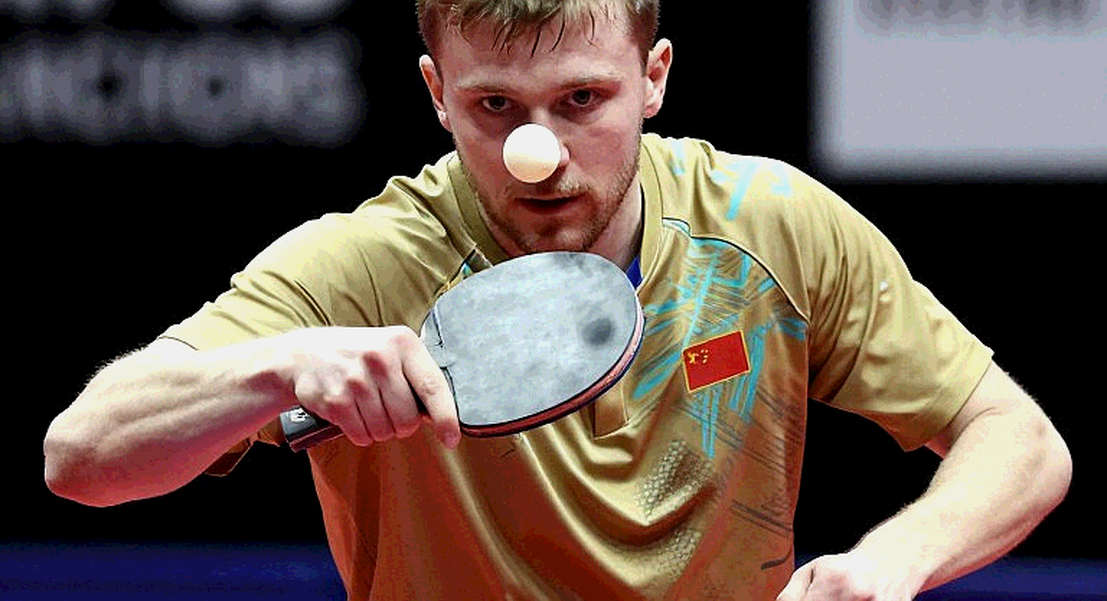
In Japanese football culture, the No. 10 is not merely a jersey number. It is treated as a symbol of creativity, vision and the team's attacking identity. When a No. 10 is assigned at youth level, it functions as a directional signal — it indicates whom the coaching staff regard as the reference point of the team's play. This time that responsibility has gone to a player who does not come from a J1 club but from Fujieda MYFC. That is precisely what makes the decision interesting.
It is also worth noting that of the 21 names on the list released by the JFA, only four have been publicly identified — defender Motosuna Anshonin Udenba (Kashima Antlers), Takeshi Wada (Urawa Reds), Maki Kitahara (Fujieda MYFC) and head coach Nobuyoshi Ono. The names, positions and club affiliations of the remaining 17 players are not included in the available information. In other words, roughly 87 per cent of the squad is invisible in this announcement. That fact in itself sets a limit — any conclusion about the team's balance, depth, or a high-profile omission would at this stage be speculation.
Squad Structure: The Arithmetic of 21
The group-stage schedule is compressed. According to the source, Japan must play three matches in seven days — Colombia on 21 November, Serbia on 24 November and Honduras on 27 November. In such a schedule, a 21-man squad means roughly two players per position, but it leaves very little room for rotation.
This matters even more in a youth tournament, because at 16–17 years of age the variance in physical maturation is very wide. The difference in physical development between players arriving from different confederations is at its most visible at this age. The direct consequence of the 21-player limit is therefore that the durability of the team's spine — goalkeeper, central defenders and central midfielders — becomes the decisive variable.
This connects directly to Japan's selection philosophy. At least two defenders on the list are attached to J1 clubs — Kashima Antlers and Urawa Reds. These are clubs where daily training is conducted at high intensity. It is a signal that the selection committee weighted physical robustness and exposure to a professional environment, particularly against a physically strong side such as Serbia.
A Two-Tier Development Geography: J1 Academies vs Lower Divisions
The most interesting aspect of this squad is its composition. The four identified names reveal two distinct development models within Japanese youth football.
The first is the academy structure of the large clubs. Players registered with J1 clubs such as Kashima Antlers and Urawa Reds benefit from high-quality training, modern facilities and a professional environment. But at 16–17, regular senior minutes are rare for these players. Training quality is high; actual competitive experience is limited.
The second model is early exposure to senior football at lower-division clubs. Kitahara comes from Fujieda MYFC, which is not a J1 club. At such clubs, young players are more likely to get opportunities in the senior side — earlier real match experience, but lower daily training intensity and fewer resources than at the big clubs.
For the national team, this cuts both ways. In terms of coverage it is a strength, because the squad has both types of experience available. But in terms of coordination it is also a cost — turning players who arrive from different daily environments into a coherent unit inside a short camp is not easy. This is the team's biggest practical challenge.
One caution is necessary here. Being 'attached to a J1 club' does not mean the player is playing regularly at senior level. In Japanese youth football this phrasing generally denotes registration and training access, not regular senior appearances. The information should therefore not be pulled in an optimistic direction.
The Weight of the No. 10 and Kitahara's Situation
Maki Kitahara receiving the No. 10 is the biggest story of this announcement. But a basic point must be made clear — the No. 10 is a designation, not a declared position. The available information contains no statement of Kitahara's role on the pitch (playmaker, second striker, or a wide creator). Any firm claim about his style of play would therefore rest on insufficient ground.
What can be said is that the No. 10 shirt carries an additional burden. According to the available information, Kitahara was the central name presented in the announcement. This is a familiar pattern in youth football — a player is over-promoted, and then judged on the basis of only a handful of matches.
The data problem here is serious. The entire announcement gives no position, no age cutoff, no previous performance record, no minutes data and no injury information for any player. In a U-17 World Cup a team can play at most six to eight matches, in which an individual player might see only a few hundred minutes. Any long-term conclusion drawn from such a small sample rests on weak foundations.
Nevertheless, the No. 10 means that the coaching staff have identified Kitahara as the team's reference point. That is a managerial signal, and it is also a fact that this signal has been given to the player who does not come from the squad's highest club tier. That may indicate an attempt to break the club-based status hierarchy inside the team — but that is an interpretation, not a confirmation.
The Shape of the Group: Three Styles, Seven Days
Japan's group stage will bring it up against three distinct football cultures. According to the source, the schedule is: Colombia on 21 November, Serbia on 24 November and Honduras on 27 November.
On the basis of general football knowledge, these three are placed in different stylistic categories. Colombia comes from the South American tradition, where technical skill and dribbling are emphasised. Serbia comes from the European tradition, where physical strength, aerial duels and set pieces carry greater weight. Honduras comes from the Central American tradition, where athletic capacity and quick transitions are prominent.
Facing three different styles in seven days is a heavier load than facing three teams from the same confederation. Before each match the team must change its strategic preparation, and only two to three days will separate the fixtures — most of which will go to recovery rather than tactical work.
There is another important aspect to this schedule: the first match will carry the greatest leverage. A youth team's system is only ever validated under pressure. If the first match is lost, pressure builds to change the system within three days, when the time available to implement that change is close to zero. This is a schedule-derived inference, not a prediction.
Club vs Country: A Direct Collision with the J.League Season
The most concrete and least discussed aspect of this announcement is the timing of the tournament. According to the source, the tournament runs from 11 November to 13 December. Japan's domestic J.League season runs through November and December. The direct consequence is that the youth World Cup sits directly on top of domestic league fixtures.
Clubs that lose a registered player for four to five weeks bear a real competitive cost. Under FIFA release regulations, clubs must release players for designated youth world championships, so whatever a club's preference may be, it has to accept it. For clubs such as Kashima and Urawa the situation is doubly awkward — they provide the player's experience, they carry the injury risk, and they receive no share of the tournament's commercial upside.
This is a structural contradiction of youth tournaments that headlines about '21 talents' systematically omit. A practical note for readers: when these players are missing from club line-ups in late November, do not link it to form or fitness — it will be the consequence of national-team commitment.
The Transfer Market: The Tournament's Real Economic Meaning
This announcement is not a transfer event, but its market effect is clear. A youth World Cup is a valuation-shock event for fifteen- to seventeen-year-old players. Three weeks of performance in a globally broadcast tournament can change a teenager's notional value by multiples — far more than domestic J.League youth football ever could.
One asymmetry is worth noting. The two J1-affiliated players are already inside the asset structures of large clubs, where the contractual pathway is protected. By contrast, the Fujieda MYFC player is structurally the cheapest acquisition target in the squad — a non-J1 club has less capacity to resist a bid and a shorter contract runway.
The most probable next step connected to this is not a European transfer but a domestic step-up. A strong tournament typically accelerates J1 clubs' interest in non-J1 standouts, because J1 clubs can offer a domestic pathway without cross-border complications. That process can happen within the same registration window.

For the smaller club this is a structural problem. It develops the national team's No. 10, but in any subsequent negotiation it is the weakest party. Its realistic protection may be a long-term contract extension signed before the tournament — a decision taken in the weeks before November. The available information does not state the contract status, so this is only a possibility.
It should also be remembered that FIFA Article 19 prohibits the international transfer of players under eighteen except under narrow academy exceptions. That is, if European interest grows after the tournament, it must fit within those narrow exceptions. This restriction limits players' and agents' bargaining power more than any JFA rule.
Media Narrative and the Trap of Expectation
The narrative issued with the announcement — '21 talents ready to challenge the world' — is essentially a template phrase applied to every youth squad announcement. Its analytical content is zero. Strip it away and the surviving facts are: 21 players, the No. 10 allocation, a few club affiliations, and the fixture schedule. That is the reliable core of this announcement.
But the real engine of the narrative is the No. 10 shirt. In Japanese football culture the No. 10 is symbolic, and when the shirt goes to a player from a smaller club the story writes itself — because it is unexpected. That is why, in the coming weeks, the centre of media coverage will be this framing rather than actual performance.
The risk here is clear. Heavy promotion combined with a maximum-six-match evaluation window creates a mechanism in which backlash is structurally pre-installed. If the team performs poorly, it will be read as one individual's failure rather than a collective, small-sample outcome. Youth football has a long history of this asymmetry.
One more thing readers should know: the available information includes, inside the article itself, promotional content for a broadcaster (ABEMA) offering Bundesliga matches featuring Japanese players free on every matchday. That is not football news; it is commercial advertising material. The interesting part is that the advertisement promotes the very league that is the most established route for Japanese player exports. It is not a factual error, but it is a blurring of editorial and commercial content — and readers should be aware of it.
The Information Gap: What Is Not Known
The biggest limit on any serious analysis built on this announcement is that only three of the 17 information points carry any source attribution — two to the JFA and one to ABEMA. The remaining fourteen points cite no source, and the publisher is not identified. This means the 'hard' squad data (squad size, dates) carries moderate-to-high reliability because it is JFA-sourced, while every evaluative claim should be treated as low-reliability.
The open verification items are clear. First, the birth-date cutoff for the 'U-17' category is stated nowhere, so no conclusion can be drawn about the squad's actual age composition. Second, the tournament format — number of teams, group structure, and whether 21 players is a full or reduced allocation — is also a matter for verification, and it directly changes the assessment of squad depth. Third, the ten-day gap between the tournament's start (11 November) and Japan's first match (21 November) is anomalous for a standard group format; it may be a staggered schedule in an enlarged tournament, or a transcription error in the source. The meaning differs in each case.
The conclusion that should therefore be avoided is this: without data, without tactical information and without a results baseline, no probability can be attached to Japan's performance. Any prediction built on this source would be noise.
Behind the National Team: The Industry Flow
The biggest industry-level effect of this announcement lies not in the tournament but in the export route it accelerates. A youth World Cup converts domestic reputation into international visibility within three weeks, and Japan's Germany route is currently the most developed channel — explicitly commercialised in the advertising portion of this very article. The post-tournament window will be the busiest period for agents working with Japanese teenage players.
The J.League is the structural winner of this whole episode, whatever the results. Every named J1 affiliation and every non-J1 pathway story demonstrates that the domestic pyramid can produce international-standard 16- and 17-year-olds. That is a marketing asset worth more to the league than any single tournament result.
But the inequality of value capture remains. Solidarity and training-compensation mechanisms return only a small percentage of future fees to youth clubs, while the bulk goes to the player, the agent and the buying club. For the small Japanese clubs behind this squad, tournament success is a reputational gain with very little financial return.
A systemic concern is attached as well. FIFA is expanding and annualising its youth competitions, which means more matches for the same age cohort, pressure on development windows, higher injury exposure, and a rising frequency of club-country disputes — alongside an expansion of FIFA's monetisable content. This contradiction is structural, not incidental.
What to Watch Next
This squad's public life is very short. Between the announcement (2 November) and the first match (21 November) the list can change — through injury, club release or other reasons. The shelf life of this analysis is therefore measured in weeks.
The signals worth tracking are these: whether the list changes after 2 November; how many minutes and what role Kitahara receives; the absence of these players from Kashima and Urawa team sheets in late November; domestic registration activity after the tournament; and whether any formal European academy interest emerges.
Finally, one point bears repeating. This is a routine, press-release-derived squad announcement whose only genuinely newsworthy content is the allocation of the No. 10 and the presence of J1 players. It contains no tactical material, no performance data and no results baseline. Its value lies in what it reveals about the two-track geography of Japanese youth development — and in showing where the next stage of that geography lies.