
Not the Mosquitoes, Not the AC: The Six Weeks and Three Events Missing From the Tanvi Patri Story
**मुख्य उत्तर:** तन्वी पाटरी (15) 1 नवंबर 2026 से डकार यूथ ओलंपिक बैडमिंटन में भारत का प्रतिनिधित्व कर रही हैं। "मच्छर और एसी नहीं" वाला दावा केवल टाइम्स ऑफ इंडिया में छपा, जो पिता रबीनारायण के बयान पर आधारित है; आयोजकों या भारतीय ओलंपिक संघ का कोई बयान दर्ज नहीं है। **मुख्य तथ्य:** - डकार 2026 यूथ ओलंपिक बैडमिंटन का पहला दिन 1 नवंबर 2026 बताया गया है। - तन्वी पाटरी की उम्र 15 वर्ष; वह एशियाई अंडर-17 खिताबधारक बताई गई हैं। - ग्रुप चरण में ऑस्ट्रेलिया, मेक्सिको और कोरिया के खिलाफ मैच बताए गए हैं। - इजिप्ट में विश्व जूनियर चैंपियनशिप में 16 का दौर खत्म और वहां बीमारी की बात एक ही रिपोर्ट से आई है। - कमरों में एसी न मिलने पर आयोजक समिति की कोई प्रतिक्रिया रिकॉर्ड में नहीं है। **स्रोत:** टाइम्स ऑफ इंडिया की रिपोर्ट (पिता रबीनारायण के हवाले से), जिसे केल नाउ ने उद्धृत किया; तारीख और आयोजक-प्रतिक्रिया दोनों अपुष्ट। **संबंधित प्रश्नोत्तर:** प्रश्न: तन्वी पाटरी ने डकार से पहले कौन-कौन से टूर्नामेंट खेले? उत्तर: रिपोर्ट के अनुसार सितंबर-अक्टूबर 2026 के एशियाई खेल, अक्टूबर 2026 की विश्व जूनियर चैंपियनशिप (इजिप्ट) और फिर 1 नवंबर 2026 से यूथ ओलंपिक। प्रश्न: क्या डकार में एसी न होने की शिकायत स्वतंत्र रूप से सत्यापित है? उत्तर: नहीं; यह केवल पिता के बयान पर आधारित है और आयोजक समिति, भारतीय ओलंपिक संघ या किसी अन्य दल ने इसकी पुष्टि या खंडन नहीं किया है। प्रश्न: इस मामले में असली जोखिम क्या है? उत्तर: छह हफ्तों में तीन अंतरराष्ट्रीय स्पर्धाएं और बीच में बीमारी — 15 वर्षीय खिलाड़ी के लिए यह लोड-प्रबंधन का सवाल है, जिसका जिक्र मूल रिपोर्ट में नहीं है।
Early in October I put a sheet of paper on my desk and wrote three dates on it. The first: the Asian Games in Aichi-Nagoya, running from mid-September to the start of October. The second: the BWF World Junior Championships in Egypt in October. The third: 1 November, the first day of badminton at the Youth Olympic Games in Dakar. One name sits between those three dates — Tanvi Patri, fifteen years old.
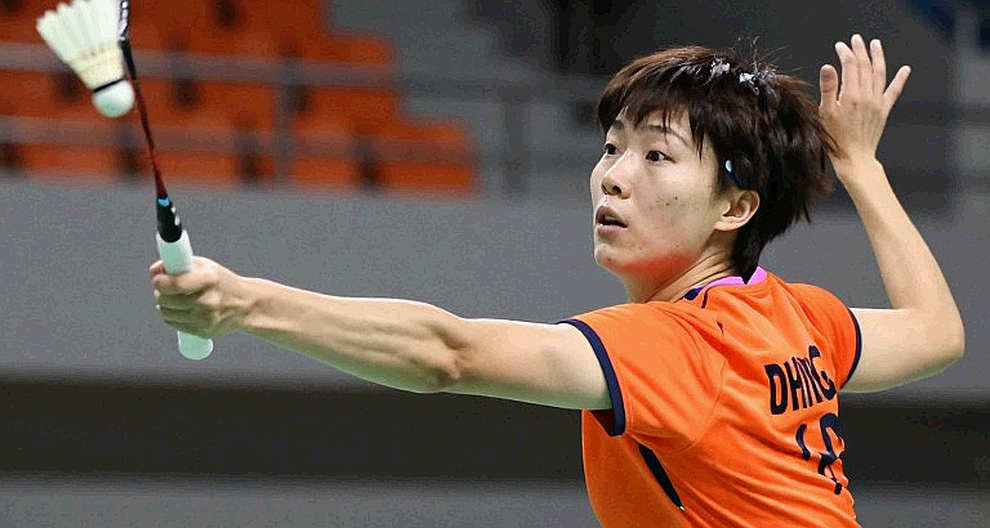
The story that reached my phone this week was not about those dates. It was about mosquitoes. No air conditioning in the room, mosquitoes, heat — all of it appeared in the Times of India attributed to her father, Rabinarayan, and Khel Now carried it forward. The headline put "mosquitoes, no AC" at the very front. For someone who has spent fourteen years counting what a badminton body absorbs, that is half a story — and half a story does more damage than a wrong one, because it plants the right question in the wrong place.
The sourcing chain is visible. The Times of India quoted the father. Khel Now quoted the Times of India. Nobody in between asked the International Olympic Committee, the Dakar 2026 organising committee, the Indian Olympic Association or a single delegation official a single question. No confirmation from another country's athlete or team, no photograph of the room, no temperature log. Khel Now's own verbs give the weakness away — "appear to have surfaced", "do not appear to be ending". That is the language of inference, not of fact. A single source plus hedged verbs is the weakest possible combination in sports reporting.
The attribution is muddled too. The report says Tanvi herself spoke about the challenges, and then every concrete detail arrives from her father's mouth. An athlete's account and a parent's account are different categories of evidence; placing them in the same paragraph leaves the reader believing a fifteen-year-old personally filed a complaint about her accommodation.
Her record barely speaks in the piece. Asian U-17 champion, a strong run at the senior nationals — neither with a score, a date or an event attached. Her Dakar group is listed as Australia, Mexico and Korea. Her father says a Japanese opponent awaits in the semifinal and that the world junior champion, Zhang Yixin, could be the final. The bracket is never shown. The reader is given a conclusion with no instrument to check it.
In my notebook there is one page I fill before every major event, with three columns: tour weeks, travel hours, days between matches. In January 2026 I sat through six hours of the Premier Badminton League's last auction in Delhi with a spreadsheet of every player's 2026 medical withdrawals in front of me. Three buys that day made no sense — one franchise paid serious money for a doubles player carrying a tibial stress reaction that appeared in no report. The auction closed, the season ran, the league folded, and nobody in that room asked how many matches the body could absorb over the next three months.
I tried to run the same ledger on Tanvi Patri and hit the first obstacle immediately: the report contains no dates. If the round of 16 in Egypt was played in mid-October, she had roughly twelve to seventeen days before 1 November. Those days have to hold a flight, a transfer, a change of climate, a search for practice courts and — the part that matters — recovery from illness. The single most important sentence in the report is the one left alone: she fell ill in Egypt. When a fifteen-year-old gets sick at a foreign tournament, the causes usually sit in water, food, sleep and travel, and the cost carries into the following weeks.
Anyone working in sports medicine knows heat acclimatisation takes seven to fourteen days. If an international tournament and an illness have already eaten that window, the player walking on court on 1 November is not acclimatised but in the first week of acclimatising. That is a bigger fact than a missing air conditioner, because it is not in the player's control — it is in the calendar.
Now the part the report never touches. Dakar is a coastal city, and in November daytime temperatures typically sit between 25 and 28 degrees Celsius. The "very hot" framing therefore comes from experience, not from a measurement; not one temperature is recorded in the piece. My reading is that the real problem is not heat but still air — without air conditioning the window stays shut, nothing moves, humidity climbs, and mosquitoes come indoors. Those are three separate problems with three separate fixes. Merging them into one word is precisely what leaves the question of responsibility blurred.
This is where an old habit returns. In August 2026 in Glasgow I sat through Saina Nehwal's quarterfinal with a stopwatch and a printed court grid while the desk wanted the Sindhu–Okuhara final. I counted 41 lateral push-offs and timed her recovery to base at 1.4 seconds — roughly 0.3 seconds slower than her 2026 numbers. That week I had 900 words on a knee. I bring a stopwatch to a hall and time what the cameras cut away — the between-point intervals, the walk back to the service line after a lost rally, the consecutive smashes before a shoulder drops. In this story there was nothing to time except the calendar.
The report's deepest internal contradiction follows. Its factual base is a round-of-16 exit at the World Juniors, an illness, poor room conditions, and a strong Japanese opponent in the semifinal — and yet the framing sentence becomes "with the Youth Olympic Games gold medal in her sight". That sentence is built from editorial rhythm, not evidence. I have no objection to crediting a player's courage; the objection is that the same piece makes the situation sound dire and the outcome sound imminent, and never tells the reader which half is doing the work.
The second contradiction is structural. By linking Dakar to the Asian Games' "accommodation and travel fiasco", the piece manufactures continuity — Indian athletes suffering abroad again. That is a category error. The Asian Games and the Youth Olympics run on different budgets, different organisers and different village management; inferring one from the other is sentiment, not analysis. The cost of that frame is that an operational failure becomes a story about Indian suffering, and no accountable party is named on either side.
I will place my disagreement only where it can be tested. If the Dakar 2026 technical manual promised air conditioning in athlete rooms, this is a breach and the organiser should be named. If it did not, this is a set of conditions whose responsibility belongs to the delegation that decided to put a fifteen-year-old in that room. That is my condition, and it is the fact that would move me off the position that the real issue here is the calendar, not the accommodation.
Because accountability is the broken part. If Tanvi Patri played three international events in six weeks — Asian Games, World Juniors, Youth Olympics — and fell ill in the middle of them, that cannot be one father's decision. It is a collective failure sitting between the selection committee, the national federation's entry policy and the junior calendar. I began with the same logic in Bangkok in May 2026, when I counted 23 flat drives in the second rubber of the Thomas Cup final and found the desk only wanted history; five ties in seven days was a load story nobody wrote. Three years on, the same omission has simply moved down to the junior level, with a fifteen-year-old carrying it.
Results from Dakar will arrive in the next few days and people will ask how far she got. My question is different: whose name sits in the room where it was decided that an ill fifteen-year-old would get three tournaments and not one empty week — and will that name ever appear on a document?